The Marble Mountains Da Nang are among the most iconic cultural and natural landmarks in central Vietnam. Located between Da Nang city and the ancient town of Hoi An, these limestone and marble hills attract travelers seeking history, spirituality, and scenic beauty in one destination.
With Vietpower Travel, travelers can explore the Marble Mountains comfortably, understand their cultural meaning, and make the most of every moment.
The Marble Mountains, known locally as Ngũ Hành Sơn, consist of five rocky hills rising from the coastal plain of Da Nang. Each mountain represents one of the five elements: Metal, Wood, Water, Fire, and Earth. For centuries, these mountains have been places of worship, meditation, and artistic expression.
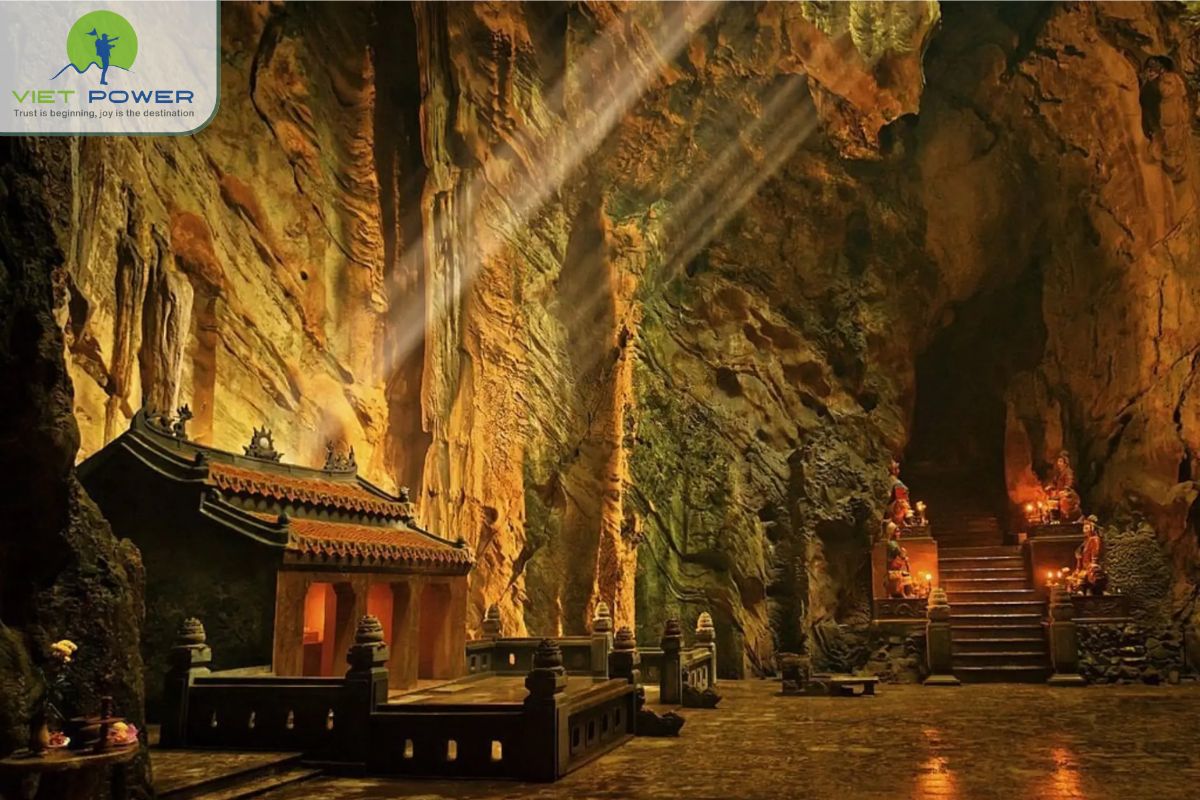
The Marble Mountains are a cluster of five individual hills rather than a single peak. Each mountain has its own features, though only one is fully developed for tourism.
The Five Mountains Explained: Each of the five Marble Mountains represents one element from Eastern philosophy. These elements reflect balance, harmony, and the natural order of the universe. This belief system strongly influenced how religious spaces were created across the mountains.
Among all five, Thuy Son clearly stands out. It offers the most complete experience of the Marble Mountains Da Nang. For first-time visitors, focusing on Thuy Son provides the best balance of culture, scenery, and accessibility.
The Marble Mountains served as religious centers for Buddhist monks and pilgrims. During the Vietnam Resistance War, several caves inside the Marble Mountains were used as secret shelters, storage areas, and field hospitals. Their hidden entrances and solid stone walls made them ideal for protection. Some caves still show signs of this period, including reinforced sections and widened passages.
This lesser-known history adds another layer to the mountains, transforming them from a peaceful spiritual site into a place of survival and resilience.
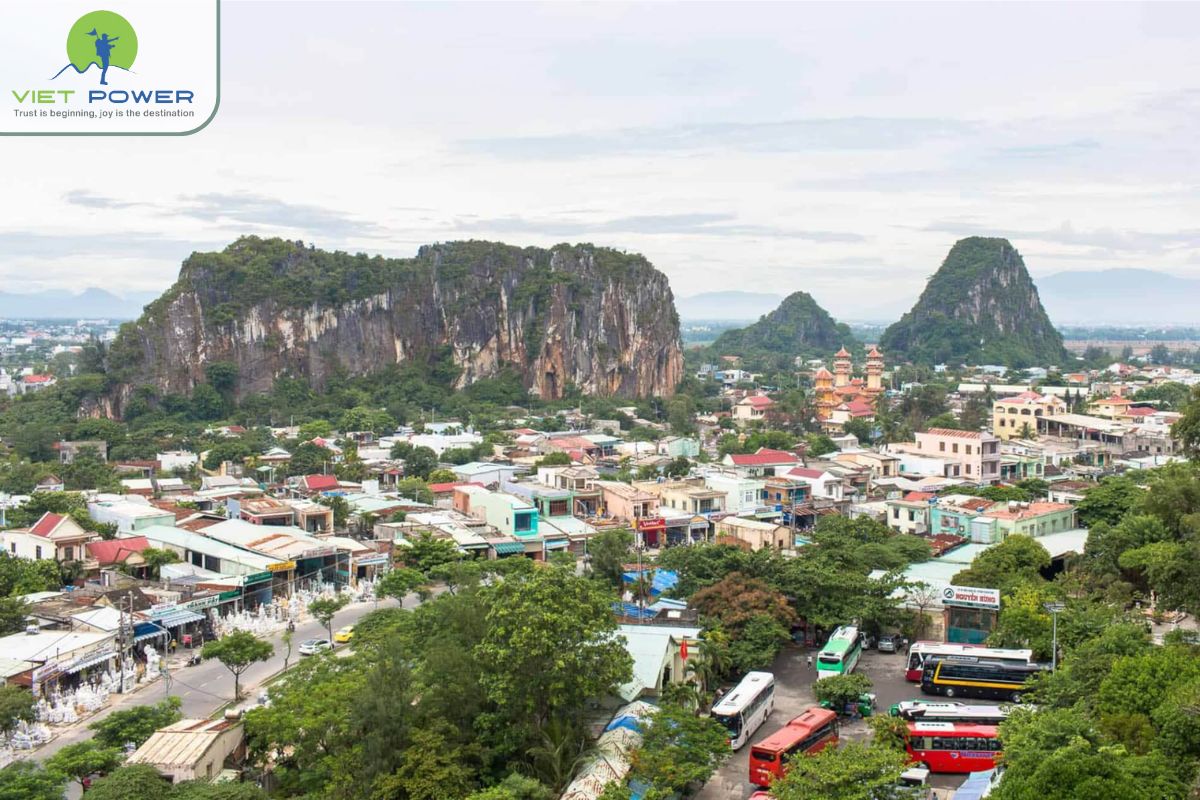
For centuries, marble from the Marble Mountains was used to create sculptures, religious objects, and decorative elements for temples and royal buildings across central Vietnam. However, quarrying was officially banned in the late 20th century to protect the mountains from permanent damage.
This decision helped preserve the site and led to the growth of the nearby Non Nuoc Stone Carving Village, where artisans continue the tradition using sourced stone instead of local quarrying.
Why the Marble Mountains Matter Today? Today, the Marble Mountains Da Nang remain one of the most visited attractions in the region. Their location makes them easy to combine with Da Nang city tours or Hoi An excursions. At the same time, the site offers cultural depth that many travelers seek.
Why Visitors Choose Thuy Son? Thuy Son offers a complete experience in one climb. Visitors can explore sacred caves, admire ancient temples, and enjoy coastal views without needing to visit other mountains. This makes it ideal for first-time visitors.
Over time, Thuy Son became a spiritual hub. Monks chose its caves for meditation, while artisans built temples into the rock. Today, this mountain represents the best example of how nature and belief come together in the Marble Mountains.
%20The%20Main%20Attraction.jpg)
Access and Elevator Option in Water Mountain: Visitors can reach Thuy Son by climbing stone staircases or using a glass elevator. The elevator reduces physical effort, especially in hot weather. However, walking is still necessary to reach many attractions on the mountain.
Let’s continue exploring more about Vietnam and its stunning natural scenery. Visit our Vietnam nature category to discover national parks, mountains, beaches, and breathtaking landscapes across the country.
Do you know “The Marble Mountains are one of the few places in Vietnam where Buddhist, Taoist, and Hindu influences co-exist in a single location”? Some caves feature Buddhist altars, while carvings and symbols reflect older Hindu traditions introduced through Champa culture. This blend shows how belief systems evolved rather than replaced one another.
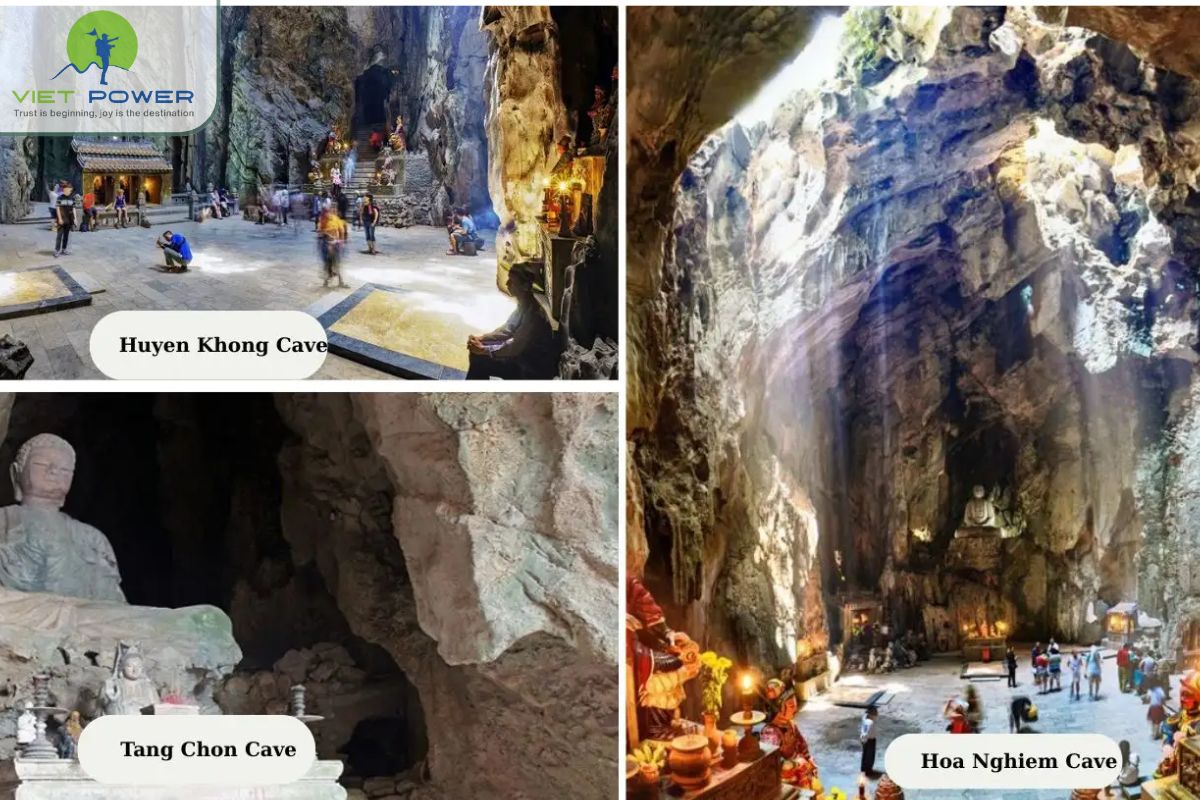
Several caves stand out for their beauty and atmosphere:
These caves are not just attractions. They remain active spiritual sites.
Several important pagodas and religious structures stand on Thuy Son, the spiritual center of the Marble Mountains Da Nang.
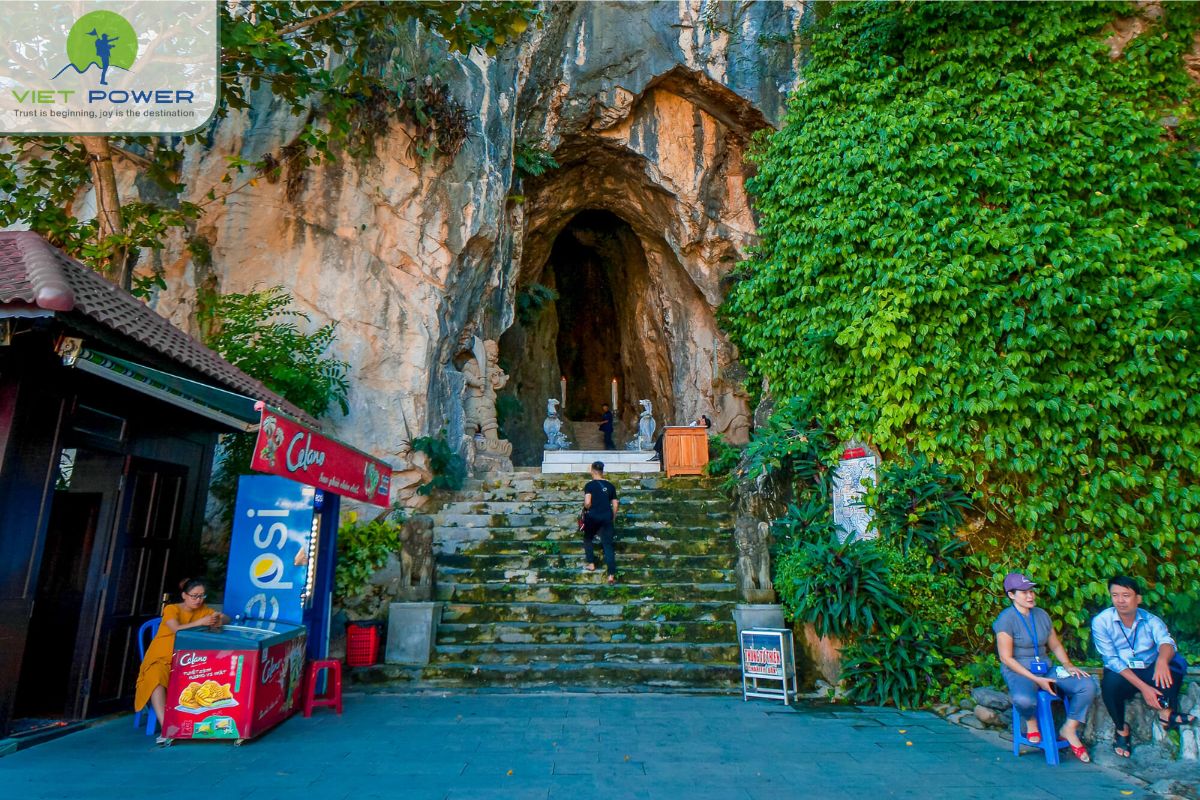
Together, these religious structures express the spiritual heart of the Marble Mountains Da Nang. They show how faith, architecture, and nature continue to coexist in this sacred place.
You can find more posts related to this topic in the category below:
Beyond temples and caves, the Marble Mountains are famous for their viewpoints.
Scenic Viewpoints: From the upper platforms of Thuy Son, visitors can see:
These viewpoints are especially beautiful in the early morning or late afternoon.
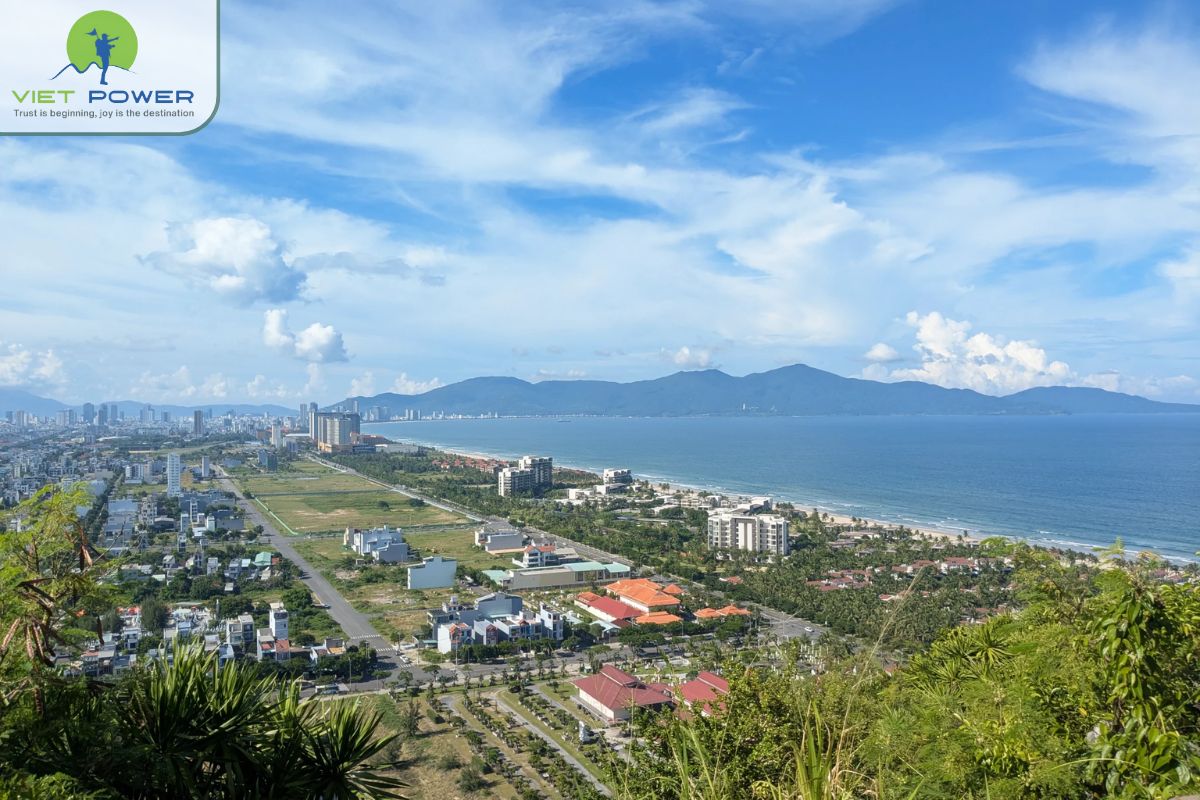
Climbing Experience: The climb involves uneven stone steps and narrow paths. While not extremely long, it requires moderate effort. Comfortable shoes and a slow pace help make the experience enjoyable.
The Viewpoints Were Once Used for Navigation? Historically, fishermen and sailors used the peaks of the Marble Mountains as coastal landmarks. From the sea, the mountains helped guide boats toward safe shorelines near Da Nang long before modern navigation systems existed.
At the foot of the mountains lies the Non Nuoc Stone Carving Village, an important cultural stop.
A Longstanding Craft Tradition
For over 400 years, artisans here have carved marble and stone into statues, decorations, and religious objects. The village developed alongside the Marble Mountains due to the availability of stone.
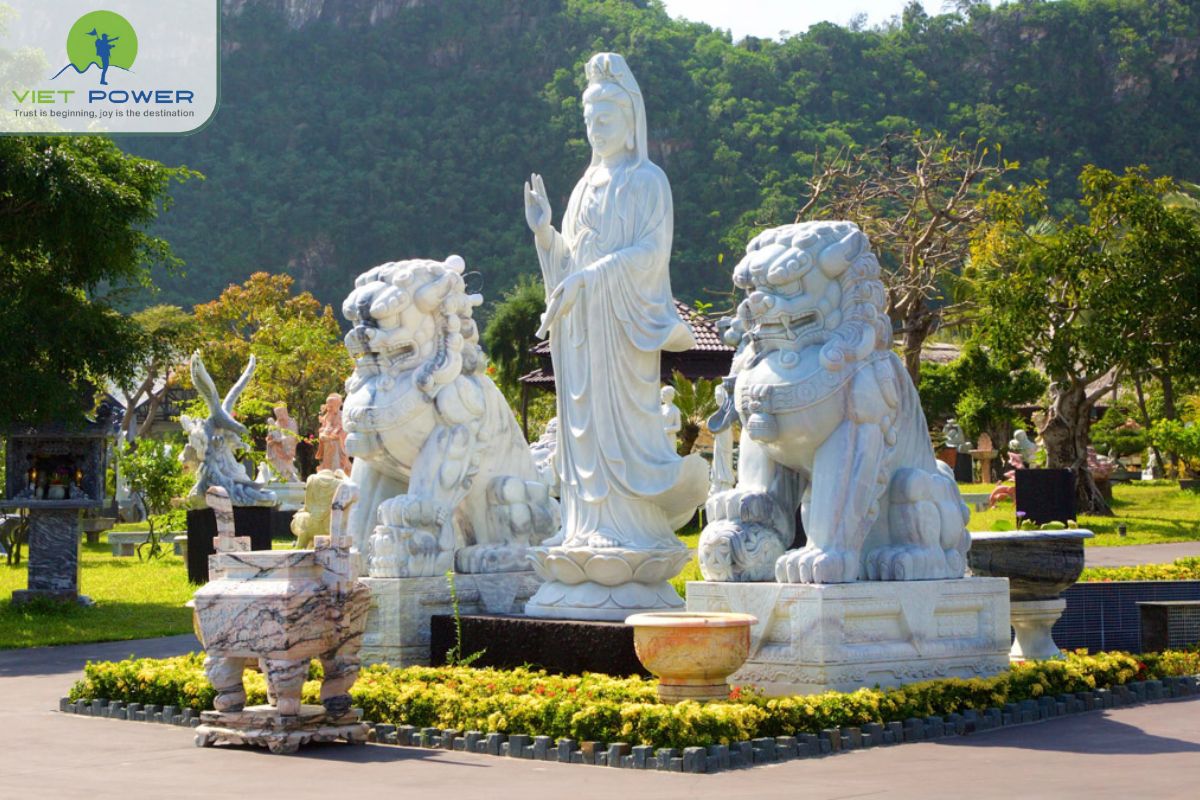
What Visitors Can Experience in Marble Carving Village?
Visitors can observe craftsmen at work and browse workshops for souvenirs. Although quarrying in the mountains is no longer allowed, the artistic tradition continues using sourced stone.
Continue exploring similar posts to learn more about Vietnam’s attractions and experiences:
People wonder Who Will Enjoy Marble Mountains Most? Culture lovers, photographers, and travelers interested in history will appreciate the Marble Mountains. Visitors with limited mobility should consider using the elevator. Proper planning improves the Marble Mountains experience.
Early morning and late afternoon are ideal times. Temperatures are cooler, and crowds are smaller. Midday visits can be hot and tiring.
Because the site includes religious areas, modest clothing is recommended. Visitors should bring water, sun protection, and cash for entrance fees.
A guide is not required, but it is highly recommended. A knowledgeable guide helps explain the religious symbolism, history, and cultural meaning of caves and pagodas that visitors might otherwise overlook.

Prices are affordable and subject to change. Bring cash (VND) as card payments may not be accepted everywhere
|
|
|
|
|
|
|
|
|
|
|
|
|
|
|
|
|
|
|
|
If you’re inspired to see Vietnam your own way, Vietpower Travel is here to create a journey that fits you perfectly.
Typical Visit Duration: Most visitors spend between 1.5 and 3 hours exploring Thuy Son. This includes caves, pagodas, viewpoints, and rest breaks.
Combining with Other Attractions: The Marble Mountains Da Nang fit well into a half-day itinerary. They are often combined with Non Nuoc Village, My Khe Beach, or Hoi An tours.
Da Nang offers a rare balance of beaches, culture, and nature. Travelers can relax by the sea, explore mountains, and enjoy vibrant city life in one trip. With nearby destinations like Hoi An and Ba Na Hills, the experience becomes even richer. Let's continue explore some famous attractions in Da Nang!
The Marble Mountains Da Nang represent one of central Vietnam’s most meaningful attractions. They combine nature, spirituality, history, and craftsmanship into a single destination. From sacred caves and ancient pagodas to coastal viewpoints, the experience leaves a lasting impression.
Contact Vietpower Travel today to include the Marble Mountains in your Da Nang journey and discover one of Vietnam’s most iconic landmarks with confidence and insight.
Please kindly send us your ideas about the tours: destinations, attractions, your group, hotel class... we will get back to you with details & best offers quickly. Surely, you will feel satisfactory!
 |
 |
 |
 |
 |
 |

.jpg) Customize Your Trip
Customize Your Trip
 Vietnam
 Thailand
 Laos
Laos Indonesia
 Cambodia
 Myanmar
 Indochina Tours