Exploring Quan Am Pagoda in HCM with Vietpower Travel offers travelers a serene journey into the spiritual heart of Saigon’s Chinatown. Built in the 18th century by the Fujianese community, this historic pagoda blends Chinese artistry with Vietnamese devotion. From its dragon-boat architecture to rare folk rituals, every corner tells a story of compassion and heritage. It stands as one of the most meaningful Pagodas in Ho Chi Minh City, where faith and culture meet in harmony.
Let's explore The Story Behind Quan Am Pagoda in the following section.
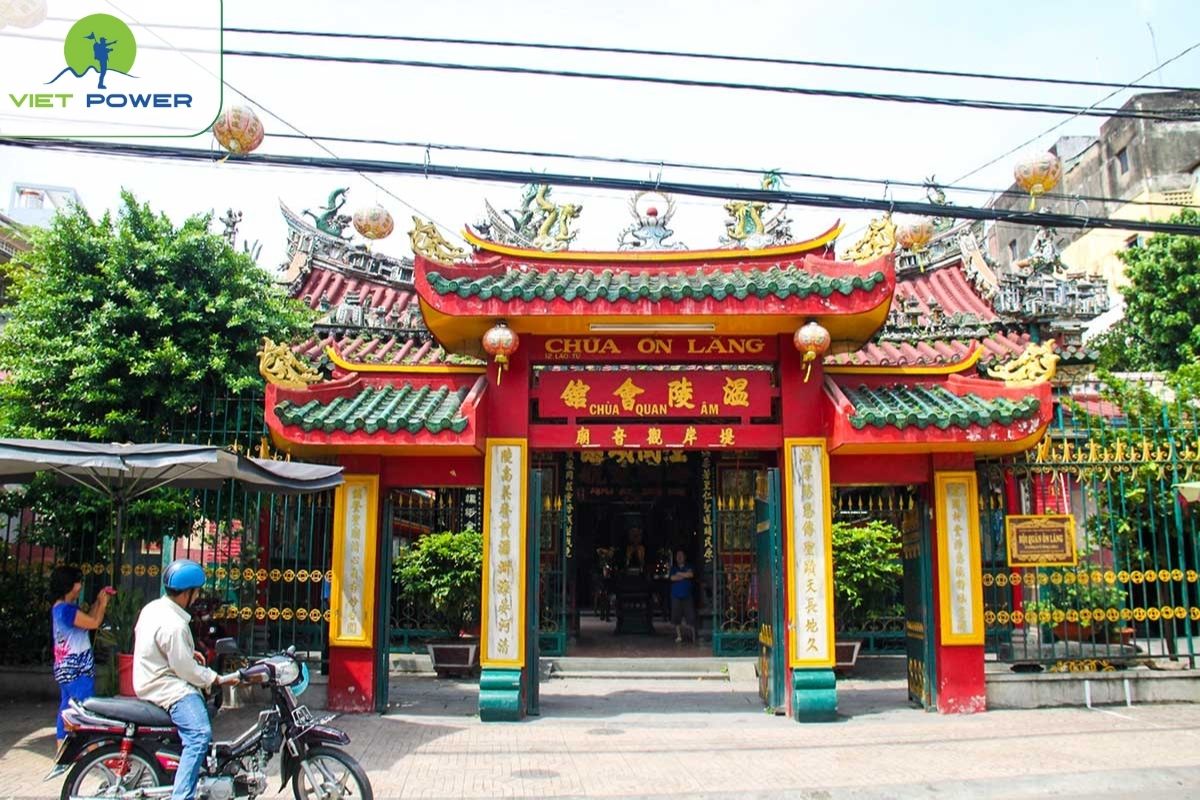
Quan Am Pagoda was built around 1740 by Chinese immigrants from Quanzhou, Fujian, who settled in Saigon to trade and establish new lives. They created the On Lang Assembly Hall as both a spiritual and social center for the Fujianese community.
Over time, the hall evolved into a place of worship for Guanyin (Quan Am), the Goddess of Mercy. Her image became the symbol of compassion and peace for the people of District 5. The temple reflects the shared traditions, beliefs, and artistry that the Fujianese brought to Vietnam nearly three centuries ago.
The temple preserves genuine Fujian craftsmanship and religious customs, a cultural link that few other Pagodas in Ho Chi Minh City still maintain.
Throughout history, the pagoda has been carefully restored to preserve its beauty. Major renovations took place in 1828, 1869, 1897, 1993, and 1995, each time supported by local believers who considered the temple a spiritual treasure.
In 1993, Quan Am Pagoda was officially recognized by the Vietnamese Ministry of Culture as a National Architectural & Artistic Monument. This title honors the temple’s historical importance and its continuous role as a cultural and religious landmark in Saigon.
The recognition confirms Quan Am Pagoda’s long-standing influence on the city’s cultural and spiritual identity.
Exploring pagodas in Ho Chi Minh City offers a journey into Vietnam’s spiritual heart, where Buddhist, Taoist, Hindu, and folk traditions blend seamlessly. From the centuries-old Giac Lam Pagoda to the Thai-inspired elegance of Buu Long Pagoda and the cultural vibrance of Vinh Nghiem Buddhist Temple, each site tells a story through its architecture, rituals, and community life.
Let's explore Architectural Beauty of Quan Am Pagoda in the following section.
The temple’s overall structure resembles a Chinese dragon boat, symbolizing strength, luck, and spiritual journey. The curved outline of the roof and layout gives visitors the sense of a boat gliding on calm water — a rare design in Vietnamese temples.
This architectural style appears almost exclusively here, setting Quan Am Pagoda apart from other temples in Saigon.
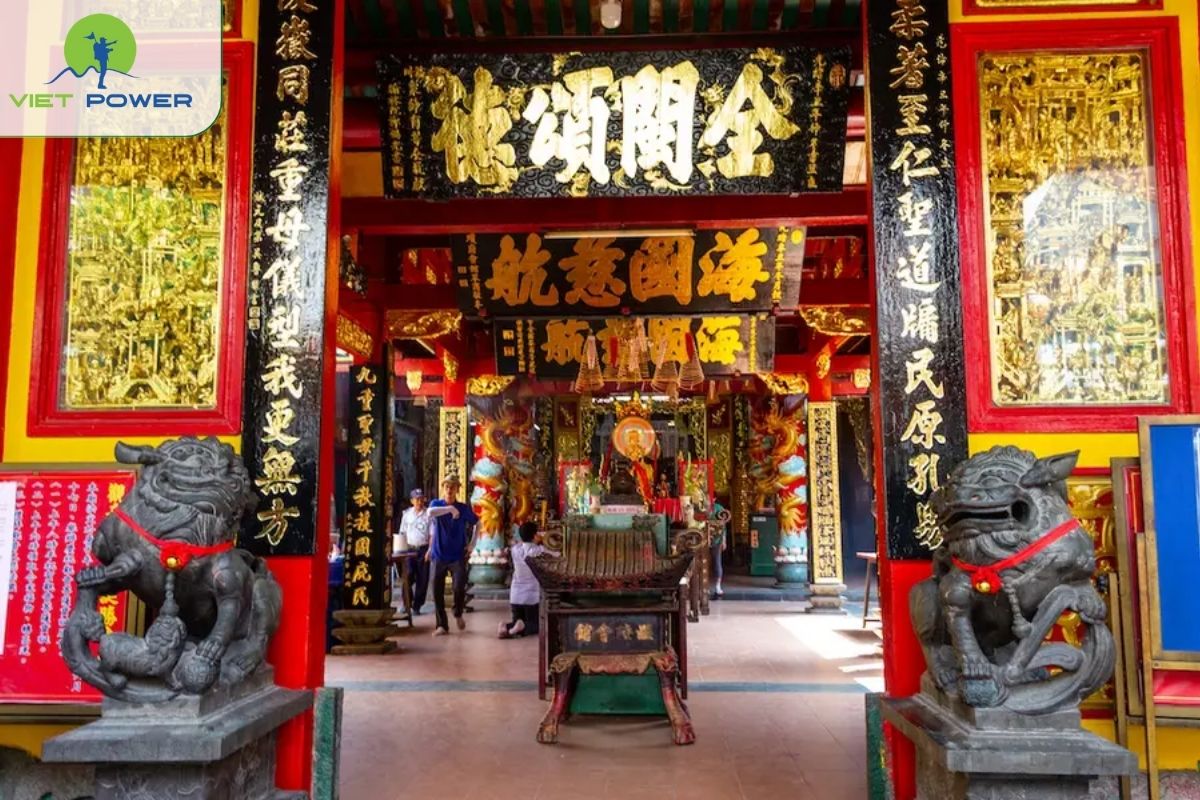
At the entrance stand two stone lions carved in 1869. Their presence represents protection, courage, and harmony, welcoming visitors with a sense of timeless guardianship.
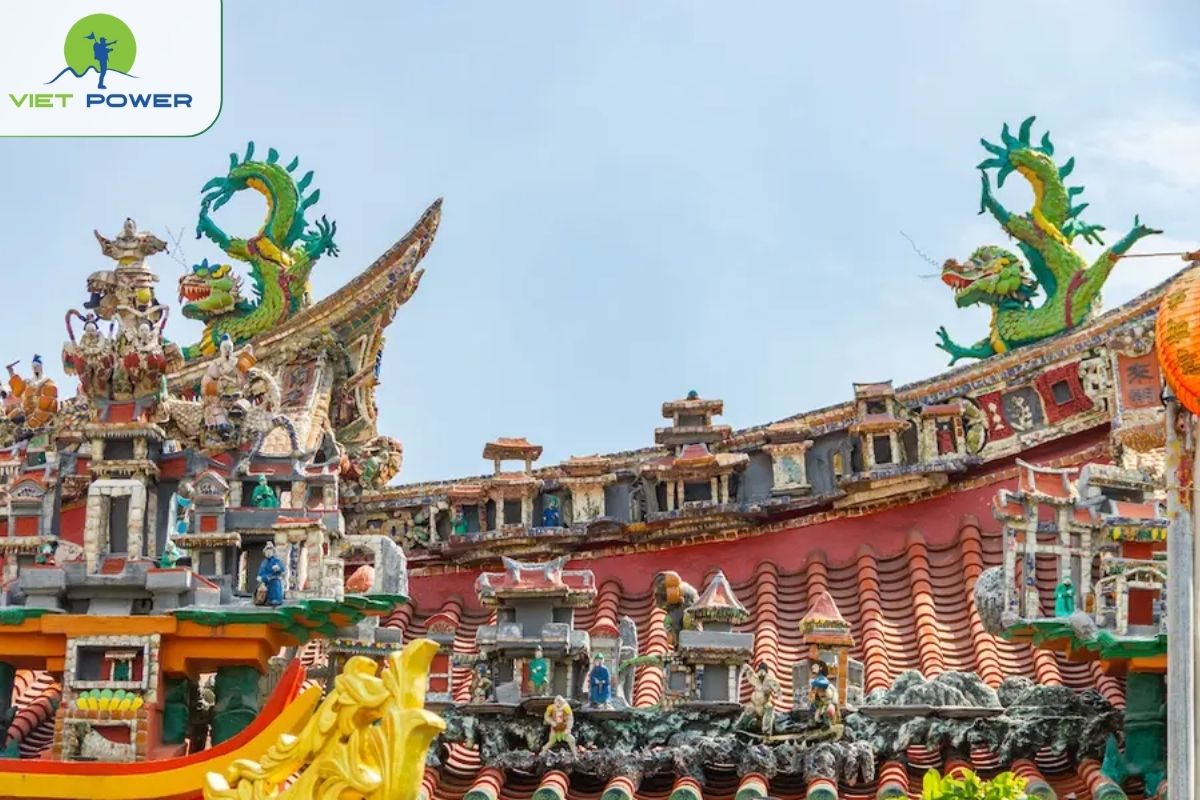
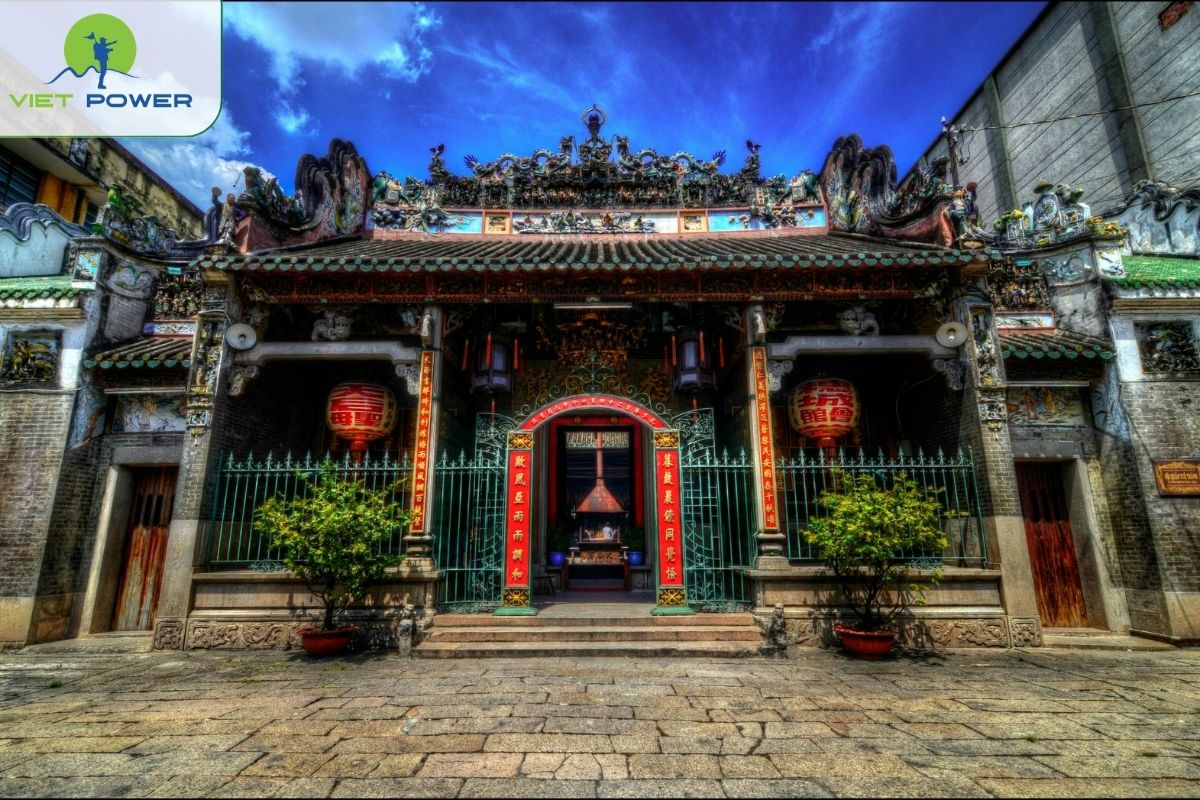
The pagoda’s roof is a masterpiece of Fujian artistry. Its curved eaves are decorated with colorful ceramic fragments, forming intricate patterns of dragons, phoenixes, and sacred symbols.
Red tiles, golden calligraphy panels, and detailed reliefs add a sense of vibrancy and balance. The design reflects how ancient craftsmen combined faith with artistic skill, making the temple both beautiful and meaningful.
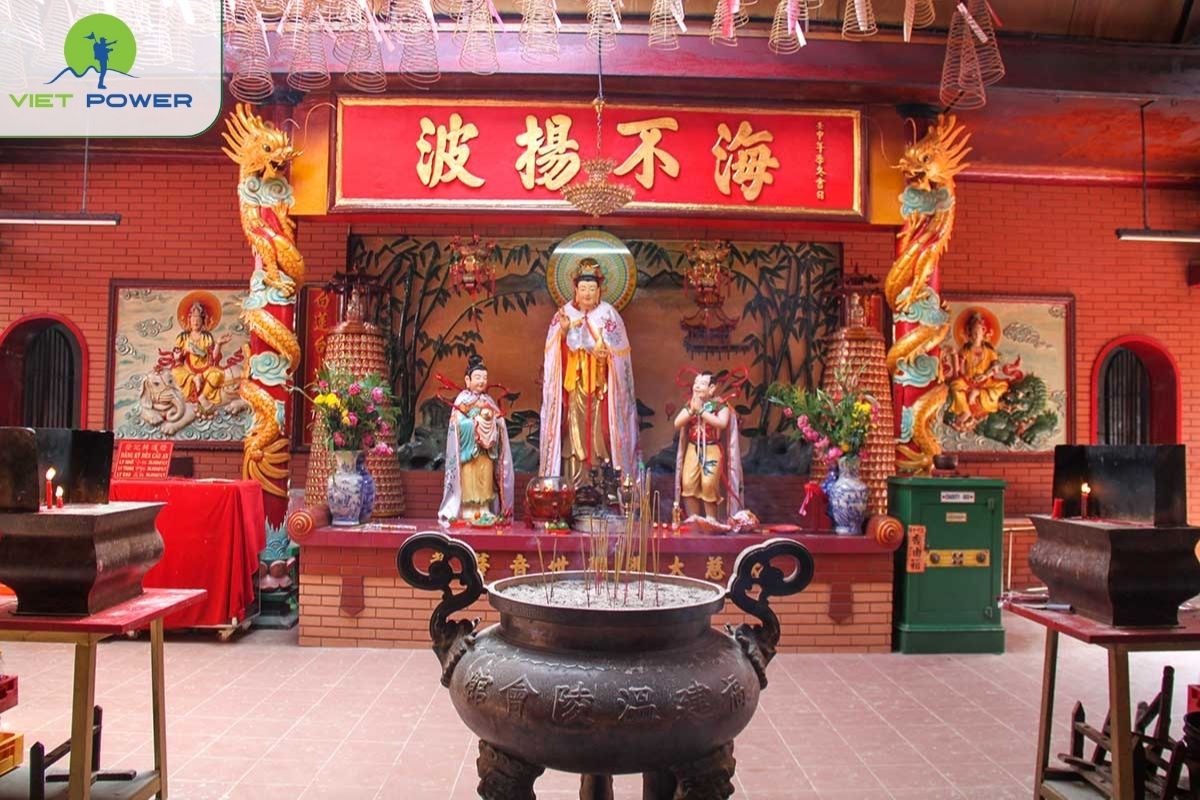
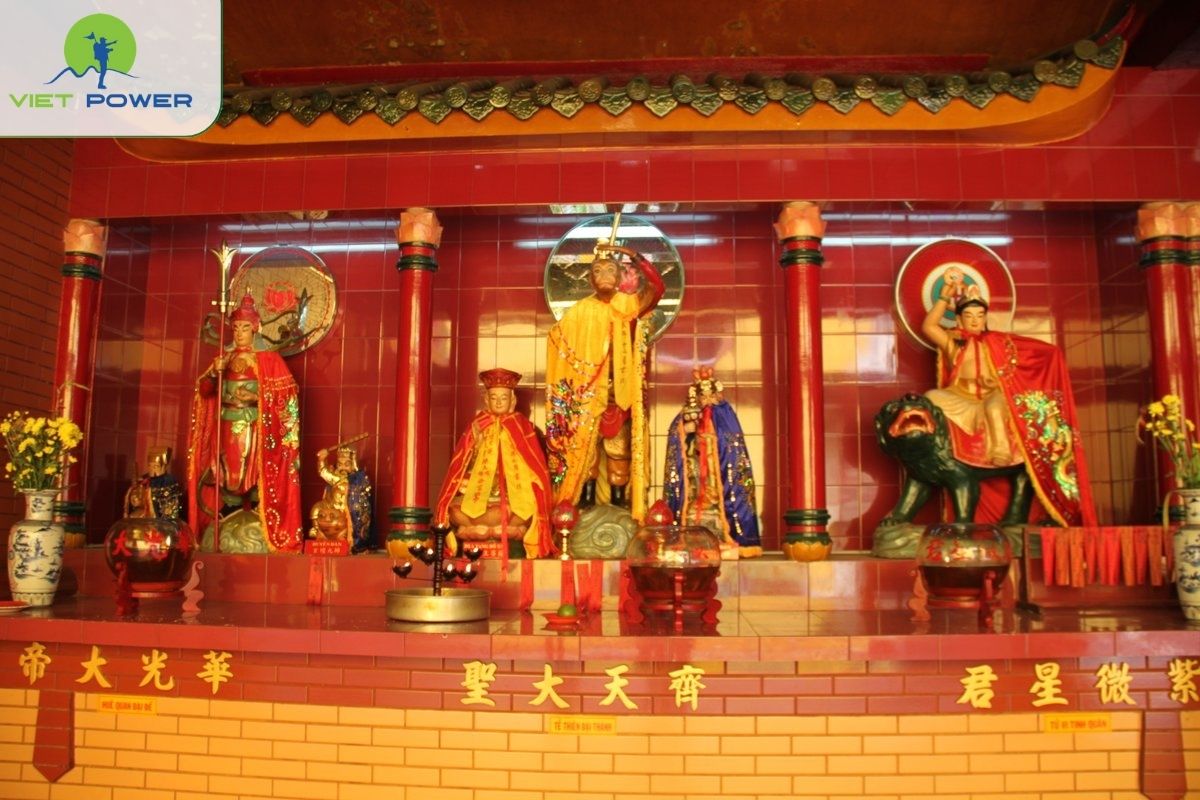
Inside the main hall, a large statue of Quan Am Bodhisattva sits at the center, surrounded by altars for Mazu (Thien Hau), Amitabha, and the Jade Emperor. The air is filled with the fragrance of incense, creating a peaceful atmosphere for prayer and reflection.
A special shrine dedicated to the Twelve Midwives Goddesses stands nearby. Locals visit this altar to pray for health, fertility, and the protection of children.
This ancient belief survives today only in a few Chinese-Vietnamese temples, making it a unique spiritual experience for visitors.
Behind the main sanctuary lies a smaller chamber honoring Ngu Hanh Nuong Nuong and Chua Sinh Nuong Nuong, goddesses who represent the five elements of nature — metal, wood, water, fire, and earth.
Visitors come here to seek balance, prosperity, and blessings for family and creative success.
The temple courtyard features a lotus pond surrounded by flowering trees and small altars. The reflection of the roof and lanterns in the water creates a calm and poetic scene.
Many visitors pause here to rest and enjoy the sound of the water before continuing their journey. It’s a serene space that balances the energy of the temple with the gentle spirit of nature.
Continue exploring similar posts to learn more about Vietnam’s attractions and experiences:
Let's explore Sacred Practices & Festivals of Quan Am Pagoda in the following section.
Every day, the pagoda fills with the soft rhythm of prayer. Visitors can observe locals lighting incense, offering fruit, and chanting sutras, all expressing gratitude and hope for peace.
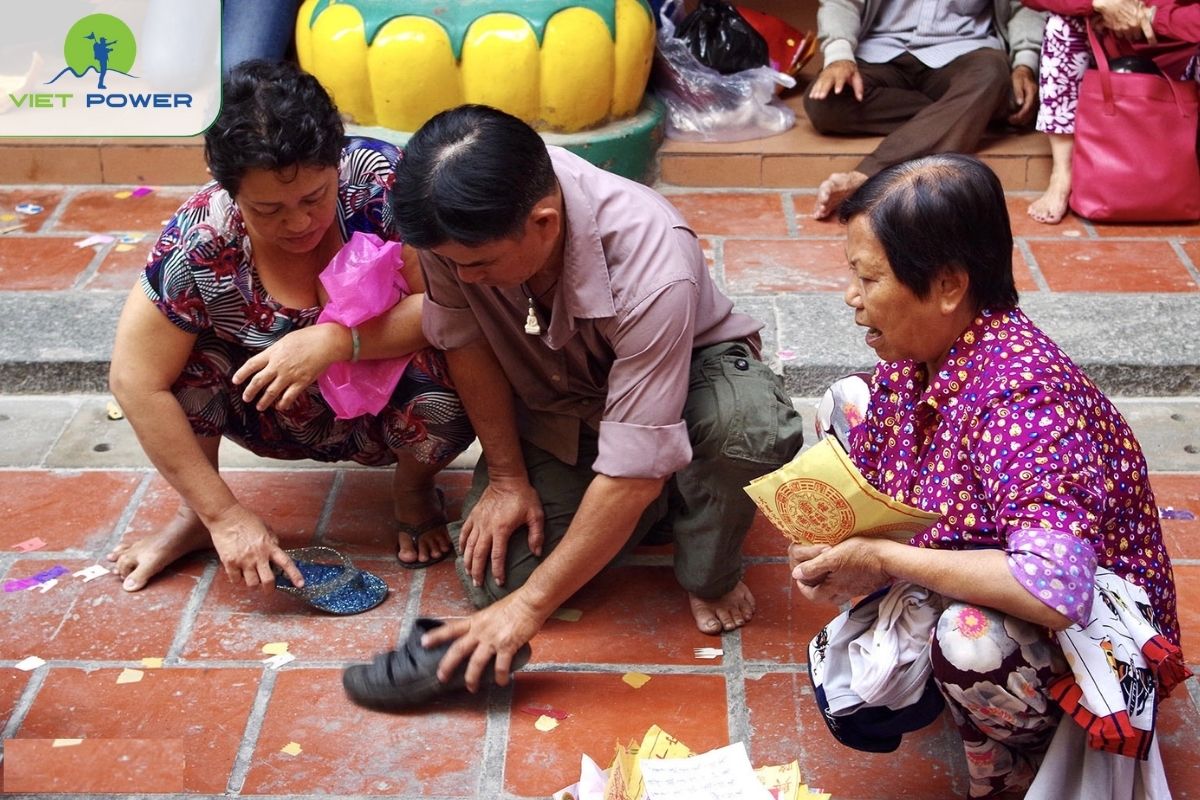
Among these customs, the most remarkable is the “Danh Tiểu Nhân” (Villain-Hitting) ceremony, held each year around March 5–6. During this ritual, worshippers strike small paper effigies with their shoes to symbolically drive away misfortune and negative influences. It reflects a belief in purifying one’s life and starting anew with good fortune.
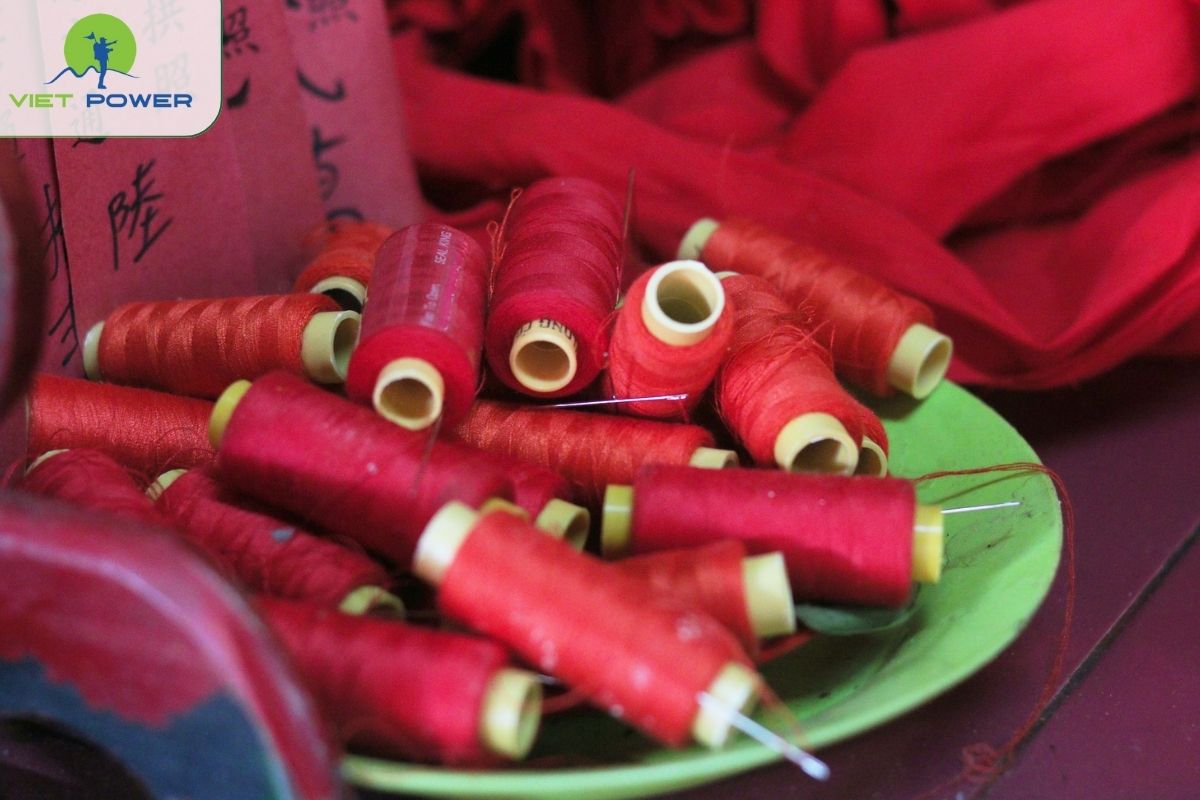
Another meaningful ritual here is the Red Thread Love-Prayer Ceremony. Devotees gently tie red threads around the altar rail to ask for harmony in love, marriage, and emotional peace. The red color represents sincerity and faith, creating a warm scene inside the quiet temple.
This tradition, rarely mentioned in English travel guides, blends romance and spirituality in a way that makes Quan Am Pagoda in HCM deeply personal to many visitors.
Each year, the temple becomes lively during Lễ Vía Quan Âm on the 19th day of the 2nd, 6th, and 9th lunar months. Locals gather to burn incense, make donations, and enjoy performances of lion and dragon dances. The atmosphere is joyful yet reverent, showing the community’s continuing respect for compassion and generosity.
You can find more posts related to this topic in the category below:
Let's explore visitor's guide of Quan Am Pagoda in the following section.
Overview: Quan Am Pagoda lies in the middle of Chinatown – the cultural heart of Saigon’s Chinese-Vietnamese community. It’s easy to reach and open all year round. Visitors can join morning prayers or explore its peaceful courtyard in the late afternoon.
From District 1:
By Bus:
Tip: Along the way, you’ll see local temples, traditional medicine stores, and food stalls — a real look into everyday life in District 5.
When visiting Quan Am Pagoda, it’s essential to respect the temple’s tranquil setting. Dress modestly, covering shoulders and knees, and speak softly while inside. Avoid using flash photography, as bright light can disturb worshippers and damage ancient decorations.
The best time to visit is early in the morning, between 6:00 and 8:00 AM, when the temple is quiet and filled with soft incense smoke and sunlight. Visitors should walk calmly, observe how locals offer incense, and follow their example. Simple actions like these reflect sincerity and help travelers understand how to visit Quan Am Pagoda in HCMC with mindfulness and cultural respect.
Turn your dream of discovering Vietnam into reality with a personalized tour crafted by Vietpower Travel.
Let's explore Nearby Attractions from Quan Am Pagoda in the following section.
|
|
|
|
|
|
|
|
|
|
|
|
|
|
|
|
|
|
|
|
|
|
|
|
|
|
|
|
|
|
Suggested Route – Half-Day Chinatown Heritage Tour by Vietpower Travel
Start at Quan Am Pagoda → Walk to Thien Hau Temple → Continue to Cha Tam Church → Stop at Ong Bon Pagoda → Finish at Binh Tay Market for local food and souvenirs.
Total distance: about 2 kilometers (ideal for a half-day cultural walk).
A visit to Quan Am Pagoda in Ho Chi Minh City is more than a cultural stop — it’s a glimpse into the soul of Saigon’s living traditions. With Vietpower Travel, visitors can explore nearby temples, markets, and sacred festivals that shape this vibrant district’s identity. Whether for worship, photography, or discovery, this timeless landmark invites everyone to experience peace and connection within Vietnam’s diverse heritage. It proudly ranks among the most treasured Vietnam Tourist Attractions
Please kindly send us your ideas about the tours: destinations, attractions, your group, hotel class... we will get back to you with details & best offers quickly. Surely, you will feel satisfactory!
 |
 |
 |
 |
 |
 |

.jpg) Customize Your Trip
Customize Your Trip
 Vietnam
 Thailand
 Laos
Laos Indonesia
 Cambodia
 Myanmar
 Indochina Tours