Ngoc Son Temple, located on a small island in Hoan Kiem Lake, is one of the most recognizable cultural landmarks in Hanoi. With its iconic red The Huc Bridge and deep connection to local legends, the temple offers a unique blend of history, architecture, and spiritual meaning right in the heart of the city.
In this post, Vietpower Travel provides a complete guide to Ngoc Son Temple, including its location, historical background, cultural significance, architectural highlights, and practical travel tips to help you plan a smooth and meaningful visit.
Ngoc Son Temple is located on a small island in the northern part of Hoan Kiem Lake, right in the center of Hanoi. Although it sits in one of the busiest areas of the city, the surrounding water creates a sense of separation, making the temple feel quieter and more distinct. It is easily accessible via the iconic red The Huc Bridge and within walking distance of the Old Quarter, which is why it is often included in most Hanoi itineraries.
Why Is Ngoc Son Temple Famous?
Beyond its location, Ngoc Son Temple is best known for the cultural meaning it carries. Positioned at the heart of Hoan Kiem Lake, it represents a place where history, daily life, and spirituality come together. Its significance is closely linked to the legend of Emperor Le Loi returning the magical sword to the Golden Turtle, giving the site a deeper connection to Hanoi’s identity.
Because of this combination, Ngoc Son Temple is considered a must-visit, not for its size, but for the meaning and atmosphere it offers.
.jpg)
Continue exploring similar posts to learn more about Vietnam’s diverse attractions and unique travel experiences. Our Vietnam tourist attractions category is filled with ideas to help you plan your perfect adventure.
To truly understand Ngoc Son Temple, it’s important to begin with the story of Hoan Kiem Lake - a legend that has shaped not only the temple’s meaning but also the cultural identity of Hanoi itself.
The story dates back to the 15th century, during the time of Emperor Le Loi. According to legend, he was given a magical sword by divine forces to help him defeat foreign invaders and reclaim independence for Vietnam.
After the victory, while boating on the lake, a giant golden turtle suddenly appeared and took the sword back, returning it to its divine origin. From then on, the lake was named Hoan Kiem, meaning “Lake of the Returned Sword”.
This legend carries deep symbolic meaning. It reflects the idea that power is granted for a righteous purpose and must eventually be returned, emphasizing harmony between human authority and higher spiritual forces. Even today, the turtle remains a powerful and sacred symbol associated with the lake.
.jpg)
Ngoc Son Temple, or “Jade Mountain Temple”, is built on a small island in Hoan Kiem Lake, placing it at the center of this legendary setting. While it does not directly commemorate the returned sword, the temple reflects the same spiritual values found in the story - loyalty, wisdom, and harmony between humans and the divine.
Over time, it has become more than just a historical site. Many locals visit the temple to seek blessings for knowledge, success, and protection, reinforcing its role as an active spiritual space. Its presence on the lake highlights the idea that Hoan Kiem is not only a scenic landmark, but also a place where history, belief, and everyday life are closely connected.
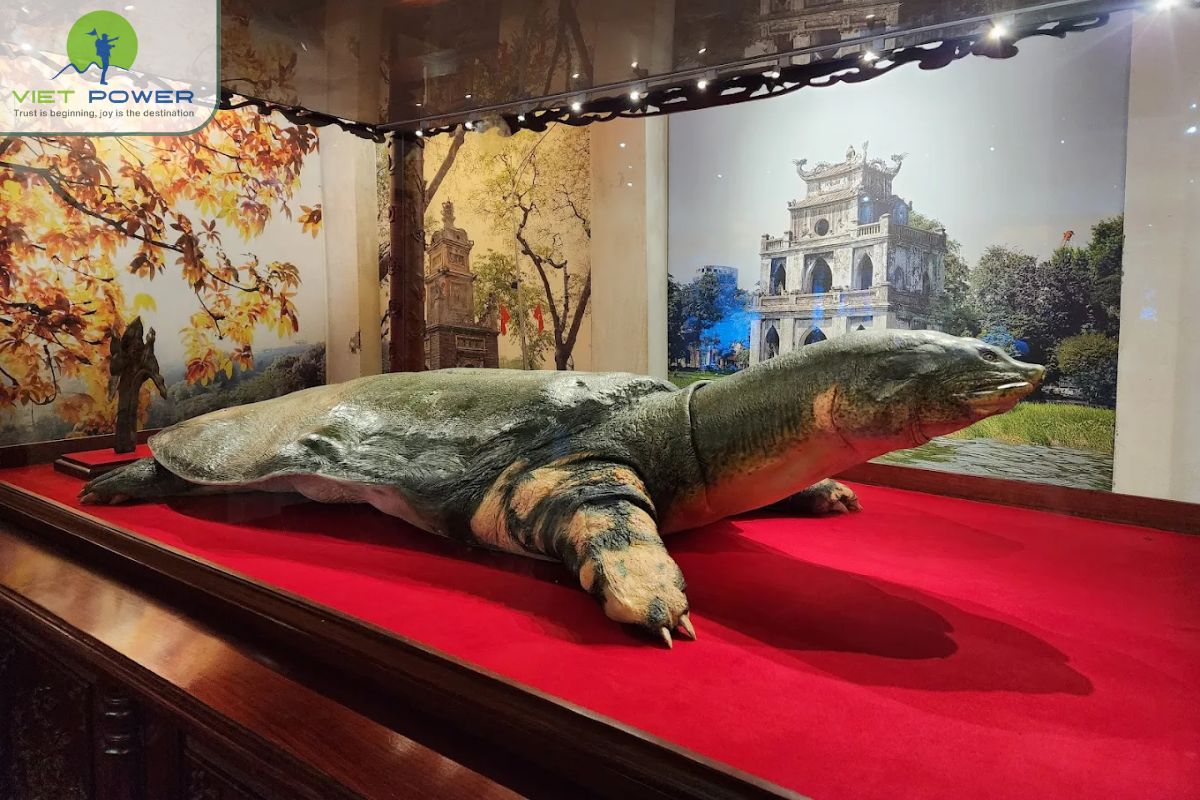
A preserved specimen of the sacred Hoan Kiem Turtle is on display inside a glass case at the Ngoc Son Temple. The temple features a specimen of a large turtle, with one notable specimen weighing roughly 250kg and another from 2016 having been preserved using modern plastination.
Planning a family vacation in Hanoi means stepping into a city where history, culture, and kid‑friendly experiences blend seamlessly. From serene lakes and vibrant parks to hands‑on workshops and the famous Vietnam Museum of Ethnology or Hanoi Opera House, the capital offers attractions every generation will love. Let's explore the top Hanoi tourist destinations is built around comfort, safety, and engaging activities for parents, children, and grandparents alike.
Let’s explore more posts on this topic to discover even more about Vietnam:
After understanding the legend of Hoan Kiem Lake, Ngoc Son Temple can be seen as more than just a physical structure. It is a compact but intentional space, designed to guide visitors from the busy outside world into a quieter, more symbolic environment.
Rather than overwhelming visitors with scale, the temple unfolds gradually. Each structure plays a role in shaping how you move and feel as you go deeper inside.
This sequence is intentional. You don’t simply walk into the temple, you transition into it. The bridge separates you from the busy streets, the pavilion frames your entry, and the inner shrine becomes a quieter, more focused space.
Architecturally, the temple follows traditional Vietnamese design principles: curved tiled roofs, wooden structures, and balanced layouts. There’s nothing overly grand, but the harmony between the elements creates a calm, almost reflective atmosphere.
At first glance, The Huc Bridge stands out because of its bold red color and elegant curve across the water. But its importance goes beyond how it looks, it plays a key role in the overall experience of the temple.
Before reaching the temple, every visitor must cross this bridge. That simple act creates a subtle shift in mindset. The noise of the city fades slightly, the open view of the lake slows your pace, and the space begins to feel more intentional.
Even the name “The Huc,” often translated as “where the morning sunlight rests,” reinforces this idea of light and renewal. In many ways, the bridge is not just an entrance, it is the beginning of the temple experience.
.jpg)
Ngoc Son Temple reflects a blend of Taoist and Confucian worship, which is common in many traditional Vietnamese temples. Instead of focusing on one doctrine, it brings together different belief systems that relate closely to everyday life.
Inside the main shrine, visitors will find altars dedicated to key figures:
Because of this, the temple serves a very practical spiritual purpose. People come here with specific wishes - students before exams, professionals seeking career growth, or families hoping for peace and protection.
Your ideal Vietnam getaway starts here - Vietpower Travel will create a tailor-made journey designed around you.
After exploring its history and meaning, many visitors simply ask: is it worth visiting? The answer is yes - Ngoc Son Temple is one of the easiest and most rewarding cultural sites to experience in Hanoi, especially for first-time visitors.
Is Ngoc Son Temple suitable for first-time visitors?
For first-time visitors to Hanoi, Ngoc Son Temple is often one of the most convenient places to start. Its central location, combined with its cultural significance, makes it an easy introduction to the city’s history and spiritual life.
Because of this, many travelers include it as part of a short walking route around the lake, often combined with nearby attractions and street food stops.
.jpg)
What is the best time to visit the temple?
Timing can make a noticeable difference in your experience, especially since the area around Hoan Kiem Lake can get quite busy.
If you prefer a peaceful visit, early morning is the best option. If you’re more interested in atmosphere and photos, late afternoon or sunset works better.
Before visiting, it helps to know a few basic details to make your experience smoother.
A few simple tips can also improve your visit:
Overall, visiting Ngoc Son Temple is less about checking off a landmark and more about experiencing a small but meaningful part of Hanoi’s cultural rhythm.
Continue exploring similar posts to learn more about Vietnam’s attractions and experiences:
Thanks to its central location on Hoan Kiem Lake, Ngoc Son Temple is easy to reach from most parts of Hanoi, especially if you’re staying in the Old Quarter.
Reaching the temple is part of the experience, as you’ll approach it through the lively surroundings of Hoan Kiem Lake before crossing The Huc Bridge.
Ngoc Son Temple is best experienced as part of a walk around Hoan Kiem Lake, where many of Hanoi’s highlights are located close together.
Ngoc Son Temple may not be the largest or most elaborate site in Hanoi, but it captures something more importantn - the essence of the city itself. From its connection to the legends of Hoan Kiem Lake to its blend of spiritual beliefs and peaceful setting, the temple offers a meaningful glimpse into Hanoi’s culture, history, and everyday life.
If you want a more organized and meaningful experience, consider exploring Hanoi with Vietpower Travel. With curated itineraries and local insights, you can discover not just Ngoc Son Temple, but the stories behind it.
Please kindly send us your ideas about the tours: destinations, attractions, your group, hotel class... we will get back to you with details & best offers quickly. Surely, you will feel satisfactory!
 |
 |
 |
 |
 |
 |

.jpg) Customize Your Trip
Customize Your Trip
 Vietnam
 Thailand
 Laos
Laos Indonesia
 Cambodia
 Myanmar
 Indochina Tours