Buddhism has shaped Vietnamese culture for more than 2,000 years, leaving behind grand temples, peaceful sanctuaries, and architectural masterpieces. In Central Vietnam, these pagodas are living witnesses to history, spirituality, and traditional craftsmanship. Below are the four most iconic pagodas in Central Vietnam you should not miss with Vietpower Travel.
Sitting gracefully on the banks of the Huong River, Thien Mu Pagoda is the most recognizable pagoda in Hue and Central Vietnam. With more than four centuries of history, it blends sacred legends, royal architecture, and national heritage.
Legend tells that an old woman once appeared on this hill, predicting that a lord would build a pagoda to bless the country. When Lord Nguyen Hoang heard the story, he ordered the construction of the temple in 1601 and named it Thien Mu, which means Heavenly Lady.
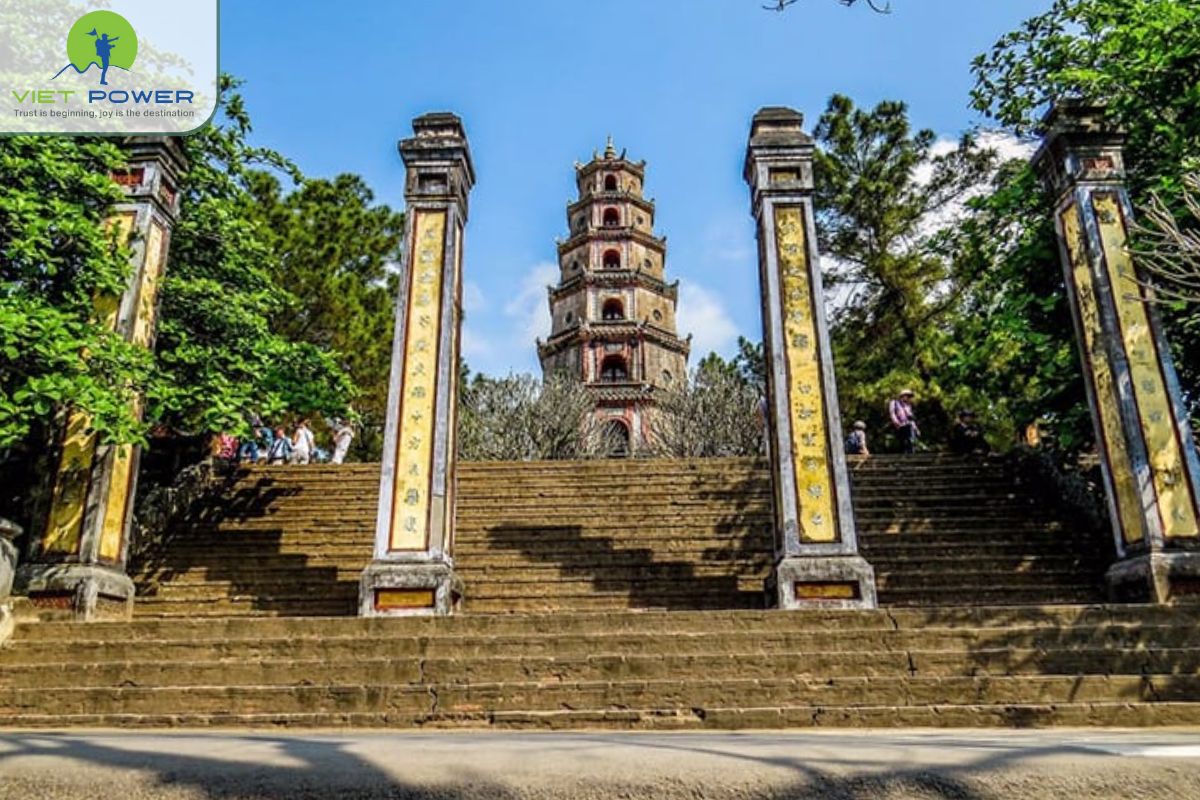
Phuoc Duyen Tower: The seven-story octagonal tower built in 1844 is the pagoda’s most iconic feature. Often appearing in songs and poems about Hue, it stands proudly as an unofficial symbol of the ancient capital.
Why does Thien Mu Pagoda appear so often in poems and songs about Hue? Because its riverside setting and iconic tower have symbolized the soul of Hue for centuries.
What makes the Phuoc Duyen Tower so important? It is one of Vietnam’s tallest ancient stupas and is recognized as a cultural symbol featured even on national postage stamps.
Historic relics: The pagoda houses the famous blue Austin car used by monk Thich Quang Duc before his self-immolation in 1963, an event that shocked the world and marked a critical moment in Vietnam’s Buddhist movement.
Peaceful riverside scenery: The complex overlooks the gentle Huong River, creating a calm, poetic landscape ideal for reflection.
Travel tips for visiting Thien Mu Pagoda: Take a boat trip along the Huong River at sunset - the view of the tower rising above the pine-covered hill is unforgettable.
You can find more posts related to this topic in our Vietnam tourist attractions category. Explore detailed travel guides, destination highlights, and inspiration for your next journey through Vietnam.
Among the three Linh Ung Pagodas in Danang, the one on Son Tra Peninsula stands out for its stunning location, where mountains meet the sea and clouds touch the horizon.
According to local belief, during the reign of King Minh Mang, a Buddha statue appeared on the sandbank of Son Tra. Fishermen considered it a divine sign and built a small shrine. From that moment, the waves became calmer, helping them fish safely. The area was later named Bai But, meaning “Buddha’s Realm,” and the present Linh Ung Pagoda was built upon this sacred land.
Why do locals call Son Tra Peninsula the “divine eye overlooking the sea”? Because its high position gives a panoramic view that feels like a guardian watching over the coastline.
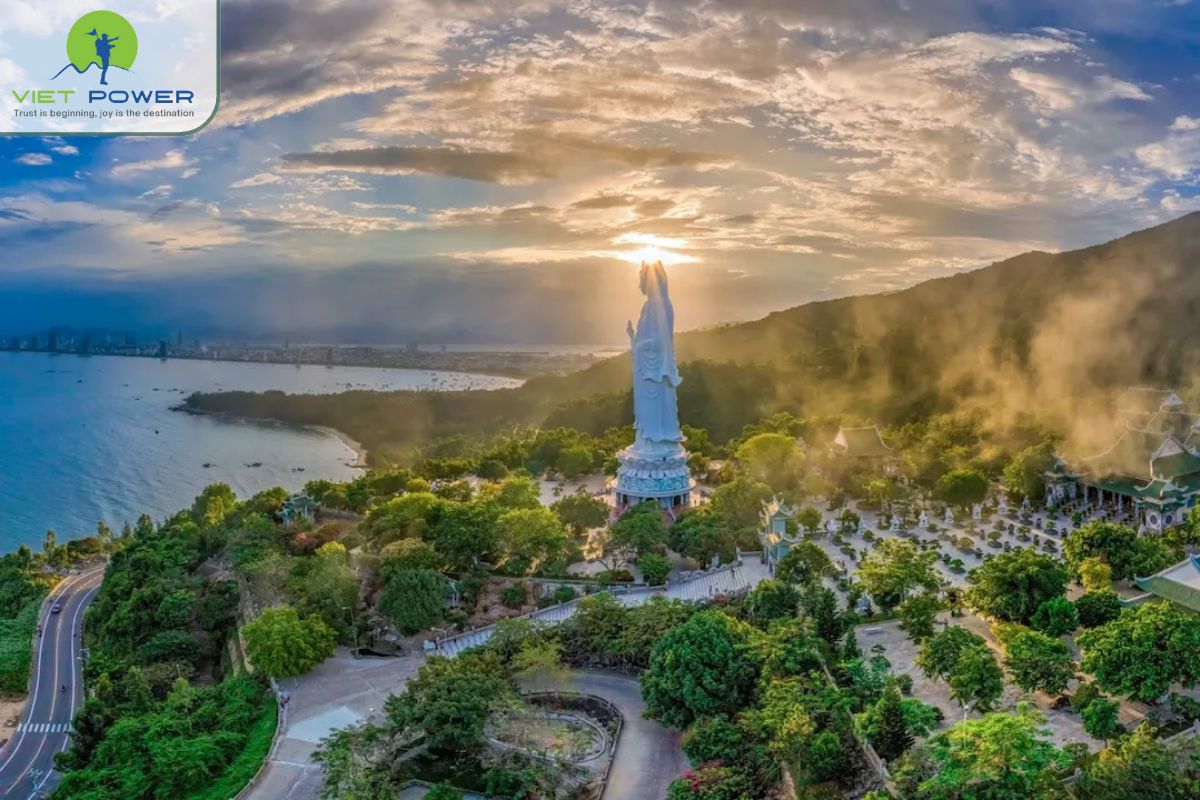
Lady Buddha Statue: The tallest Lady Buddha statue in Vietnam (67 m), standing atop a 35-meter lotus base. With one hand in prayer and the other holding a pitcher of nectar, she faces the sea as a spiritual guardian for local fishermen. Inside are 17 floors, each with 21 Buddha statues.
Why is the Lady Buddha statue considered a spiritual lighthouse? Fishermen say its presence brings calm seas and good fortune during long voyages.
Panoramic views: The pagoda offers sweeping views of Danang Bay, Marble Mountains, and the city skyline.
Travel tips for visiting Son Tra Peninsula Linh Ung pagoda: Visit early morning or late afternoon to enjoy cool breezes, soft sunlight, and excellent photography conditions.
Each pagoda tells a unique story through its distinctive history, design and spiritual meaning. In the following post of Vietpower Travel, let’s discover the story of famous pagodas in Vietnam.
If you’re inspired to see Vietnam your own way, Vietpower Travel is here to create a journey that fits you perfectly.
Located on Ham Long Hill, Bao Quoc Pagoda is one of Hue’s most historically significant temples, known for its centuries-long commitment to Buddhist education. This is one of the pagodas you should visit on a Central Vietnam tour.
Founded in 1670 by Chinese Zen Master Thich Giac Phong, the pagoda became a major spiritual hub. In 1824, Emperor Minh Mang renamed it Bao Quoc, meaning “Repaying the Nation,” elevating it to one of the three main national temples under the imperial court. Since 1940, it has served as a leading Buddhist academy and monastery in Central Vietnam.
Why is Bao Quoc Pagoda called the heart of Buddhist education in Central Vietnam? Because many generations of monks and nuns have been trained here since the 17th century.
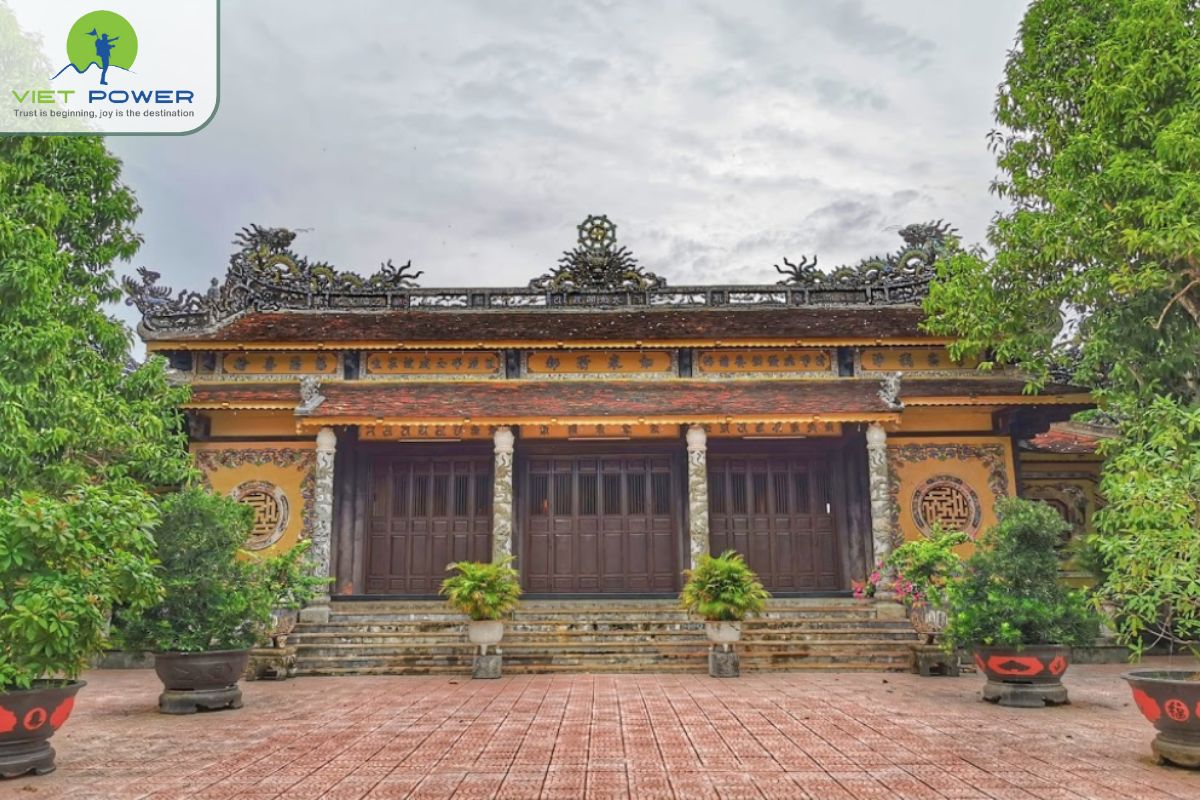
Traditional Hue layout: The pagoda follows the “Khau” (口)-shaped architectural plan, with the main hall at the front, guest and monastic houses on the sides, and a rear hall forming a peaceful enclosed courtyard.
What makes the Khau-shaped layout so calming? Its square, enclosed structure creates a natural sense of quiet, balance, and harmony.
Serene entrance and courtyard: Passing through the triple-arched gate, visitors enter a shaded courtyard filled with old trees and quiet pathways.
Main hall design: Built in the “double-roof, double-house” style, it features intricate ceramic mosaics, carved dragons, and classic Hue decorative motifs.
Travel tips for Bao Quoc Pagoda: Visit in the early morning for a serene atmosphere. A local guide can enrich your visit with stories about the pagoda’s role in monastic training and imperial culture.
You can find more posts related to this topic in the category below:
Moving into the cool highlands of Da Lat, Linh Phuoc Pagoda offers a striking contrast with its vivid colors and elaborate mosaic art, earning worldwide recognition. This is also one of the famous pagodas in Central Vietnam.
Built in 1949, the pagoda underwent major reconstruction in the 1990s under Venerable Thich Tam Vi. This renovation introduced the distinctive mosaic style that gave Linh Phuoc its nickname: “Chua Ve Chai” (Bottle Pagoda).
Explore more posts within this topic and uncover more of what Vietnam has to offer:
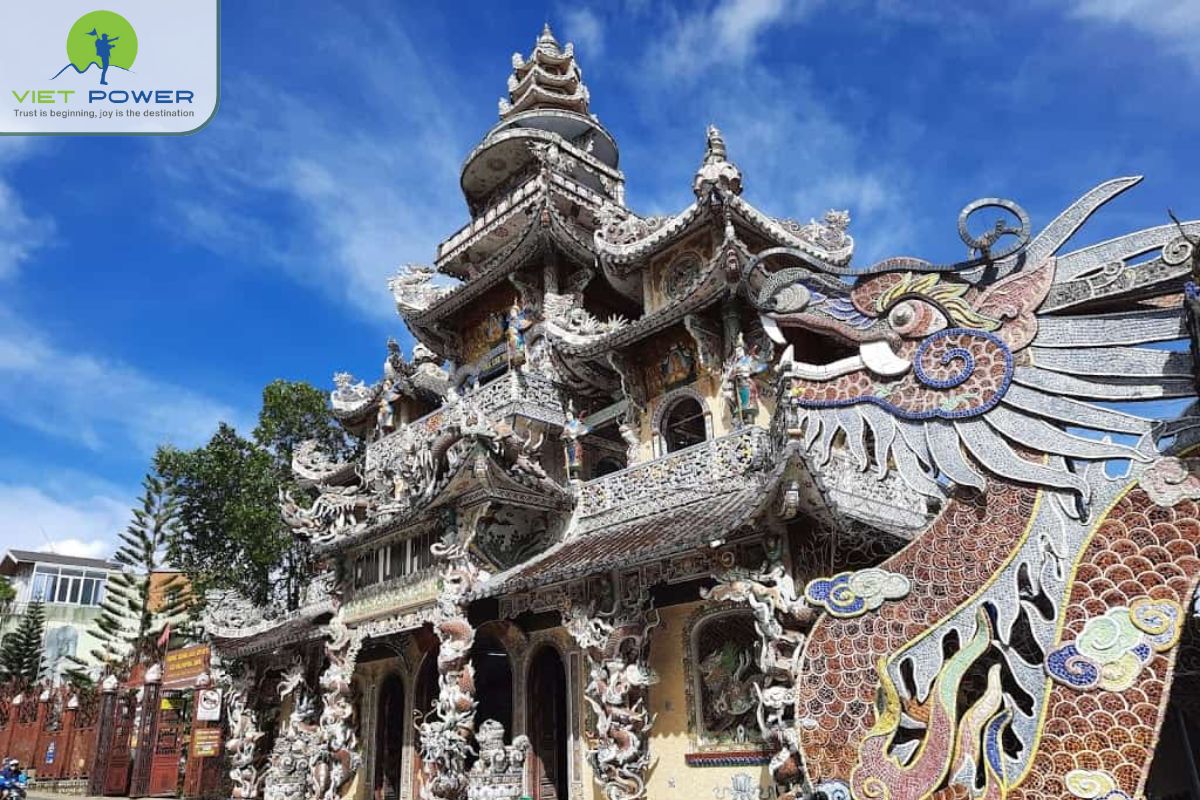
Art from recycled materials: Millions of small ceramic and glass pieces, broken dishes, bottles, and pottery fragments were collected by monks and locals to create the pagoda’s intricate surfaces.
What makes Linh Phuoc Pagoda so visually unique? It is built from millions of mosaic pieces made of broken glass, ceramic, and porcelain.
Why is Linh Phuoc Pagoda compared to an open-air art museum? Every wall, gate, and tower is covered in handcrafted mosaic details.
Impressive structures: The main hall, measuring 22m x 33m, is covered in dazzling mosaic artwork. The pagoda also features dragon statues, bell towers, and decorated corridors - all crafted from recycled materials.
How did locals contribute to the Linh Phuoc pagoda’s construction? Residents collected thousands of bottles and ceramic scraps that were recycled into the structure.
Record-holding temple: Linh Phuoc Pagoda is the most porcelain pieces used in a pagoda in Vietnam. This pagoda houses the tallest indoor concrete Buddha statue and the largest wooden zodiac-themed furniture set.
The pagodas of Central Vietnam form a vibrant tapestry of history, art, faith, and culture. From the imperial elegance of Thien Mu, the coastal serenity of Linh Ung, the scholarly spirit of Bao Quoc, to the creative brilliance of Linh Phuoc, each site reveals a different chapter of Vietnam’s spiritual heritage. Are you ready to explore Central Vietnam’s sacred locations? Contact Vietpower Travel to customize your journey through Hue, Danang, and Da Lat. Your spiritual adventure begins here.
Please kindly send us your ideas about the tours: destinations, attractions, your group, hotel class... we will get back to you with details & best offers quickly. Surely, you will feel satisfactory!
 |
 |
 |
 |
 |
 |

.jpg) Customize Your Trip
Customize Your Trip
 Vietnam
 Thailand
 Laos
Laos Indonesia
 Cambodia
 Myanmar
 Indochina Tours