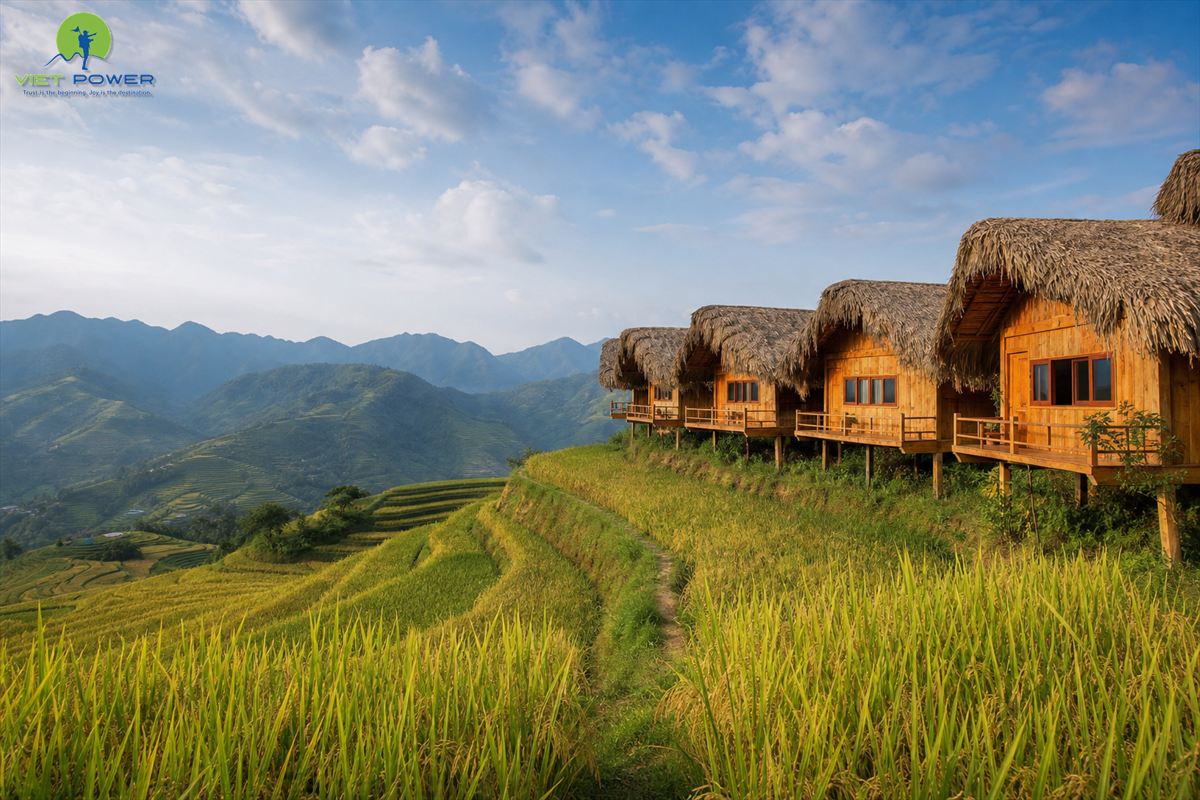
Vietnam's most spectacular rice terraces are in the far northern mountains. Sapa, Mu Cang Chai, Hoang Su Phi, Y Ty, Pu Luong and Bac Son turn golden from late August to October, usually peaking in September. These fields are hand-carved into steep mountainsides and usually produce a single crop a year, so their beauty follows a clear seasonal rhythm: mirror-bright when flooded in early summer, deep green through the growing months, and a breathtaking amber gold just before the harvest. This guide covers where to go, exactly when each area turns gold, and how to plan a trip around the light.
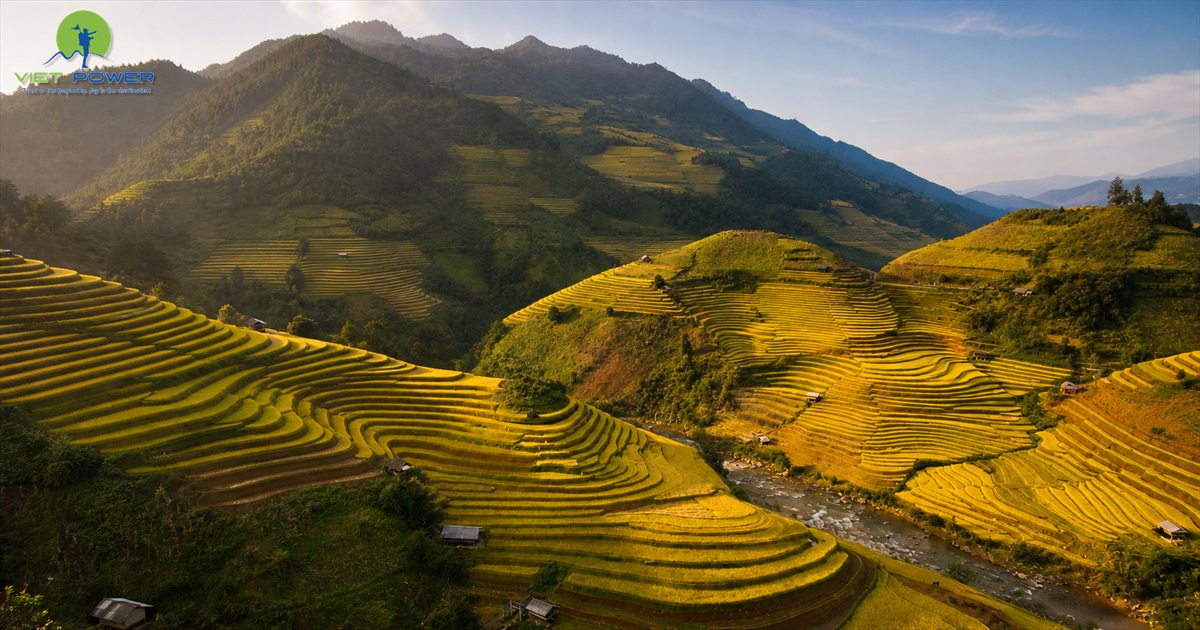
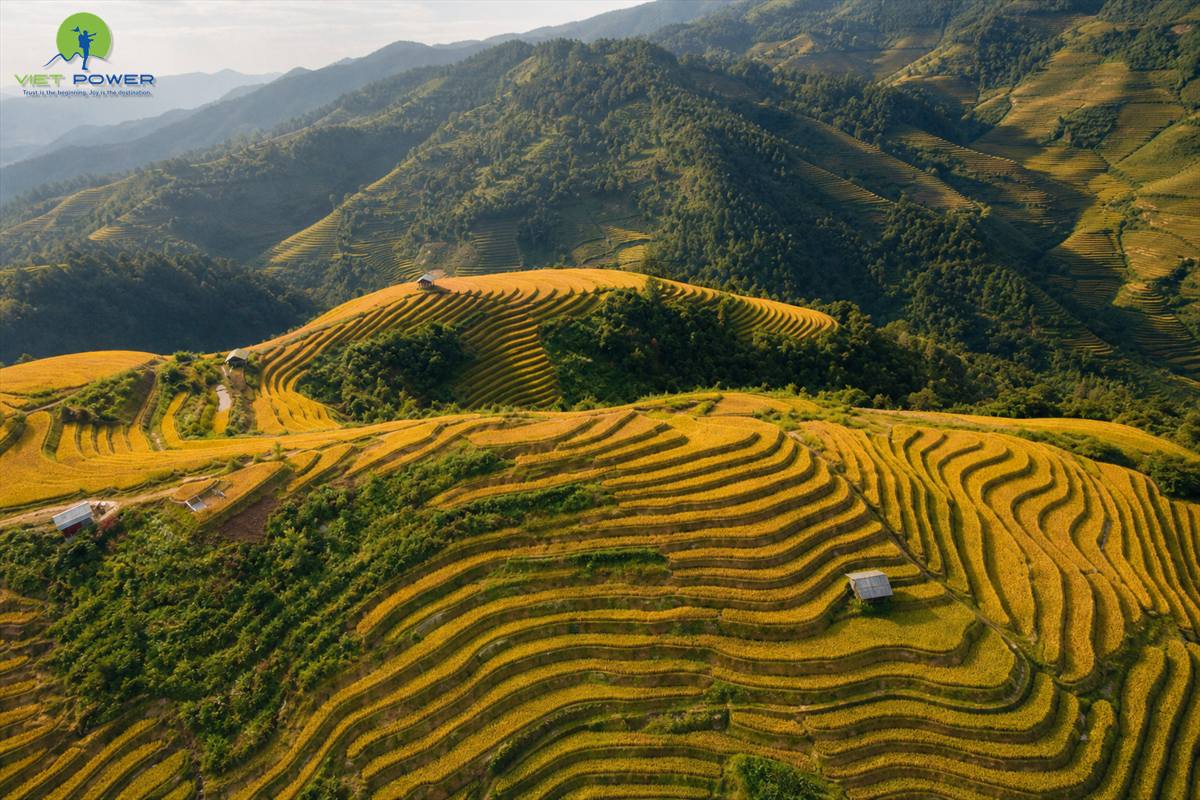
The short answer: the golden harvest season, roughly late August to October, with the peak in September. This is when ripening rice turns the terraces from green to luminous gold — the images that make northern Vietnam famous. The exact timing shifts by valley and altitude: lower, warmer valleys ripen first, and higher, cooler ones follow a week or two later, so the gold rolls across the mountains through September into early October.
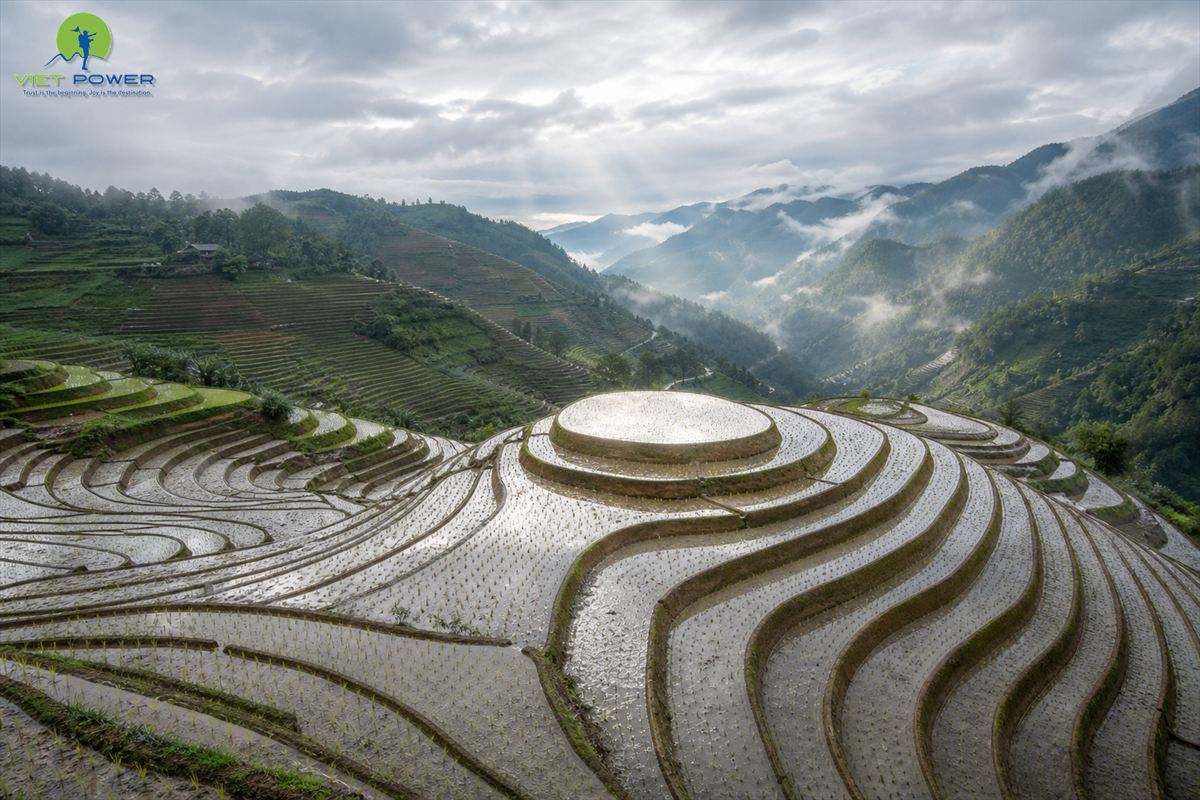
There is also a second, very different window. In May and June, farmers flood the terraces before planting, and the still water turns the paddies into giant mirrors reflecting the sky and mountains — the "water season." Which one is right for you depends on the photos and scenery you're after. Both are beautiful; only one is golden.
| Period | Stage | What you'll see |
|---|---|---|
| March–April | Preparation | Farmers working the land; terraces mostly bare |
| May–June | Water / "mirror" season | Flooded terraces reflecting the sky — mirror landscapes |
| July–August | Growing season | Lush, vivid green terraces |
| Late Aug–October | Golden harvest | Amber-gold terraces — the iconic season |
| November–February | Fallow | Empty, harvested fields; quiet and cold |
Because the golden window is short — often just two to three weeks in any given valley — it pays to plan ahead and, ideally, give yourself two full days on location so a foggy morning doesn't cost you your only sunrise.
The "golden season" is not a single date across the north. Here's how the main destinations line up, based on typical years:
| Destination | Golden season (typical) | Known for |
|---|---|---|
| Sapa (Muong Hoa Valley) | Mid-August – late September | Ripens earliest; easiest access |
| Mu Cang Chai | Mid-September – early October | Vietnam's most dramatic "gold waves" |
| Hoang Su Phi | Late September – early October | Remote, near-vertical terraces |
| Y Ty | Mid-September – early October | Misty, remote, few crowds |
| Pu Luong | Late Sept–Oct (also May–June) | Two crops; closest lush escape |
| Bac Son Valley | Around July and late Sept–Oct | Panoramic valley views near Hanoi |
If your dates are fixed, choose the destination that matches them rather than forcing the trip. Travelling in mid-September? Mu Cang Chai and Sapa are safe bets. Late September to early October? Add Hoang Su Phi for peak drama.
Want to match your dates to the best golden valley? Send us your travel dates on WhatsApp: +84 936 336 389.
Set in the Muong Hoa Valley in Lao Cai, Sapa is the most accessible terrace destination and the only one truly set up to trek right into the fields with a guide. It's the easiest choice for first-time visitors, with a good range of hotels, homestays and trails. Sapa's terraces tend to ripen earlier than the rest — from mid-August — so it's a strong pick for late-summer trips. Reachable by expressway and a train line to Lao Cai, it's also the simplest to combine with Hanoi.
In Yen Bai province, about 280 km west of Hanoi, Mu Cang Chai is widely considered Vietnam's most dramatic rice-terrace destination. Its fields cascade down slopes at 800–1,000 m, and in 2007 some 500 hectares across three communes were designated a National Heritage Site. The most famous viewpoints are around La Pan Tan (home of the celebrated Mam Xoi, or "Rice Ball" Hill), Che Cu Nha and De Xu Phinh. The golden season here runs mid-September to early October, and the Khau Pha Pass hosts the "Flying Over the Golden Season" paragliding festival.
In Ha Giang, Hoang Su Phi offers terraces etched into near-vertical mountainsides, often shrouded in mist. It's less touristy than Sapa or Mu Cang Chai and rewards travellers who want a raw, authentic experience among Dao and La Chi communities. Peak beauty is late September to early October. It's remote, so plan four to five days to do it justice.
Y Ty (Lao Cai) is a misty, remote alternative with very few crowds, golden from mid-September. Pu Luong (Thanh Hoa) is the closest lush escape from Hanoi, with a milder climate, two rice crops a year and "wow" windows in both May–June and September–October — ideal for a shorter, relaxed trip. Bac Son Valley (Lang Son) offers sweeping panoramic views from a hilltop and is one of the nearest terrace areas to Hanoi.
These are the two great windows, and they look completely different:
Between them, July–August brings vivid green terraces and the anticipation of the turn to gold — a beautiful, less-crowded time in its own right.
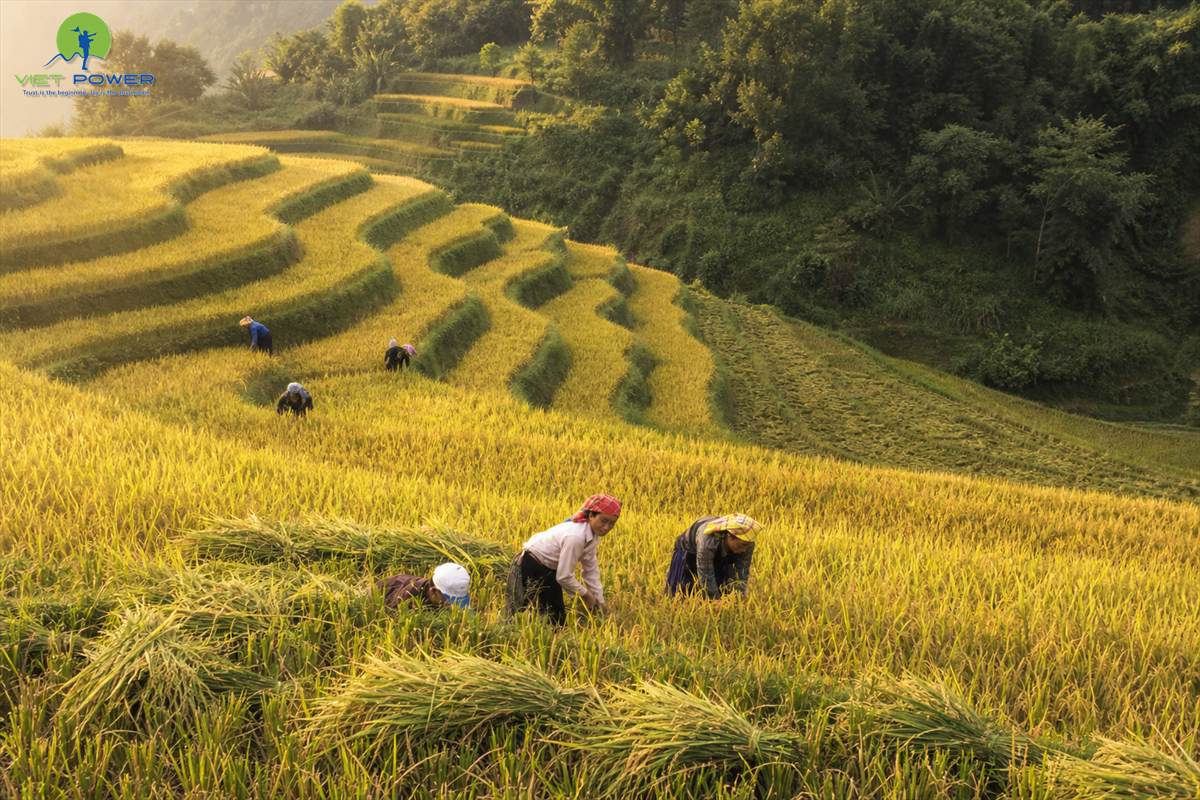
If you can travel only once, aim for the second half of September into early October. This is when the greatest number of valleys are golden at the same time, the weather in the northern mountains is cool and relatively clear, and harvest activity brings the landscape alive with people, colour and festivals. Higher, cooler valleys such as Hoang Su Phi peak slightly later, so late September to early October is the safest bet for a trip that includes them.
One caution: mountain weather is unpredictable, and fog can settle over a valley for a whole morning. Building in extra time — and being ready to shoot the moment the mist lifts — is the difference between a good trip and a great one.
All the main terrace areas radiate out from Hanoi. Approximate travel times by road:
| Destination | From Hanoi | Access notes |
|---|---|---|
| Pu Luong / Bac Son | ~3–4 hours | Closest; easiest short escape |
| Sapa | ~5–6 hours | Expressway; also train to Lao Cai |
| Mu Cang Chai | ~7–8 hours (≈280 km) | Best by private car or organised tour |
| Hoang Su Phi / Y Ty | ~7–9 hours | Remote; private transport recommended |
For the more remote areas, a private car or organised tour saves time and stress and gets you to the best viewpoints for sunrise and sunset — which is when the terraces are at their most magical.
First time, limited days, want to trek? Choose Sapa. Chasing the most dramatic "gold waves" for photography? Go to Mu Cang Chai. Want remote and authentic with few crowds? Hoang Su Phi or Y Ty. Short escape from Hanoi with green scenery and comfort? Pu Luong. Whatever you choose, timing is everything — match your dates to the valley that's gold when you travel.
If you'd like a northern Vietnam itinerary built around the harvest and the best light for your exact dates, our local team can plan it for you. See our northern Vietnam tours and Sapa tours, or tell us your dates on WhatsApp: +84 936 336 389.
For a closer look at specific areas by month, see our guides to Ha Giang in September (for Hoang Su Phi) and Mu Cang Chai / Yen Bai in September.
The golden harvest season, roughly late August to October and peaking in September, is the most beautiful time. For mirror-like flooded terraces, visit in May or June instead.
All in the northern mountains: Sapa, Mu Cang Chai, Hoang Su Phi, Y Ty, Pu Luong and Bac Son. Sapa is the easiest to reach; Mu Cang Chai is the most spectacular; Hoang Su Phi is the most remote and authentic.
Around May to June, farmers flood the terraces before planting. The still water reflects the sky and mountains, turning the paddies into natural mirrors — a favourite window for photographers who prefer reflections over golden fields.
Pu Luong and Bac Son are closest, at about 3–4 hours. Sapa is around 5–6 hours with good transport links. Mu Cang Chai, Hoang Su Phi and Y Ty are further and best visited by private car or organised tour.
Give yourself at least two full days at any terrace destination to allow for weather. The remote areas like Hoang Su Phi and Y Ty are most rewarding with four to five days.
Possibly, but it's a risk — higher valleys may already be harvested. For the safest chance of full golden scenery, aim for the second half of September into early October.
Please kindly send us your ideas about the tours: destinations, attractions, your group, hotel class... we will get back to you with details & best offers quickly. Surely, you will feel satisfactory!
 |
 |
 |
 |
 |
 |

.jpg) Customize Your Trip
Customize Your Trip
 Vietnam
 Thailand
 Laos
Laos Indonesia
 Cambodia
 Myanmar
 Indochina Tours