Exploring Son Doong Cave is one of the most remarkable experiences an adventure traveler can pursue. Recognized as the world’s largest cave passage by volume, Son Doong captivates visitors with colossal chambers, underground jungles, and a river system hidden for millions of years.
Let Vietpower Travel explains everything you need to know about the Son Doong cave map and exploration, what the inside looks like, camping details, ecosystems, connected caves, depth and mapping, and the full adventure experience.
Son Doong Cave is located in Phong Nha - Ke Bang National Park, a UNESCO World Heritage Site in Quang Binh Province, Vietnam. First discovered by local explorer Ho Khanh and later surveyed by British - Vietnamese speleologists, the cave measures over 9 kilometers in length and features chambers towering up to 200 meters high.
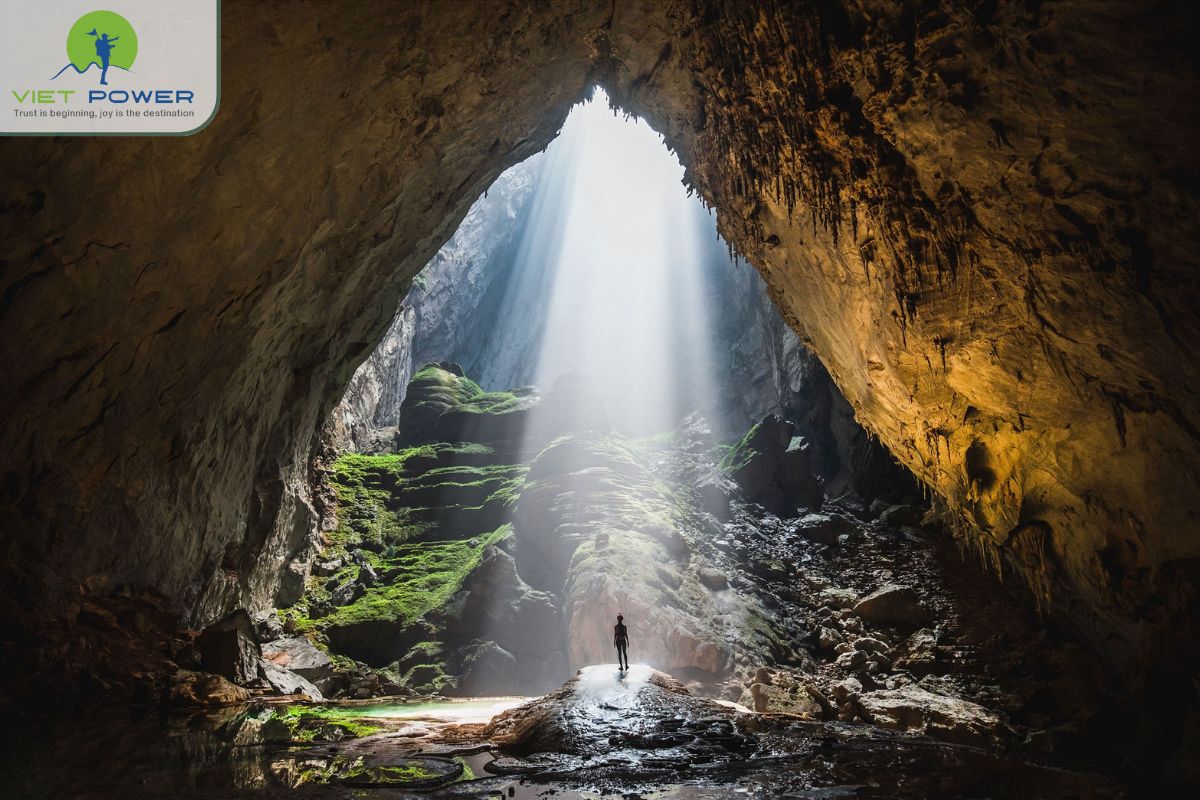
Exploring Son Doong Cave Vietnam is one of the most extraordinary adventures on Earth. This massive underground world challenges imagination with its towering chambers, ancient formations, and its own subterranean jungle. You can find all information you need in this post of Vietpower Travel!
Son Doong formed millions of years ago as an underground river carved through limestone. Over time, geological processes expanded the hollow, eventually creating the world-record-breaking cave we see today.
The creation of dolines-huge sinkholes where the ceiling collapsed - also played an important role. These openings allowed sunlight, rain, and wind to enter the cave.
As a result, a hidden jungle eventually grew inside. This is why Son Doong is one of the few caves in the world where an entire ecosystem thrives underground.
Even today, Son Doong continues to change. During the rainy season, the underground river becomes extremely strong. Water rises quickly and reshapes the cave floor.
New formations appear over time as minerals build up drop by drop. Stalagmites grow taller each year. Stone layers become smoother as water washes over them.
Because the cave is still developing, scientists call it a “living cave system.”
Because of Son Doong cave’s immense scale and complex internal structure, it requires careful mapping and regulated access.
The national park authorities allow only limited annual visitors through licensed operators. As a result, every expedition feels exclusive, highly organized, and deeply memorable.
Mapping helps scientists understand its internal passageways, dolines, hydrology, and fragile ecosystems. It also allows operators to design safe trekking routes.
While many areas are well documented, ongoing explorations still reveal new discoveries. This makes each expedition feel like a part of modern exploration history.
Continue exploring similar posts to learn more about Vietnam’s natural wonders. Our Vietnam nature category is filled with ideas and inspiration for your next adventure in the great outdoors.
Understanding the layout of Son Doong helps travelers visualize the journey. Although only trained speleologists have full access to mapping equipment, visitors can rely on detailed route plans created from official surveys.
Son Doong features a long main tunnel running through massive chambers. Two collapsed ceilings, known as Doline 1 and Doline 2, create skylights that allow sunlight to reach the floor. Between these dolines lie sandy beaches, underground rivers, and giant formations.
Explorers enter through a steep descent, walk along an underground river, cross boulder fields, and finally reach the dolines where green jungles thrive.
Main measurements of Son Doong cave:
These numbers confirm Son Doong as the world’s largest cave passage by volume.
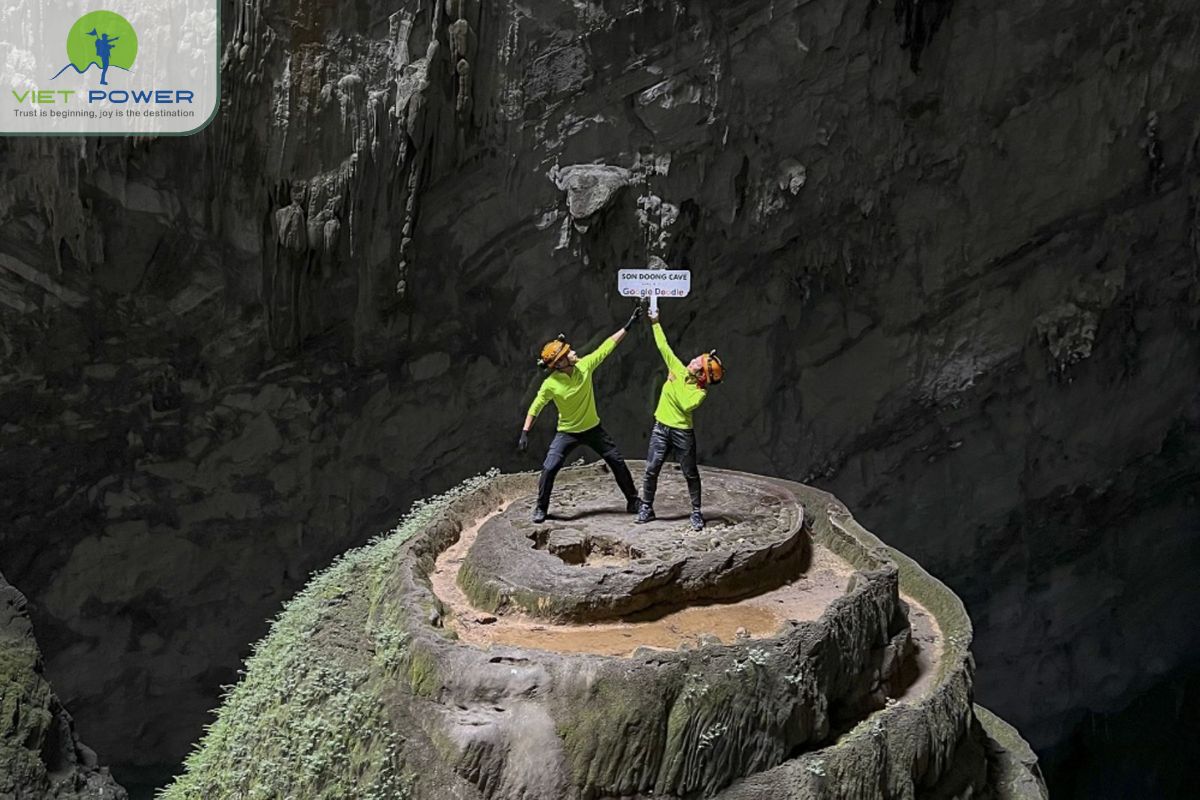
Expeditions follow a carefully established trail. Visitors trek from Phong Nha into the jungle, spend the first night in Hang En, then enter Son Doong the next morning.
The route includes river crossings, downhill rock scrambling, and climbs supported by safety guides.
Because the terrain changes with weather and river flow, guides always adjust the schedule to ensure safety. Mapping data helps crews prepare for seasonal shifts and water levels.
Continue exploring similar posts to learn more about Vietnam’s diverse landscapes and ecosystems:
Stepping into Son Doong is like entering a different world. Everything inside is oversized, surreal, and filled with natural contrasts.
The main passages inside Son Doong Cave are extremely large. Some chambers are almost 200 meters high and over 150 meters wide. A 40-story building could stand inside these spaces, so visitors often feel amazed the moment they enter.
Huge stalagmites rise from the ground, some reaching more than 70 meters. They formed as mineral-rich water dripped from the ceiling. Over many years, the minerals built up and created these impressive towers.
The walls also feature smooth flowstone formations. They look like frozen waterfalls shaped by mineral water that once flowed over the rock. When sunlight enters through the cave’s openings, the surfaces shine softly and create a dramatic scene.
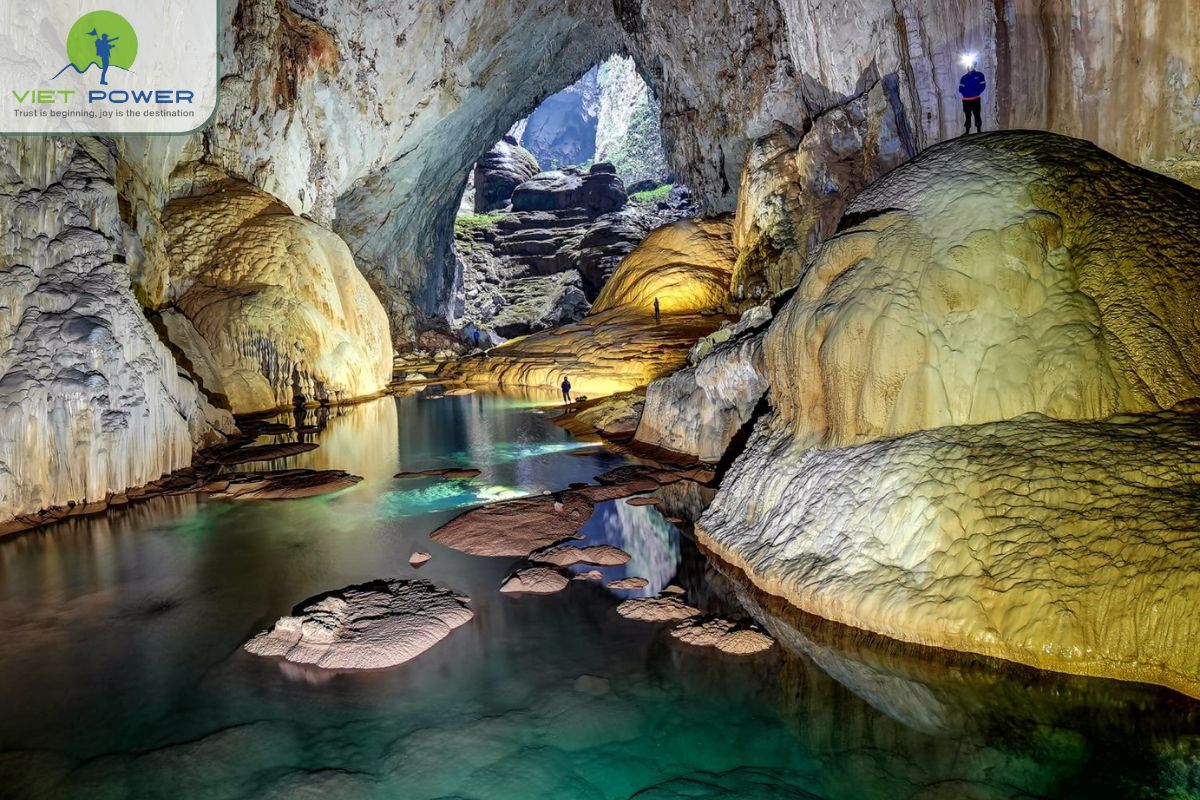
Doline 1 and Doline 2 allow sunlight, wind, and rain to enter. As a result, lush vegetation grows beneath each skylight, creating two underground jungles.
These patches of green are some of the most photographed areas in the cave. Sunbeam shafts cut through the mist on sunny days, making the scenery look almost mythical.
Are the skylights natural or man-made? The skylights, called dolines, are natural collapsed sections of the cave’s ceiling. Over thousands of years, erosion and structural weakening created openings that now let sunlight into the cave.
Inside the cave, travelers walk across sandy banks known as “cave beaches.” They also follow an underground river, which shapes the cave’s path.
Pools of emerald water appear in several sections, reflecting light from headlamps and skylights. The mixture of sand, stone, jungle, and water makes every section visually different.
Son Doong Cave Has Its Own Weather System: Because of its enormous size, Son Doong can create its own micro-weather. Under certain conditions, clouds and fog form inside the cave when warm air from the skylights mixes with the cool underground atmosphere.
Visitors often see mist drifting across chambers or rising toward the ceiling, giving the cave an unreal, otherworldly appearance.
If you’re inspired to see Vietnam your own way, Vietpower Travel is here to create a journey that fits you perfectly.
Son Doong is not just a geological marvel. It is also a biological treasure.
The two dolines create isolated ecosystems that behave like miniature rainforests. Plants such as ferns, mosses, and tropical shrubs thrive here.
These areas develop under distinct microclimates formed by sunlight, humidity, and airflow. The environment changes throughout the day, creating mist or light clouds inside the cave.
Son Doong’s Underground Jungle Has Tree-Sized Plants: The dolines provide enough light and rain for an entire ecosystem to flourish underground. Some of the trees and plants are tall enough to resemble a mini-forest.
Due to the cave's isolation, this “lost world” develops independently from the jungle above, allowing scientists to study unique adaptations.
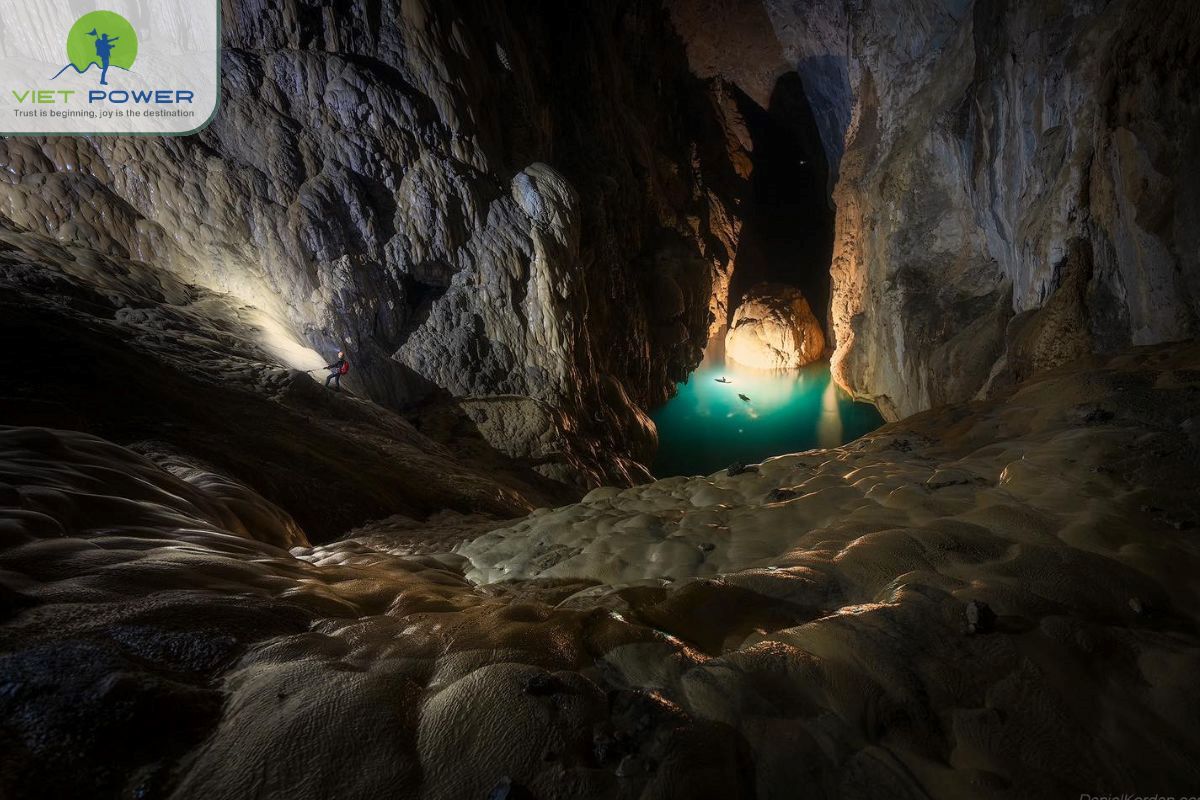
The wildlife inside Son Doong Cave is limited but unique. Only certain species can survive in the dark and humid environment.
Near the entrances, bats often appear because they can navigate easily with light and airflow. They use these areas for resting and feeding, and their presence shows that the cave connects closely with the outside ecosystem.
Deeper into the cave, the animals become smaller and more specialized. Insects and other invertebrates live in the darker zones.
They include spiders, beetles, and tiny crustaceans that adapt to life without sunlight. These creatures use their senses of touch and vibration to move around. Scientists continue to explore these areas, and they believe the cave may still hide undiscovered or rare species.
Let’s explore more posts on this topic to discover even more about Vietnam’s natural beauty:
Son Doong is part of the vast Phong Nha - Ke Bang cave network, one of the largest karst systems in the world.
People wonder: Could Son Doong be part of an even larger cave system? Researchers believe there may be deeper or hidden connections that could expand the known system. Further surveys are required to confirm this.
Several important caves sit close to Son Doong Cave, and they form one of the most impressive cave systems in the world. Nearby caves include Hang En, Hang Thung, and Hang Va. Each of them lies within the same limestone massif. This means they share similar geological origins and developed through the same natural processes.
These caves highlight how rich and diverse the entire Phong Nha-Ke Bang region is. When travelers explore Son Doong Cave, they often discover that the surrounding caves add even more depth to the adventure.
Is Son Doong Cave physically connected to Hang En? They are part of the same karst area but not directly connected by a walkable passage. Travelers move between them through jungle routes
The caves around Son Doong Cave connect through a complex network of underground rivers. Water flows beneath the limestone, and over millions of years, it carved many of the passages that visitors explore today. These rivers shape the caves constantly, especially during the rainy season.
When heavy rains arrive, water levels rise and move through different systems. Some rivers even flow between caves, which helps explain why Son Doong and its neighbors share similar features. At times, the increased water pressure can open new cracks or widen existing tunnels. This process continues to expand the underground network.
Did you Know?
Scientists Believe Son Doong May Connect to an Even Larger Cave: During recent surveys, divers discovered a flooded tunnel that may link Son Doong to Hang Thung Cave. If this connection is confirmed, the combined system could surpass existing records and potentially become the largest known cave system in the world.
Son Doong Cave is one of Vietnam’s greatest natural wonders. Its massive chambers, underground jungles, and ancient formations make it a destination unlike any other. To start planning your journey to Quang Binh, contact our team today. Let Vietpower Travel help you experience the world’s largest cave in the safest and most immersive way possible.
Please kindly send us your ideas about the tours: destinations, attractions, your group, hotel class... we will get back to you with details & best offers quickly. Surely, you will feel satisfactory!
 |
 |
 |
 |
 |
 |

.jpg) Customize Your Trip
Customize Your Trip
 Vietnam
 Thailand
 Laos
Laos Indonesia
 Cambodia
 Myanmar
 Indochina Tours