What to eat in Ha Giang is a question every traveler should ask before exploring Vietnam’s northern highlands. From Thang Co, Au Tau porridge, Dong Van steamed rice rolls, sour pho, Men Men, and buckwheat cake to smoked buffalo meat and corn wine, Ha Giang local food reflects mountain life, ethnic minority culture, cold-weather flavors, and highland ingredients.
With Vietpower Travel, travelers can enjoy a deeper Vietnam travel experience through well-planned Ha Giang tours, trusted local routes, ethnic market visits, homestay meals, and authentic food stops in Dong Van, Meo Vac, Quan Ba, and Du Gia.
If you are wondering What to eat in Ha Giang, start with these local dishes. They reflect Ha Giang local food, ethnic minority culture, mountain ingredients, and the cold-weather flavors of the Northern Highlands.
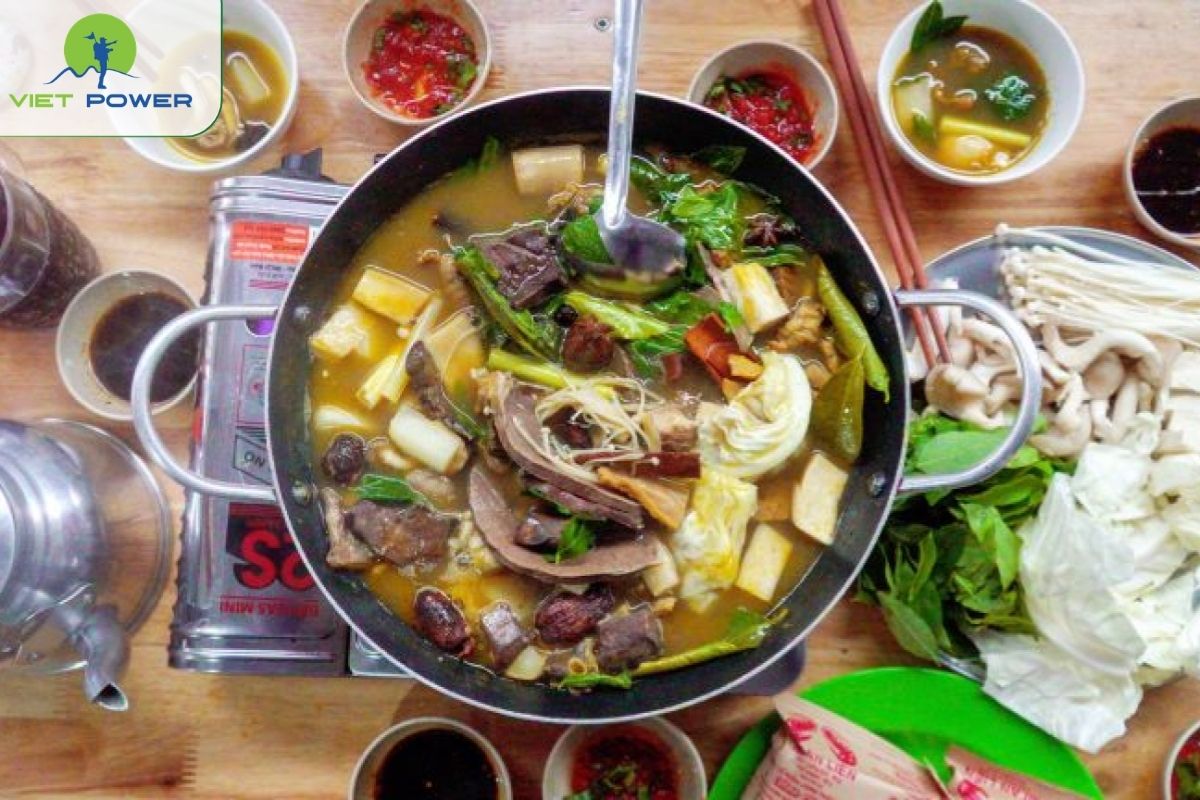
Thang Co is a traditional Hmong stew made from horse, beef, buffalo, or pork with internal organs and mountain spices. It has a strong aroma, rich broth, herbal flavor, and warming taste. This is one of the most cultural Ha Giang specialties, often enjoyed hot with corn wine at local markets.
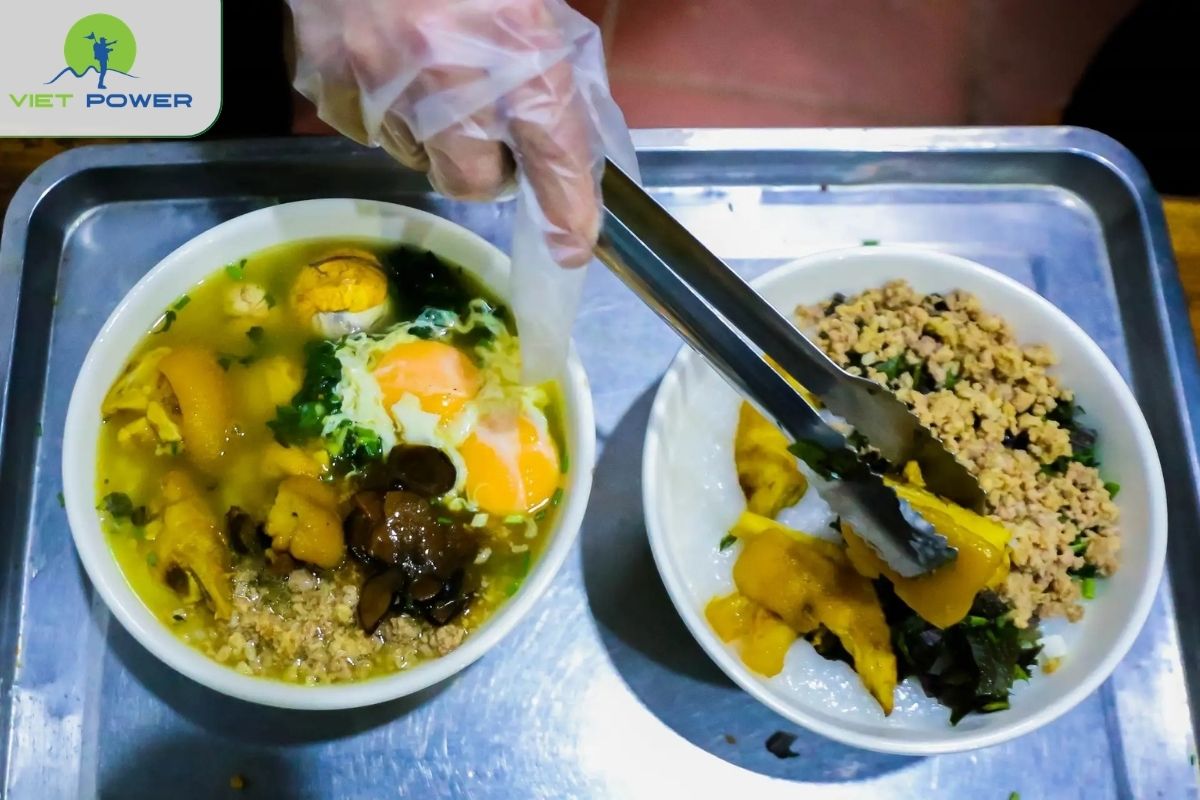
Au Tau porridge is made from processed Au Tau root, rice, pork broth, minced meat, egg, pepper, and herbs. It has a slightly bitter taste, creamy texture, and warm aftertaste. Raw Au Tau root is toxic, so travelers should only eat this dish at trusted local restaurants.
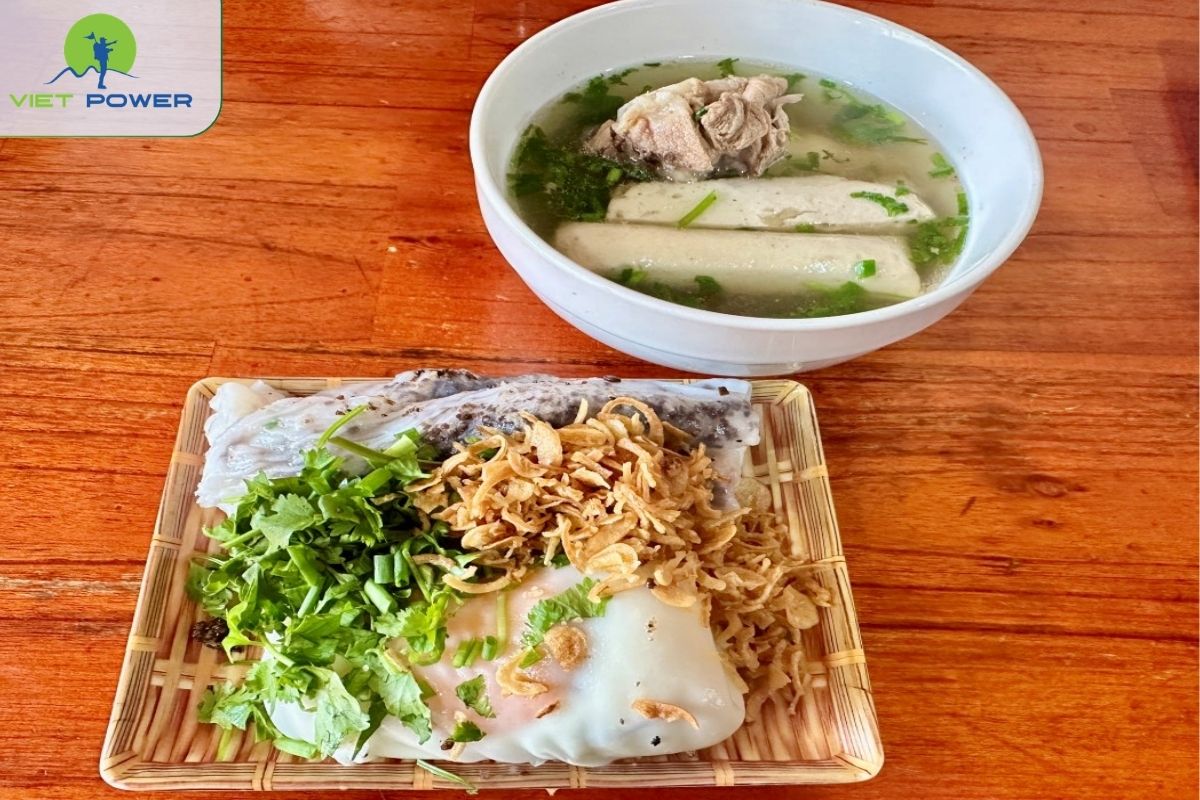
Dong Van steamed rice rolls are different from Hanoi-style bánh cuốn. Instead of fish sauce, they are served with hot bone broth, fried shallots, herbs, pepper, and sometimes egg. This is one of the easiest Dong Van local food dishes for first-time travelers.
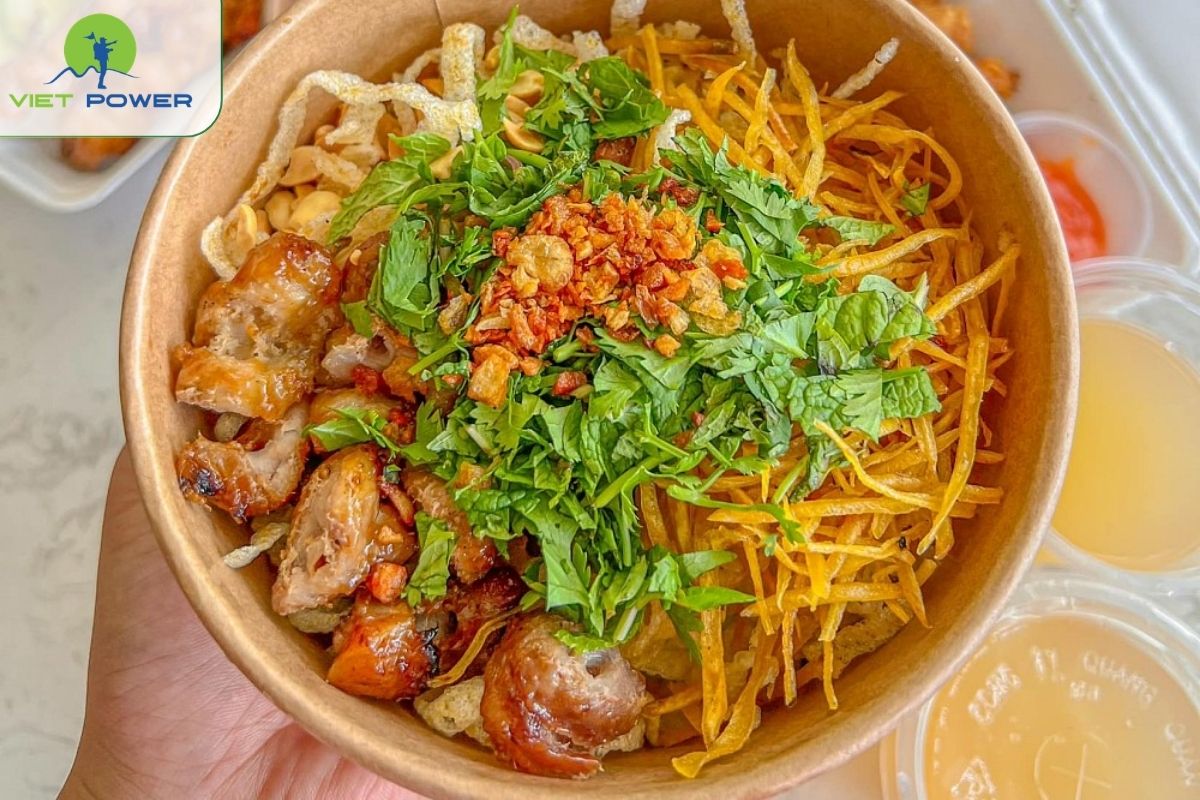
Sour pho is a sweet-sour noodle dish with rice noodles, vinegar-based sauce, roasted duck or pork, sausage, peanuts, papaya, cucumber, and herbs. It is lighter and easier to eat than stronger mountain dishes.
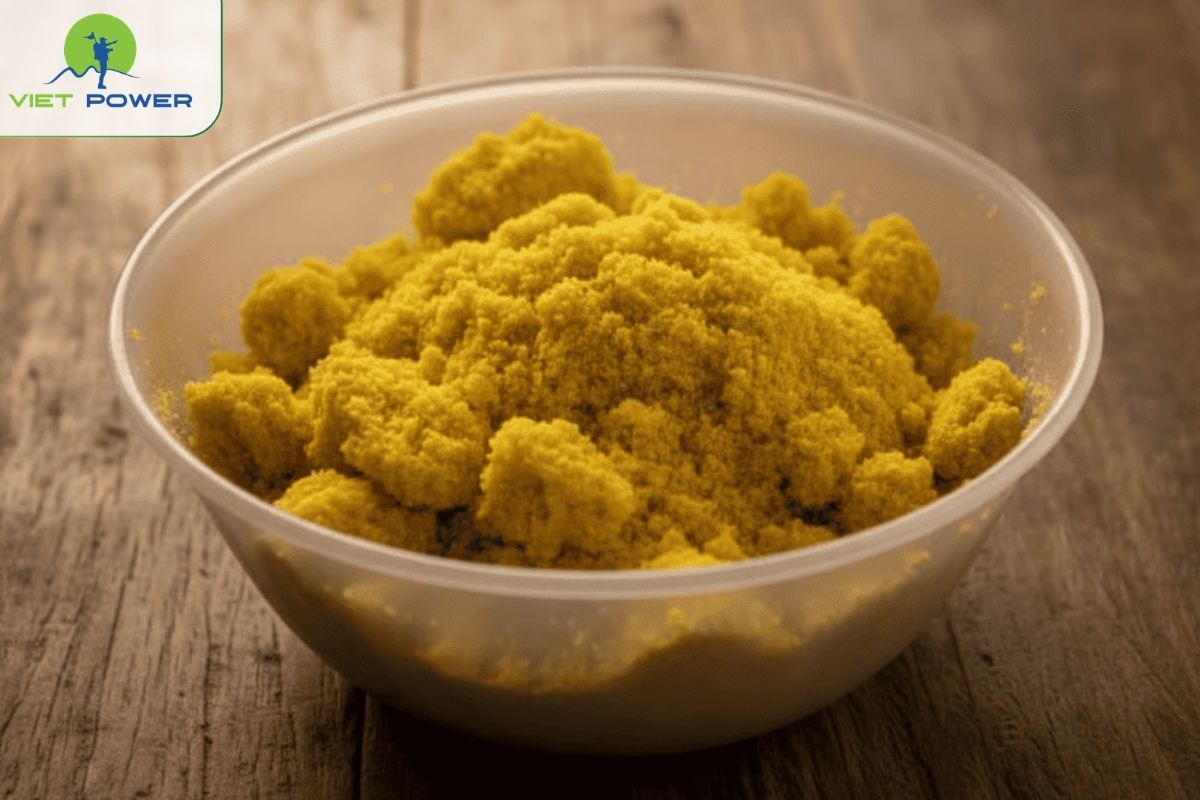
Men Men is steamed cornmeal made from local corn. It is one of the most typical local corn based dishes and reflects Hmong food culture in Ha Giang. The taste is mild, earthy, slightly sweet, and best eaten with soup, meat, or Thang Co.
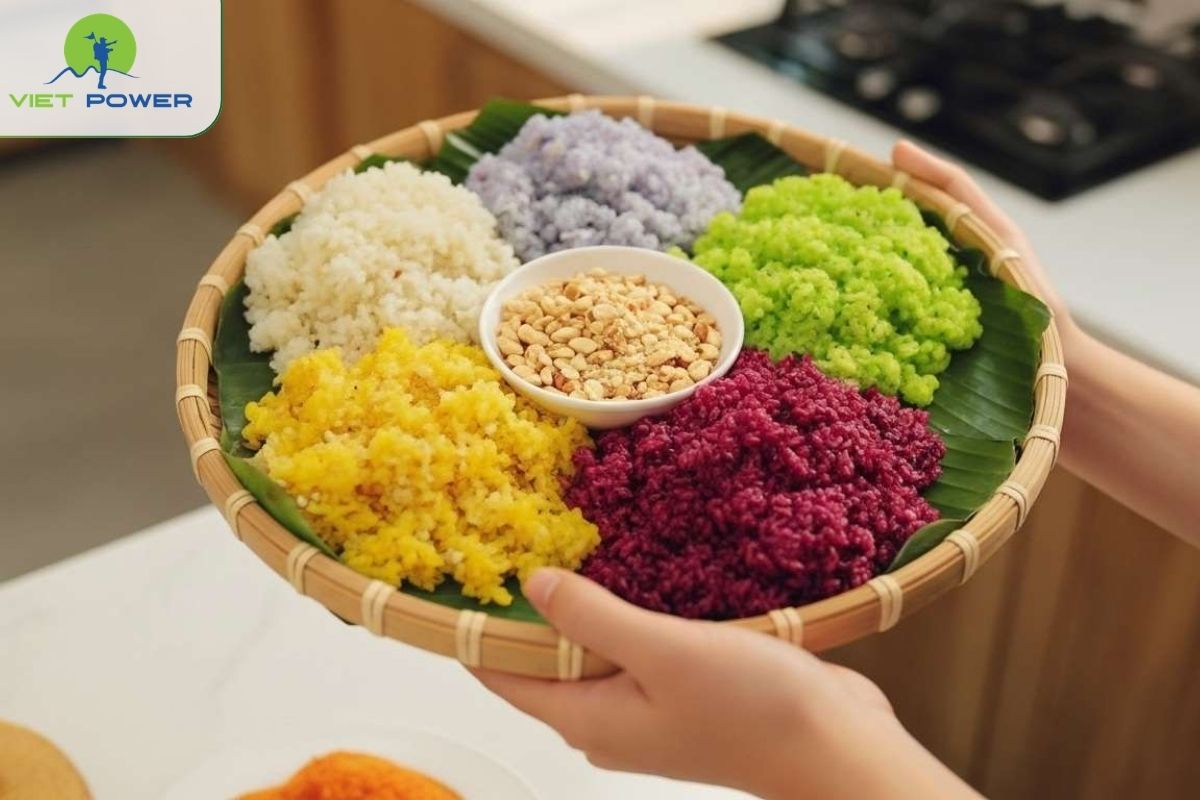
Five-color sticky rice is made from sticky rice colored naturally with forest leaves and roots. The colors represent the five elements and are strongly connected with Tay cuisine and festival meals.
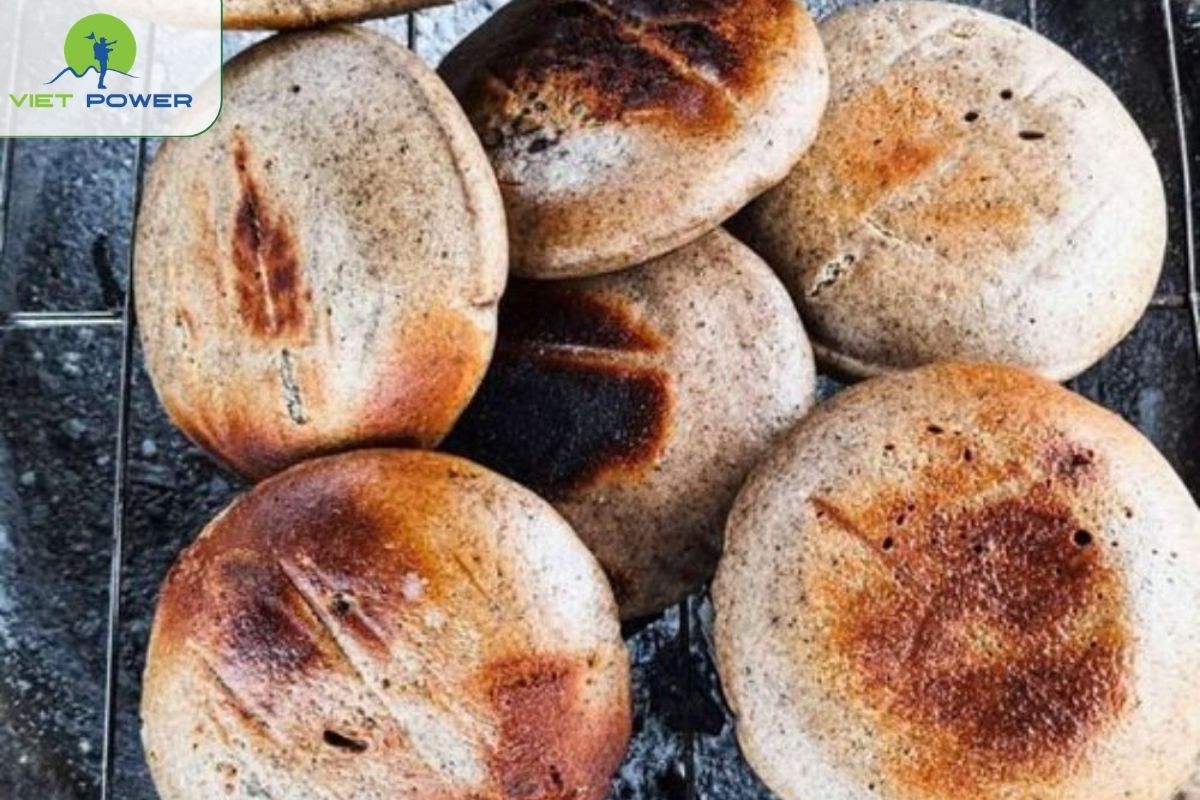
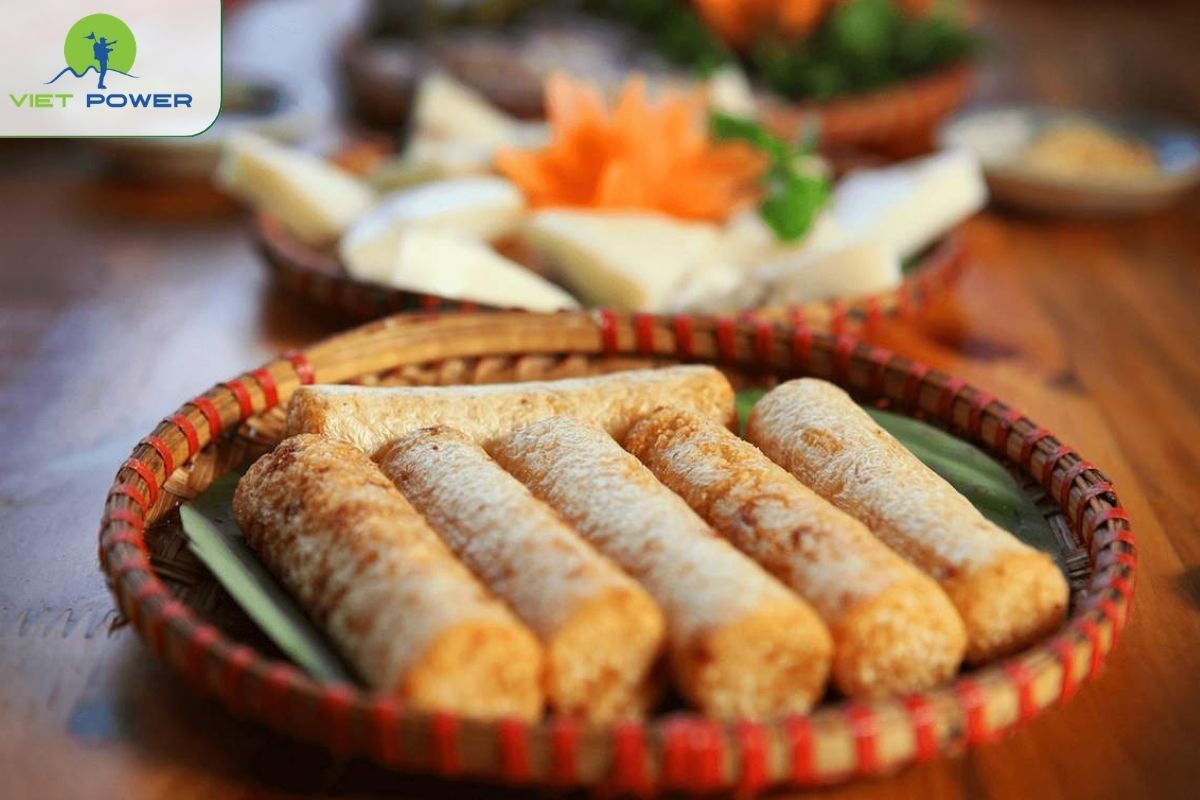
Buckwheat cake is made from buckwheat seeds, then steamed or grilled. It has a nutty, mildly sweet, rustic flavor. This snack is popular during buckwheat flower season from October to November.
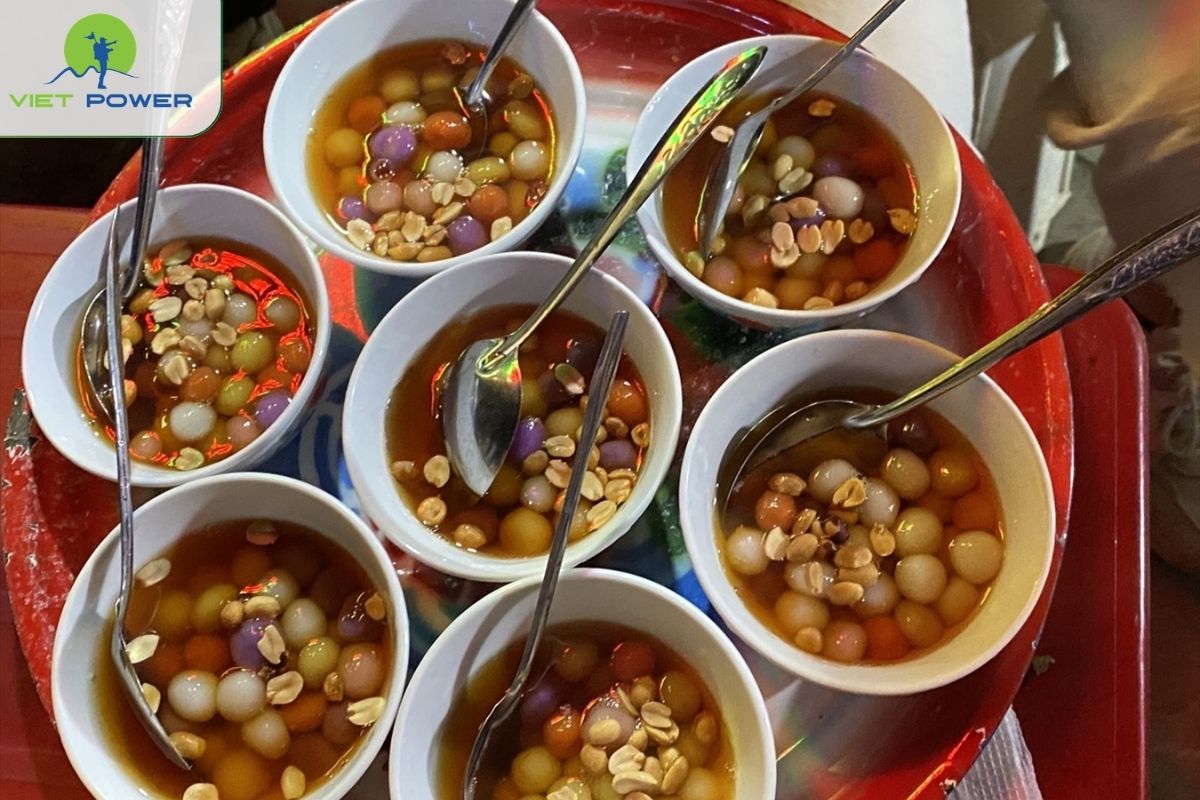
Thang Den is a warm dessert made from sticky rice balls served with ginger syrup, coconut milk, peanuts, and sesame. It is soft, sweet, nutty, and perfect for cold nights in Dong Van.
Bac Me bamboo rice is sticky rice cooked inside bamboo tubes over fire. It has a smoky, fragrant, slightly sweet taste and pairs well with grilled chicken, grilled pork, or sesame salt.
Grilled moss is a unique Tay dish made from cleaned stream moss mixed with ginger, garlic, Mac Khen, herbs, and spices, then wrapped in leaves and grilled. It has a smoky, herbal, earthy taste and is one of the most unusual dishes in Ha Giang.
You can find more posts related to this topic in our Vietnam food & cuisine category. Explore traditional dishes, street food highlights, and insider recommendations for your next culinary journey.
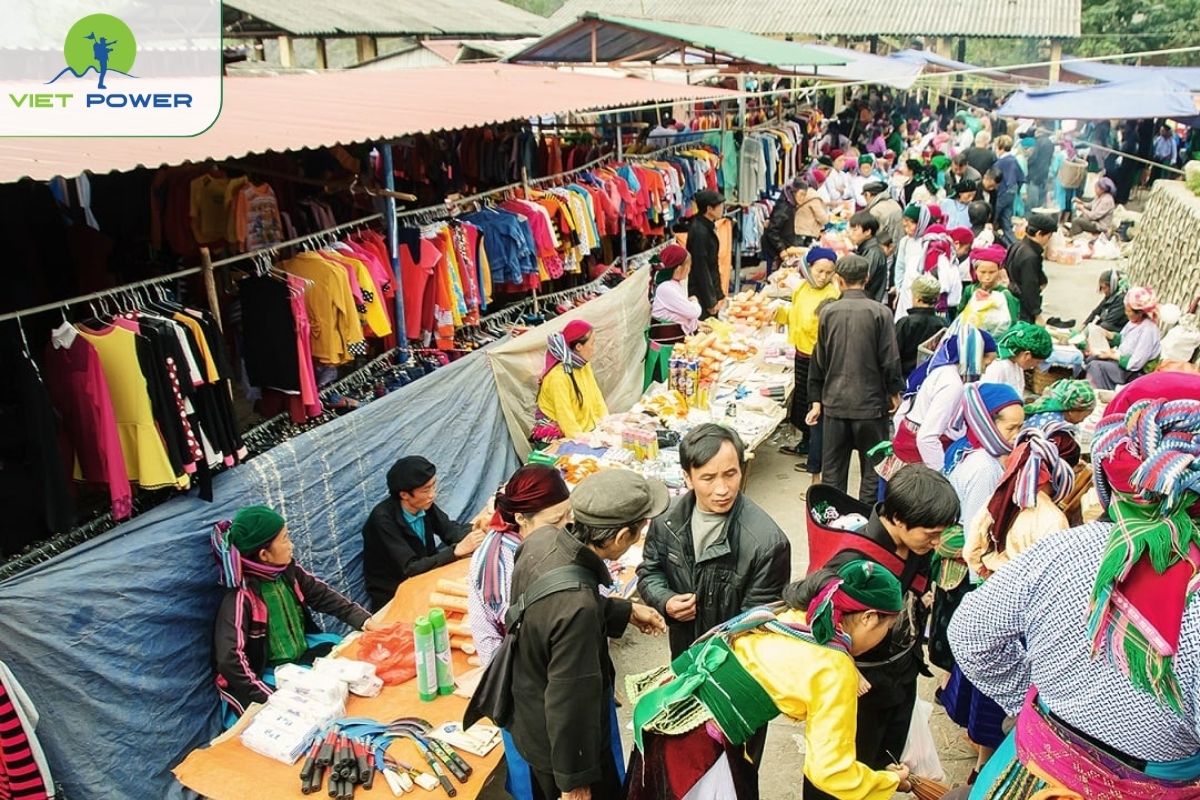
Yes, travelers can find many local markets in Ha Giang to taste real mountain dishes. These markets are cultural meeting points where Hmong, Tay, Dao, and Lo Lo communities trade goods, eat breakfast, drink corn wine, and share traditional food in Ha Giang. For a deeper Ha Giang Food experience, markets are often more memorable than regular restaurants.
Dong Van Market is a great place to try Dong Van market food in the early morning. Popular choices include sour pho, buckwheat cake, five-color sticky rice, corn wine, breakfast noodles, and smoked meats. The market is most lively on Sunday morning, when local people from nearby villages gather to trade and eat.
Traveler tip: Arrive before 8:00 AM, bring cash, and try small portions from different stalls.
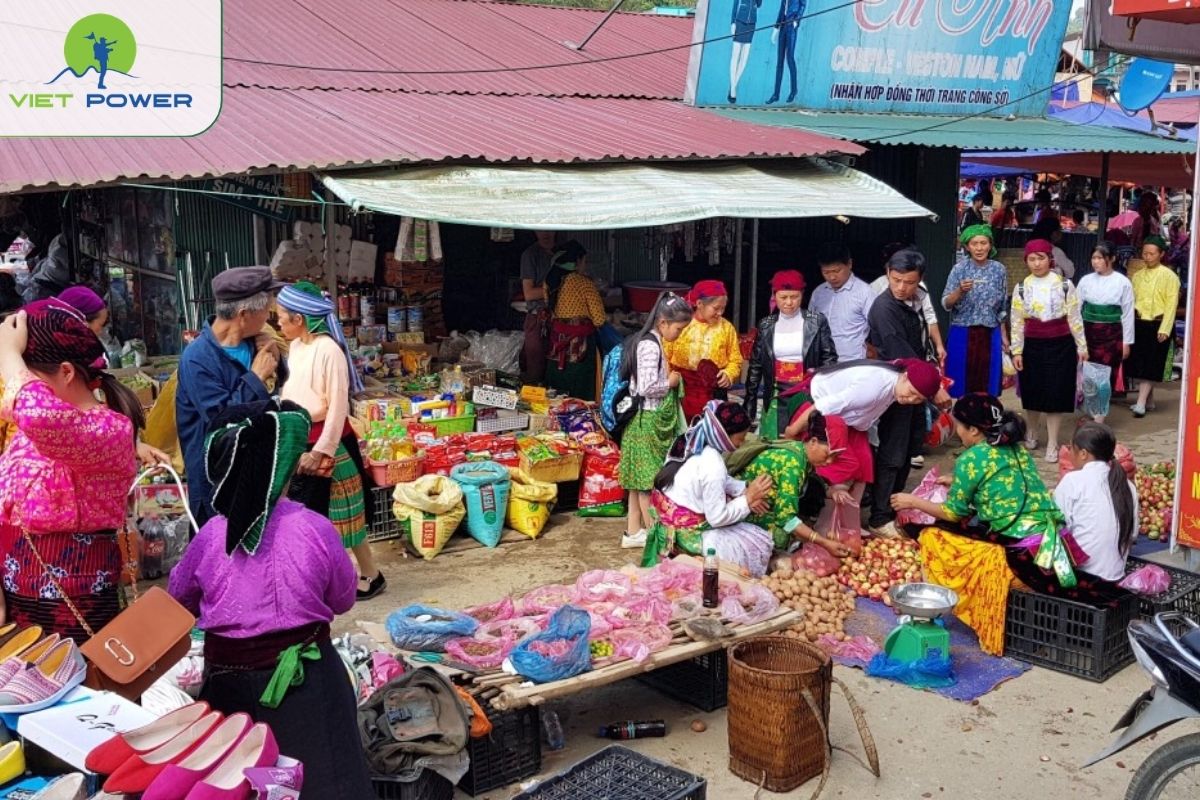
Meo Vac Sunday Market offers a stronger highland food experience. Signature Meo Vac market food includes Thang Co, Men Men, grilled meat, corn wine, and simple local breakfast dishes. The livestock area also adds a raw, authentic mountain-market atmosphere.
Traveler tip: Try grilled food or sticky rice first, then order a small bowl of Thang Co if you want a bolder flavor.
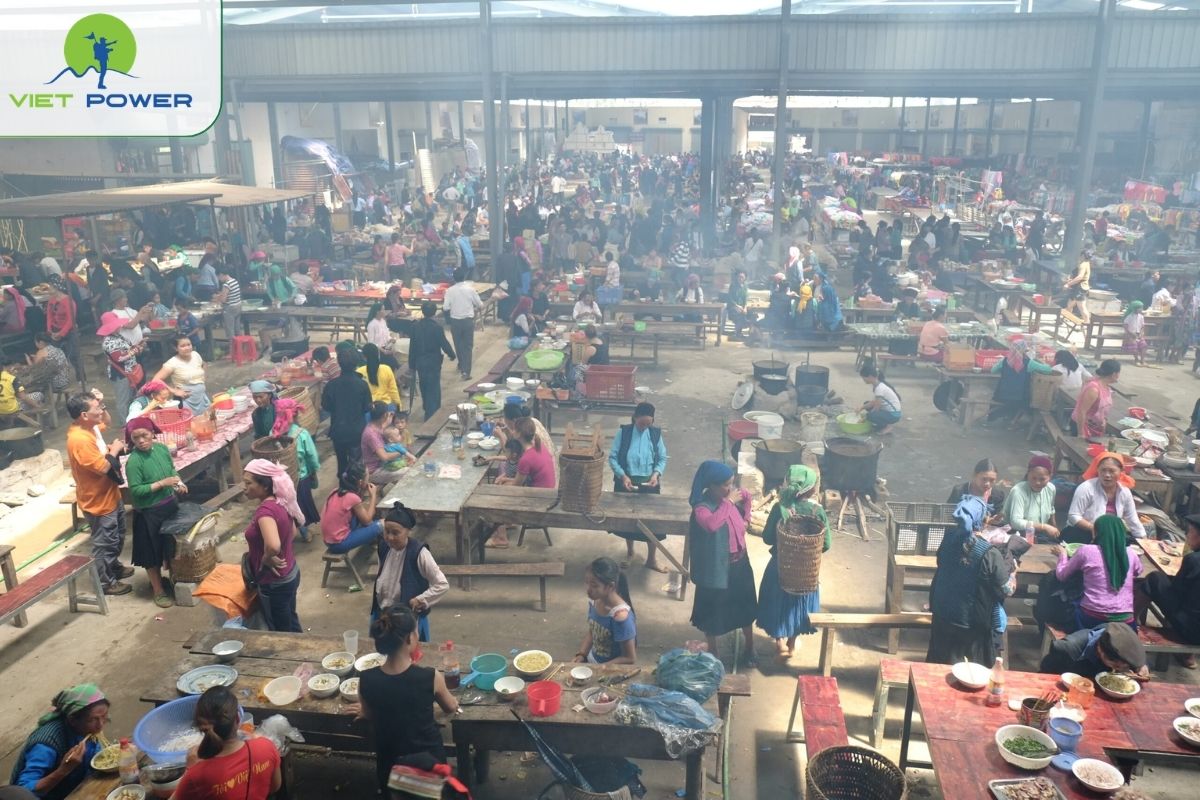
Highland receding markets, or chợ lùi, follow a rotating local schedule instead of a fixed weekly date. These markets are less touristy and often feature Men Men, grilled moss, local pork, corn wine, wild vegetables, and smoked meats.
Traveler tip: Ask your homestay or local guide about the exact market date before visiting.
You can find more posts related to this topic in the category below:
Yes, Ha Giang food vs Hanoi food is clearly different in taste, ingredients, and eating culture. Hanoi cuisine is often lighter, cleaner in flavor, and shaped by urban street food traditions. In contrast, Ha Giang mountain cuisine is smoky, warming, earthy, and rich in herbal mountain flavors, reflecting the cold climate, rocky highlands, ethnic markets, and homestay meals of the Northern Highlands.
|
|
|
|
|
|
|
|
|
|
|
|
|
|
|
|
|
|
|
|
|
|
|
|
|
|
|
|
Food souvenirs from Ha Giang are easy to carry and full of Northern Highland flavor. Travelers can choose smoky meats, seasonal cakes, local drinks, honey, and tea as meaningful gifts after a Ha Giang Loop trip. These Ha Giang specialties also help visitors bring home the taste of mountain markets, ethnic kitchens, and local farming traditions.
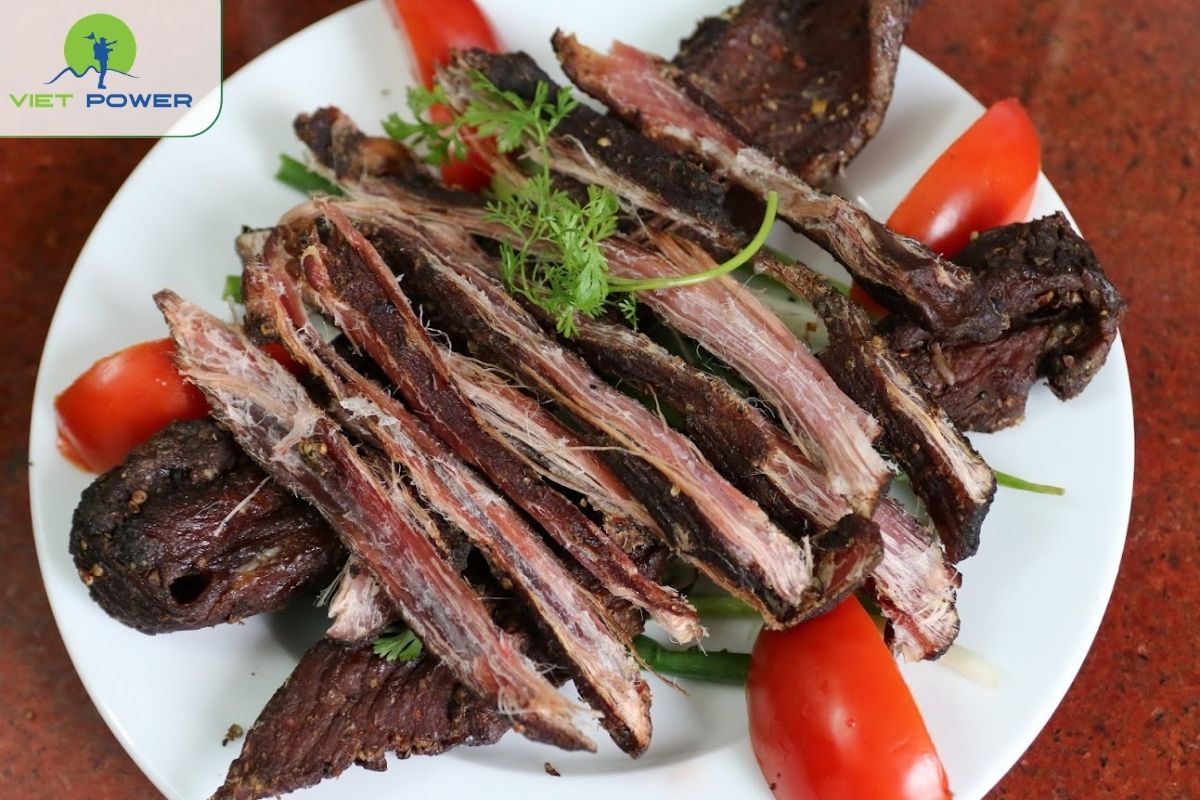
Smoked buffalo meat is one of the most popular traditional smoked meats in Ha Giang. The meat is marinated with Mac Khen, chili, ginger, and garlic, then dried above the kitchen fire until it becomes dark, chewy, smoky, and slightly spicy.
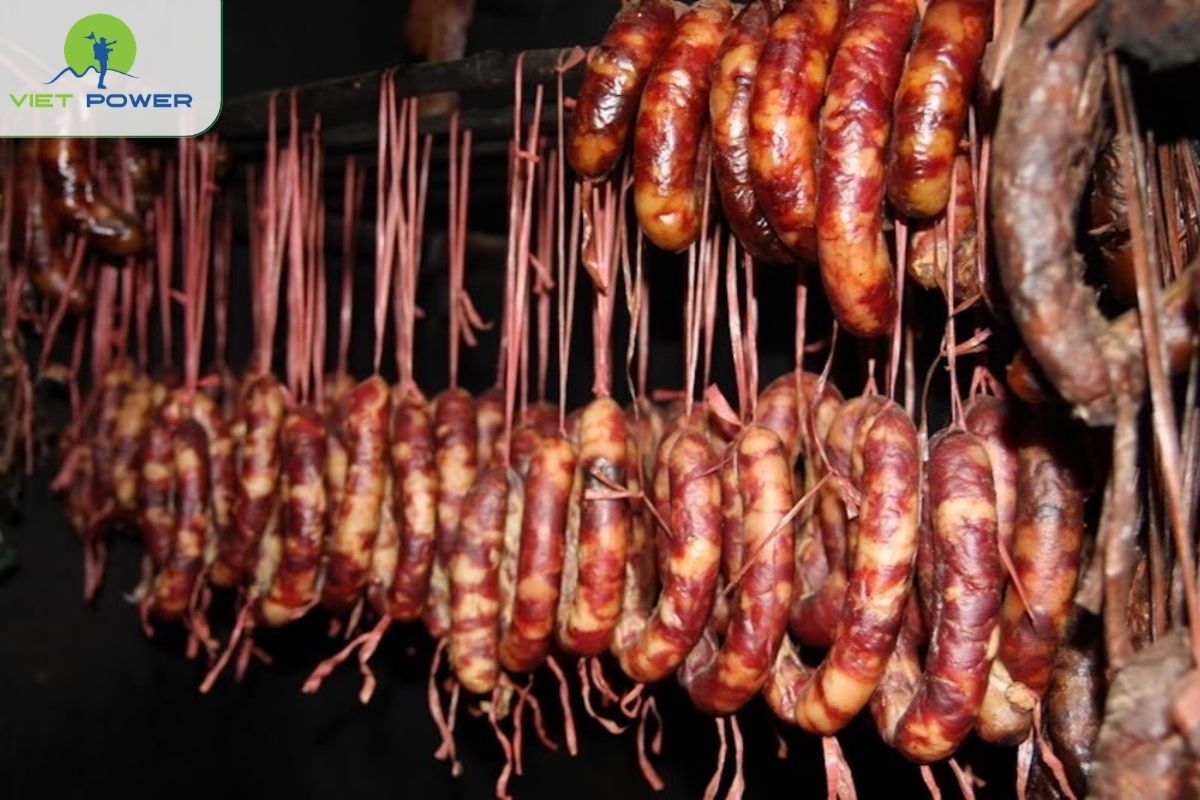
Ha Giang smoked sausage is made from local pork, mixed with Mac Khen, ginger, wine, and highland spices before being hung above the fire. It has a fragrant smoky taste, a rich pork flavor, and a slightly fatty texture.
Buckwheat cake is a good gift for travelers visiting during buckwheat flower season. It is made from buckwheat seeds and has a mild nutty taste, soft texture, and rustic mountain aroma.
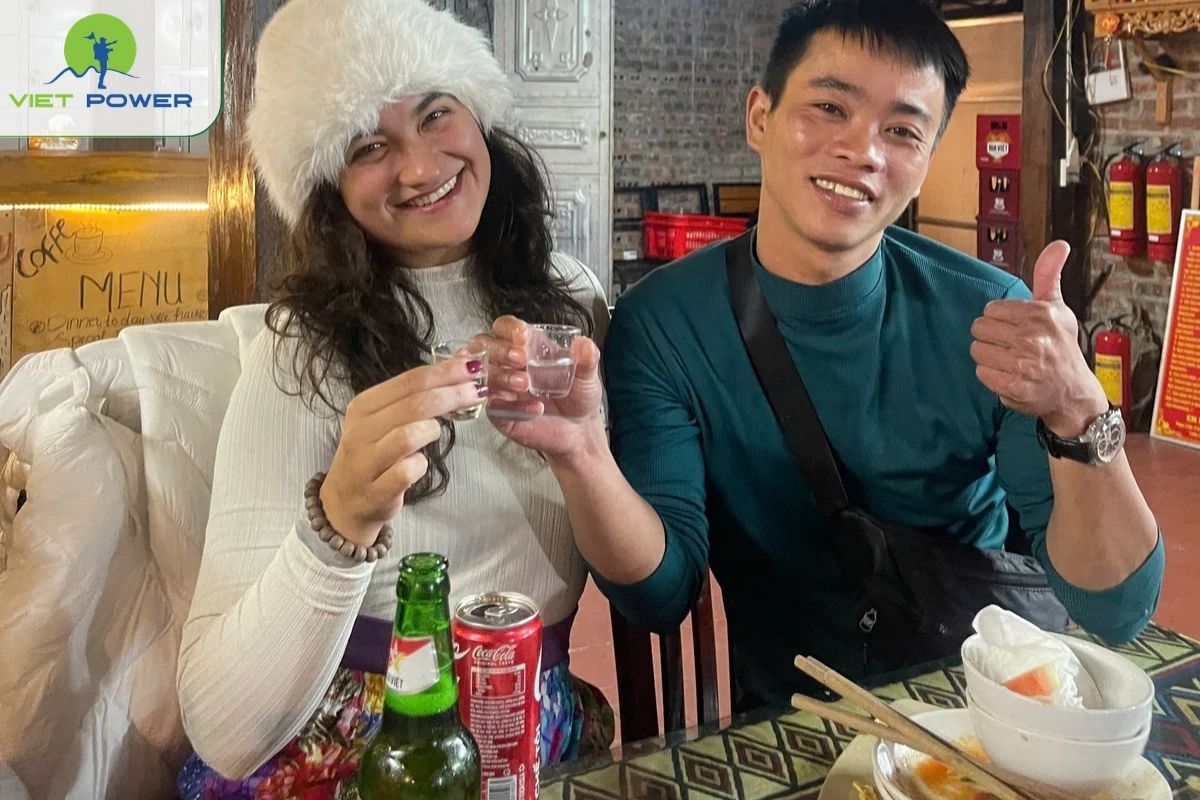
Corn wine is a cultural drink of the Northern Highlands, often shared at markets, homestays, and local meals. It is made from mountain corn and traditional leaf yeast, giving it a warm, fragrant taste.
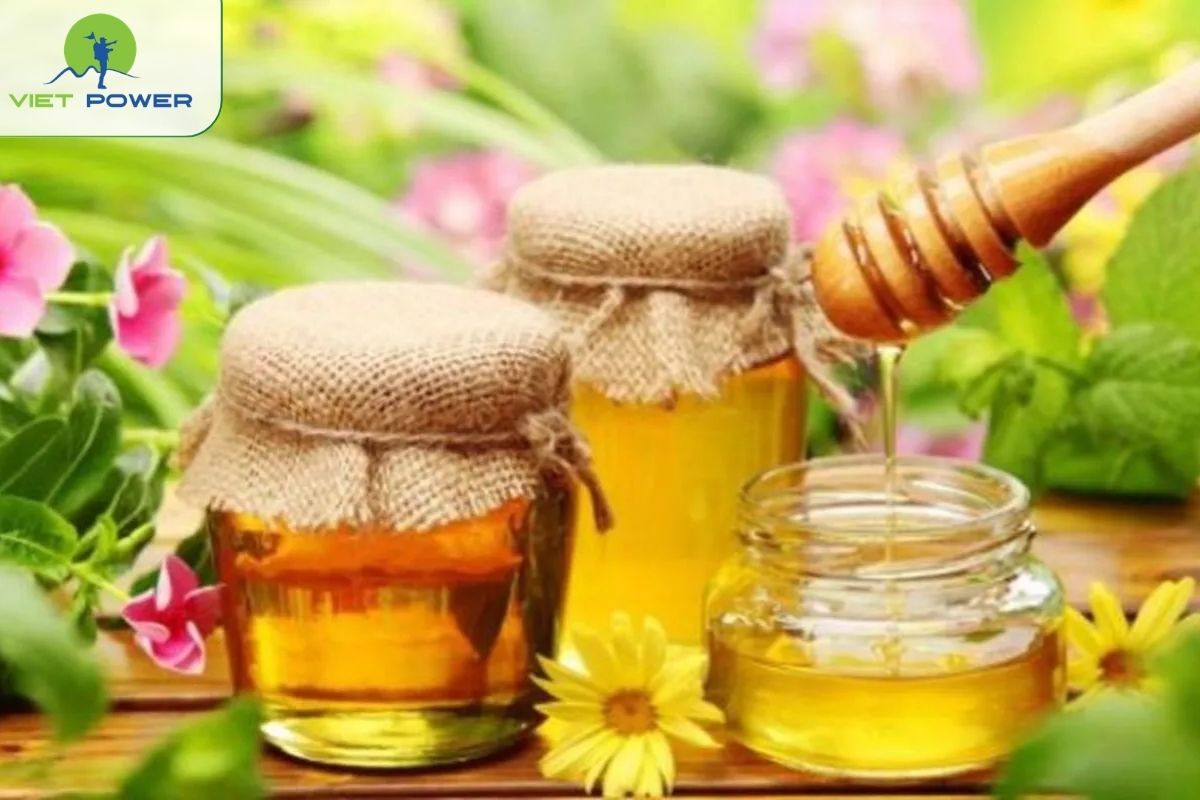
Mint honey and Shan Tuyet tea are premium gifts from Ha Giang’s highlands. Mint honey from Meo Vac has a gentle sweetness and fresh herbal note, while Shan Tuyet tea comes from ancient tea trees in misty mountain areas.
Continue exploring similar posts to learn more about Vietnam’s diverse flavors and food culture:
For travelers deciding what food to try in Ha Giang, start slowly and choose dishes based on your taste, schedule, and comfort level. Ha Giang local food is rich in herbs, smoked meats, corn, and warming flavors, so these local eating tips will help you enjoy it safely.
Begin with lighter dishes such as sour pho, Dong Van steamed rice rolls, Trang Kim chicken pho, five-color sticky rice, and Thang Den. These dishes are easy to eat, gentle in flavor, and suitable for first-time visitors.
Thang Co and Au Tau porridge are famous but stronger in taste. Thang Co has a bold aroma from meat, organs, and mountain spices. Au Tau porridge should be eaten only at reliable restaurants because the root must be prepared carefully for food safety.
Dong Van Market and Meo Vac Sunday Market are best in the morning, especially before 8:00 AM. Travelers can try sour pho, Men Men, Thang Co, buckwheat cake, sticky rice, grilled food, and corn wine while experiencing real highland market life.
Many small stalls and family-run eateries may not show prices. Ask the price by bowl, plate, portion, or kilogram before ordering, especially for grilled meat, smoked buffalo meat, corn wine, and food souvenirs. Bring cash and small notes.
Vegetarian food can be limited in Ha Giang because broths often use pork, chicken, or beef bones, and vegetables may be cooked with animal fat. Ask clearly about broth, oil, sauces, and ingredients before ordering.
These simple tips help travelers enjoy Ha Giang Food with more confidence while respecting local eating culture.
Ha Giang cuisine is a memorable part of the journey, where smoky meats, corn-based dishes, herbal mountain flavors, and local markets reveal the culture of the Hmong, Tay, Dao, and Lo Lo communities. Each dish helps travelers understand the land, the people, and the rhythm of life in the Northern Highlands.
Plan your trip with Vietpower Travel and experience the landscapes, markets, homestays, and authentic Ha Giang Food that make this destination one of Vietnam’s most rewarding mountain journeys
Please kindly send us your ideas about the tours: destinations, attractions, your group, hotel class... we will get back to you with details & best offers quickly. Surely, you will feel satisfactory!
 |
 |
 |
 |
 |
 |

.jpg) Customize Your Trip
Customize Your Trip
 Vietnam
 Thailand
 Laos
Laos Indonesia
 Cambodia
 Myanmar
 Indochina Tours