With Vietpower Travel, travelers to Hue can explore Hue Royal Court Music (Nha Nhac)—the official ceremonial music of Vietnam’s imperial court under the Nguyen Dynasty. Recognized as a UNESCO heritage, this refined art form reflects royal authority, ritual order, and cultural governance. Through authentic performances at historic venues, visitors gain insight into how court music shaped state ceremonies and imperial life. Hue remains the most meaningful place to experience this royal musical legacy.
Hue Royal Court Music, known in Vietnamese as Nha Nhac, is the ceremonial music once performed exclusively for Vietnam’s royal court. Originating in the imperial city of Hue, this art form was created to accompany official state rituals and royal ceremonies rather than public entertainment.
Nha Nhac reflects the values of order, harmony, and authority that defined Vietnam’s monarchy. Every performance followed formal rules regarding melody, rhythm, and setting, making it a core cultural expression of imperial life.
Historically, Nha Nhac is defined as “elegant music,” a refined musical form reserved for the royal court. It differs clearly from other forms of Traditional Music, which developed among communities for daily life or festivals.
While folk music emphasizes emotional expression and regional identity, Nha Nhac was composed and performed under strict court regulations. Its purpose was to support royal rituals and convey political and spiritual meaning.
Because of this role, Nha Nhac became a symbol of royal authority rather than a popular musical genre.
In 2003, Nha Nhac was officially recognized by UNESCO as an Intangible Cultural Heritage of Humanity. This recognition confirmed its exceptional cultural value and its role in preserving Vietnam’s imperial traditions.
Nha Nhac is regarded as the only national court music of Vietnam with a fully developed system of rituals, orchestras, and ceremonial functions. Today, its status as a UNESCO heritage site allows visitors to understand Vietnam’s royal culture through living performances, not only historical texts.
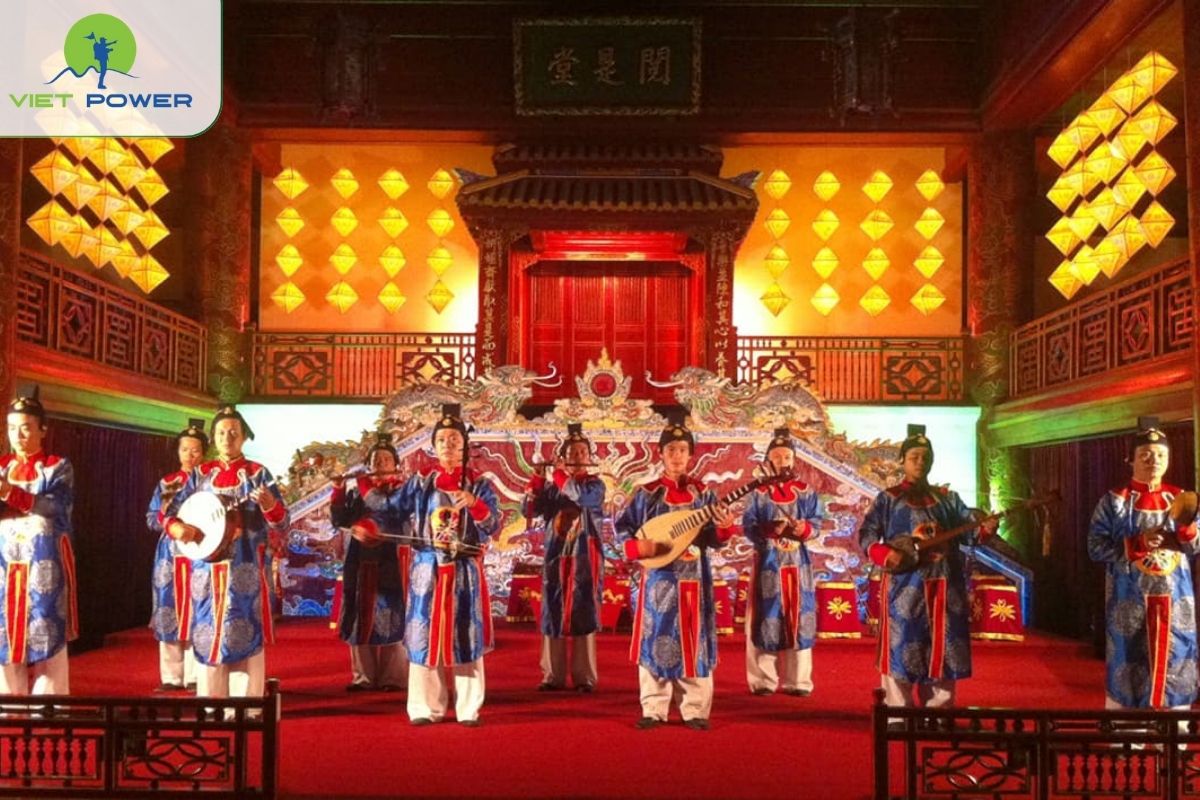
Vietnam culture music reflects centuries of history, from heartfelt folk songs to ceremonial court music and soulful gong traditions. Each region brings unique melodies and instruments such as the dan bau, dan tranh, and bamboo flute. Recognized by UNESCO and celebrated in festivals, these traditions connect visitors with authentic cultural values. You can explore more about Vietnam music in the following post!
The identity of Hue Royal Court Music is closely linked to the Nguyen Dynasty, which transformed earlier court traditions into a unified and regulated musical system.
Nha Nhac appeared as early as the Ly and Le dynasties, when court music was used in state rituals and ancestral worship. At that time, music played a key role in maintaining order within the royal court, following cultural models shared across East Asia.
These early traditions laid the groundwork for the later development of court music in Hue.
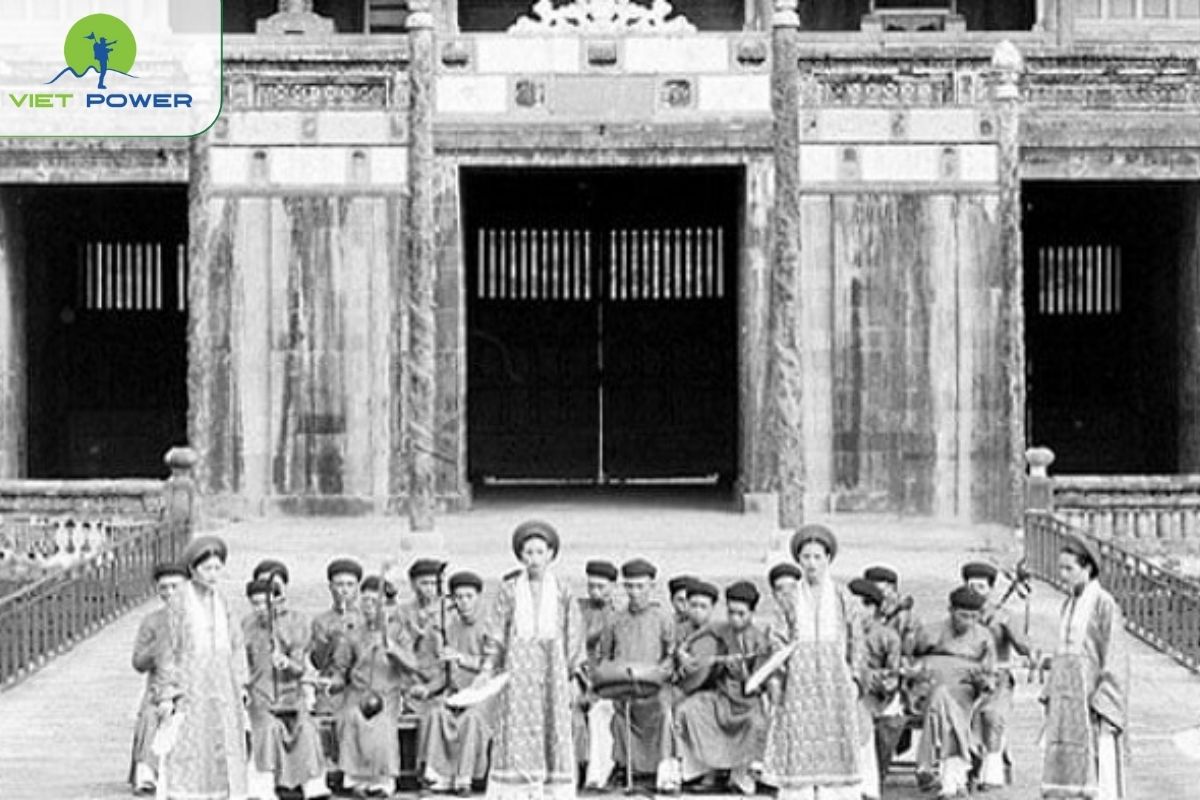
During the Nguyen Dynasty (1802–1945), Nha Nhac reached its most structured form. The court standardized musical repertoires, performance rules, and ceremonial usage, turning Nha Nhac into official state music.
Music was performed during coronations, ancestral rites, seasonal ceremonies, and diplomatic receptions, all governed by established Nguyen Dynasty rituals. This system ensured consistency and preserved the authority of the monarchy.
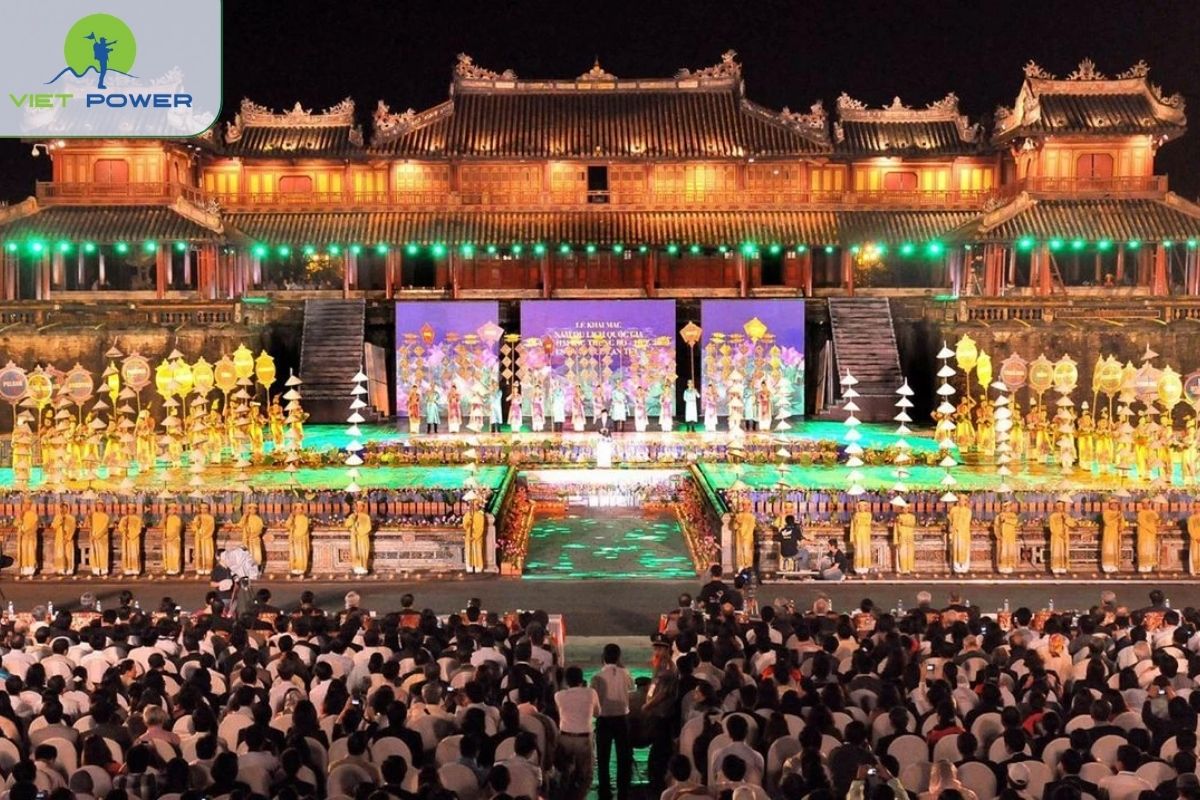
Today, this legacy can still be experienced in Hue, where performances within the Imperial Citadel help travelers connect with Vietnam’s royal past in a clear and meaningful way.
Let’s explore more posts on this topic to discover even more about Vietnam’s unique culture:
In Vietnam’s imperial system, court music served as a formal language of governance. Hue Royal Court Music regulated ceremonial space, reinforced hierarchy, and conveyed the stability of the dynasty. Its presence signaled authority, harmony, and continuity within the royal court.
Nha Nhac represented royal authority through sound and structure. Every melody, tempo, and pause reflected the ruler’s position and the court’s hierarchy. Music accompanied rituals that affirmed the dynasty’s continuity and the ruler’s mandate.
Rather than entertainment, court music functioned as a ceremonial marker that organized time and movement during state events. Through this role, it communicated discipline and unity to both the court and foreign envoys.
Nha Nhac was performed during major state occasions such as coronations, royal funerals, anniversary rites, and diplomatic receptions. Each ceremony required specific compositions selected according to ritual purpose and rank.
Music guided the sequence of actions, signaling transitions between stages of the ceremony. This system ensured consistency across generations and reinforced the authority of the monarchy during formal gatherings.
Dreaming of an unforgettable Vietnam adventure? Let Vietpower Travel build a personalized tour that brings your vision to life.
Royal performances followed a clearly defined ceremonial structure. The arrangement balanced musical form, spatial order, and ritual timing to maintain decorum within the imperial court.
Performances adhered to a fixed sequence that included ceremonial preparation, musical sections, and coordinated movement by musicians and dancers. Each phase was assigned a specific role, ensuring that music aligned precisely with ritual actions.
The court supervised repertoire selection and ensemble placement to preserve ceremonial balance and clarity.
Court music was organized into two main ensemble types:
You can find more posts related to this topic in the category below:
Today, Hue remains the primary destination to experience Hue Royal Court Music in settings closely connected to its imperial origins. Performances are presented in carefully preserved locations, allowing travelers to understand how court music functioned within royal life while enjoying a well-structured cultural experience.
Duyet Thi Duong Theater is the most authentic venue to experience Nha Nhac in its original royal environment. Built in 1826 under the Nguyen Dynasty, this theater once served as the exclusive performance space for emperors, royal family members, and high-ranking officials.
The theater preserves its traditional wooden architecture, ceremonial seating layout, and enclosed stage design. Performances follow historical formats with live orchestration, court costumes, and formal presentation order. This setting allows visitors to see how royal music operated within imperial rituals, clearly separated from folk performances and other forms of Traditional Music outside the palace.
.jpg)
Another widely chosen experience is enjoying Hue Royal Court Music during an evening cruise on the Perfume River (Sông Hương). These performances are created for travelers who wish to combine cultural discovery with Hue’s scenic landscape.
Music is performed onboard traditional dragon boats while cruising along the river, passing landmarks such as Truong Tien Bridge and the riverfront heritage zone. The program introduces court melodies and instruments in a relaxed atmosphere, making it accessible for international visitors.
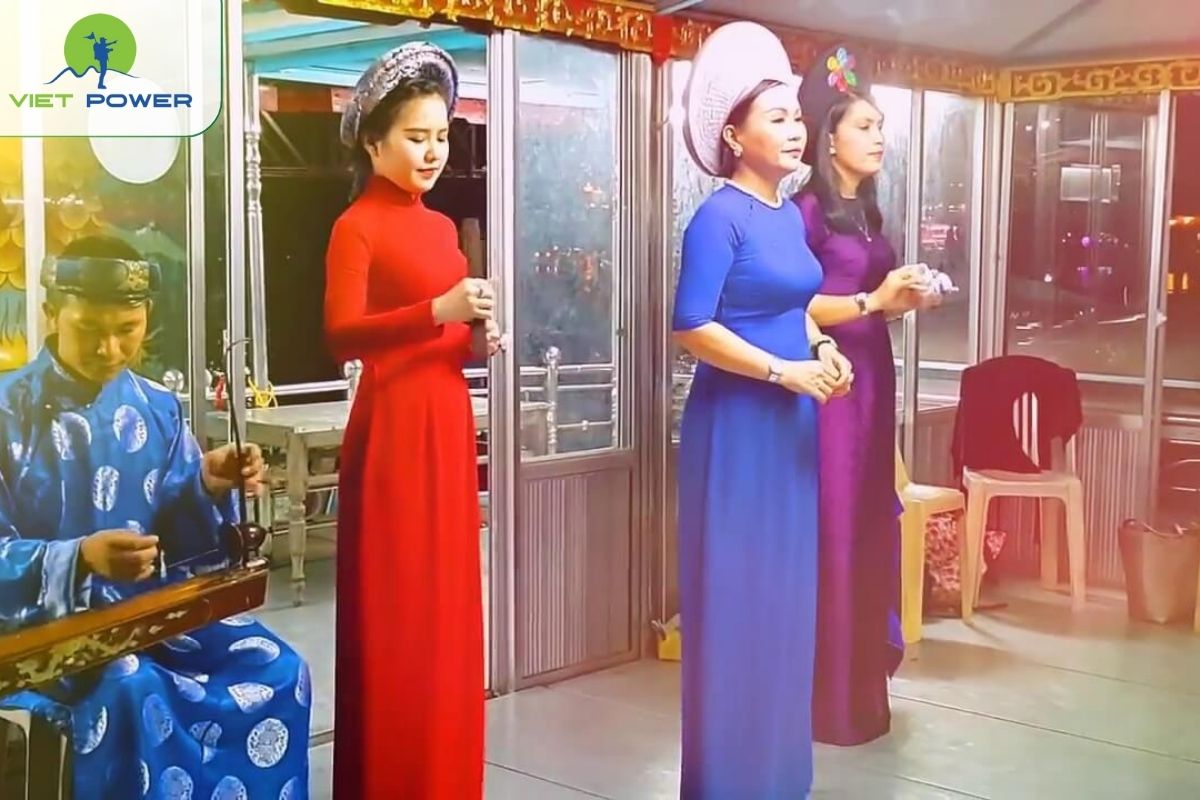
Today, Hue Royal Court Music continues to preserve the spirit of Vietnam’s monarchy through living performances in the Imperial Citadel and along the Perfume River. By experiencing Nha Nhac in its original settings, travelers can better understand the cultural values and ceremonial traditions of the Nguyen Dynasty. With carefully curated Hue itineraries, Vietpower Travel connects visitors to this enduring heritage, offering a deeper appreciation of Vietnam Culture.
Please kindly send us your ideas about the tours: destinations, attractions, your group, hotel class... we will get back to you with details & best offers quickly. Surely, you will feel satisfactory!
 |
 |
 |
 |
 |
 |

.jpg) Customize Your Trip
Customize Your Trip
 Vietnam
 Thailand
 Laos
Laos Indonesia
 Cambodia
 Myanmar
 Indochina Tours