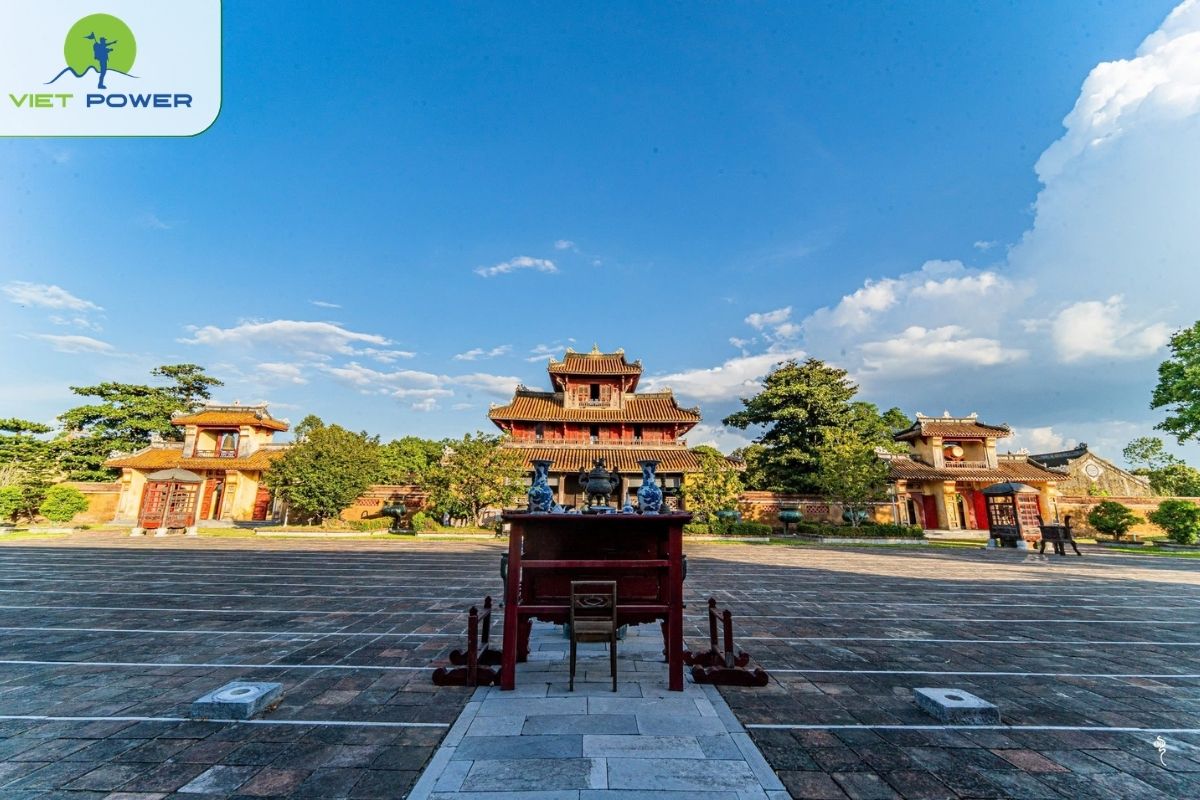
Hien Lam Pavilion is one of the most remarkable heritage structures inside the Hue Imperial City. Built during the reign of Emperor Minh Mang, this royal memorial pavilion stands out for its three-story design, refined wooden craftsmanship, and strong ceremonial meaning. More than a beautiful monument, it reflects the memory, values, and architectural vision of the Nguyen Dynasty in the heart of Hue.
Vietpower Travel is a trusted Vietnam tour operator that helps travelers experience heritage sites with clearer cultural and historical context. Through well-planned journeys in Hue and across Vietnam, Vietpower Travel makes it easier to explore landmarks like Hien Lam Pavilion as part of a richer and more meaningful travel experience.
Before exploring its history and architecture in greater detail, visitors usually want to know a few essential facts first: what Hien Lam Pavilion is, where it is located, why it was built, and the basic visitor information. This overview brings those points together clearly, so readers can understand the site quickly before moving on to the deeper historical and architectural sections.
Hien Lam Pavilion, also known as Hien Lam Cac Pavilion, is a royal memorial structure inside the Imperial City of Hue. It was built to honor the Nguyen emperors and meritorious mandarins who played an important role in the dynasty. Beyond its ceremonial meaning, the pavilion is also known for its tall wooden form and refined decorative details, which make it one of the most recognizable monuments in the Hue royal complex.
Hien Lam Pavilion is located inside the Hue Citadel, within the temple area of the Imperial City. Its visitor address is generally associated with the Hue Imperial City area on 23/8 Street, Thuan Hoa Ward, Hue City.
For travelers exploring the site in person, the clearest way to place it is this: the pavilion stands directly in front of The Mieu Temple, one of the most significant royal worship sites in the former imperial capital.
Hien Lam Pavilion was built under Emperor Minh Mang to commemorate the Nguyen emperors and the high-ranking mandarins who made major contributions to the dynasty. Its purpose was, therefore, commemorative from the beginning. It was meant to preserve memory, express royal gratitude, and reinforce the moral order of the court.
Its location in front of The Mieu strengthens that purpose. The Mieu served as a temple space dedicated to the emperors, while Hien Lam Pavilion added a visible architectural statement of remembrance within the same ceremonial environment. In practical terms, this made the pavilion part of the symbolic language of the Imperial City, where buildings were arranged to reflect rank, duty, and continuity. That is why the pavilion carries historical meaning far beyond its physical appearance.
Hien Lam Pavilion is usually visited as part of the wider Imperial City route, so visitors typically explore it together with other major royal monuments. As with many heritage sites, opening hours and ticket prices may change over time, so it is best to check the latest information before visiting.
Opening hours:
Entrance fees:
Continue exploring similar posts to learn more about Vietnam’s diverse attractions and unique travel experiences. Our Vietnam tourist attractions category is filled with ideas to help you plan your perfect adventure.
Hien Lam Pavilion carries historical meaning far beyond its appearance. Inside the Imperial City, it was created as part of the Nguyen court’s memorial and ceremonial space, where architecture helped express royal memory, political order, and respect for those who served the dynasty. This is why the pavilion remains one of the most meaningful heritage structures in Hue.
Hien Lam Pavilion clearly reflects the spirit of Minh Mang’s reign, a period when the Nguyen Dynasty strengthened court order and developed the imperial capital with a strong sense of structure and symbolism. Buildings from this era were planned with clear political and ceremonial purposes, and Hien Lam Pavilion was part of that larger vision.
Its construction shows how architecture in Minh Mang’s time was used to represent authority, continuity, and reverence for the dynasty. Rather than standing as an isolated monument, the pavilion belonged to a carefully arranged royal setting that expressed the values of the court through space, position, and form.
Hien Lam Pavilion played a memorial role within the ceremonial life of the Nguyen Dynasty. It was built to honor Nguyen emperors and meritorious mandarins, so its function was closely tied to remembrance and dynastic gratitude. This gave the pavilion a deeper role than that of a decorative wooden building.
Because it stands in front of The Mieu, it was also part of a sacred court environment where royal rituals and ancestor veneration took place. In that setting, the pavilion helped reinforce ideas of loyalty, hierarchy, and respect for the past, all of which were central to Nguyen court culture.
Hien Lam Pavilion remains valuable today because it preserves both the heritage of Hue and the historical memory of the Nguyen Dynasty. It helps modern visitors understand how the imperial court used architecture to express ceremony, remembrance, and royal identity.
Its value also lies in its place within the preserved monument complex of Hue. For travelers interested in history, architecture, and culture, it offers a clearer view of Vietnam’s imperial past and stands out among the meaningful Vietnam Tourist Attractions.
Let’s explore more posts on this topic to discover even more about Vietnam:
Hien Lam Pavilion stands out for its height, balanced three-level composition, and the high quality of its royal woodwork. From the raised Bat Trang brick base to the carved wooden frame and symbolic decorative details, every part of the structure reflects the refined design language of Nguyen court architecture. This is what makes the pavilion one of the most visually impressive monuments inside the Hue Imperial City.
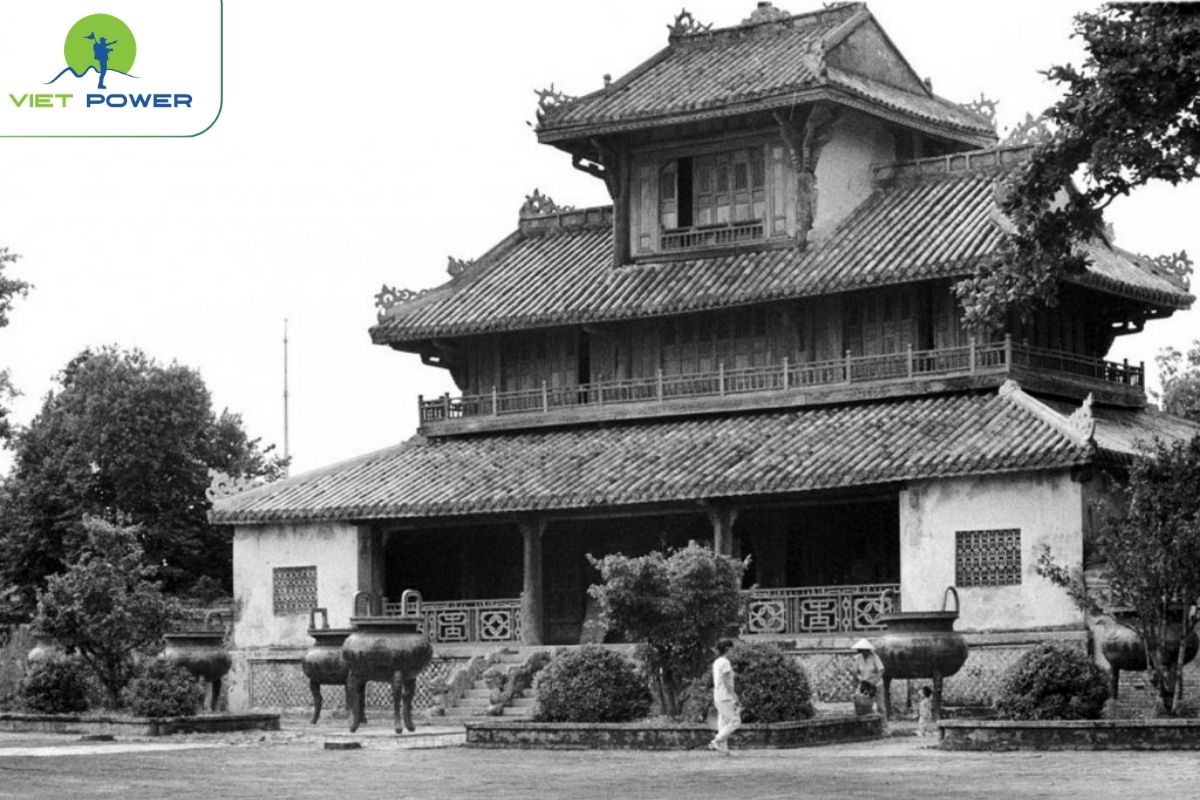
Hien Lam Pavilion is built in three levels, and each level has a different scale and function.
The first level is the widest and most grounded part of the structure. It is arranged as three central compartments with two side wings, creating a broad and stable base for the upper stories.
The second level is smaller, with three compartments, which makes the building appear lighter as it rises.
The third level is the smallest, consisting of a single chamber, giving the top of the pavilion a more concentrated and elevated presence.
This gradual reduction in size from the first to the third level is what gives the pavilion its elegant proportions. The building looks tall and dignified, but it does not feel heavy. Instead, each level steps back in a controlled way, creating a sense of vertical harmony that suits its memorial role.
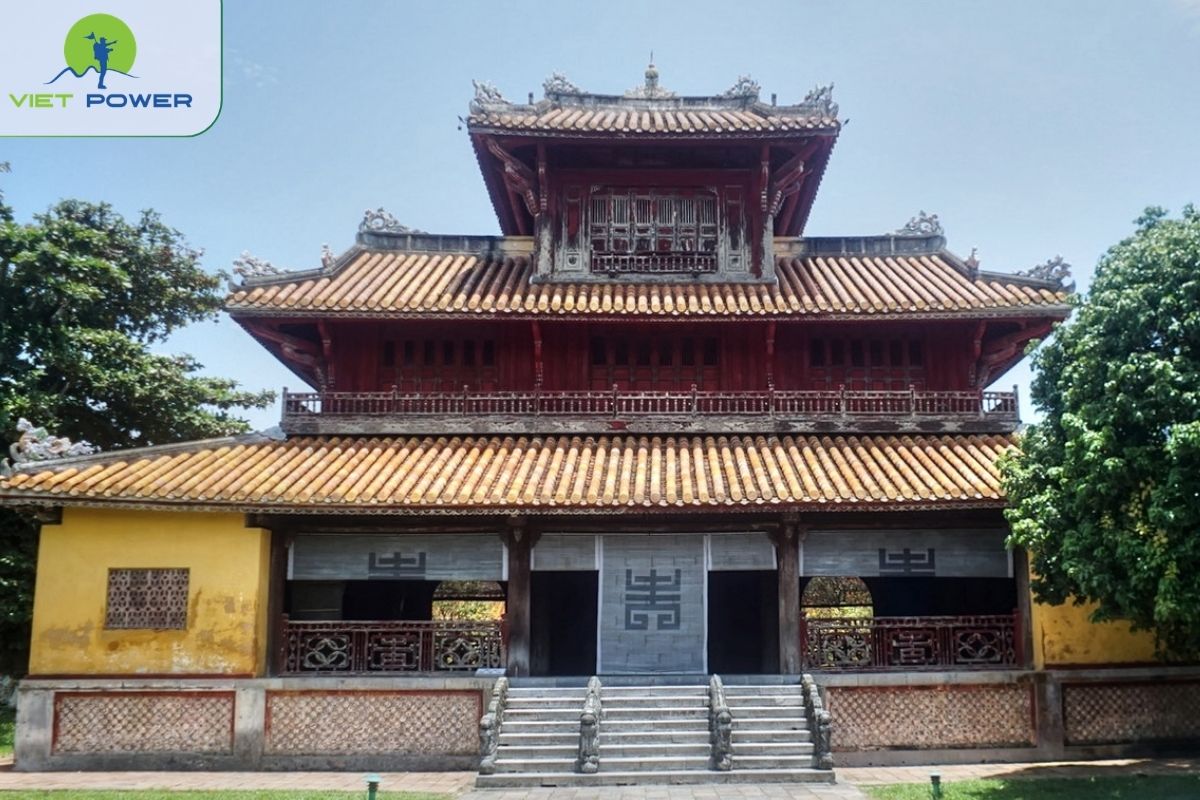
The pavilion’s decorative details are concentrated in several highly visible areas. On the first level, the beams, wooden panels, and supporting elements are carved with dragon motifs stylized into curling vines and leaves. These carvings appear across the structural members rather than in one isolated zone, so the decorative language runs through the building itself.
One of the most recognizable details is the large inscribed board reading “Hiển Lâm Các”, hung above the central entrance. It is set on a green background and framed by nine dragons among clouds, finished in red and gold.
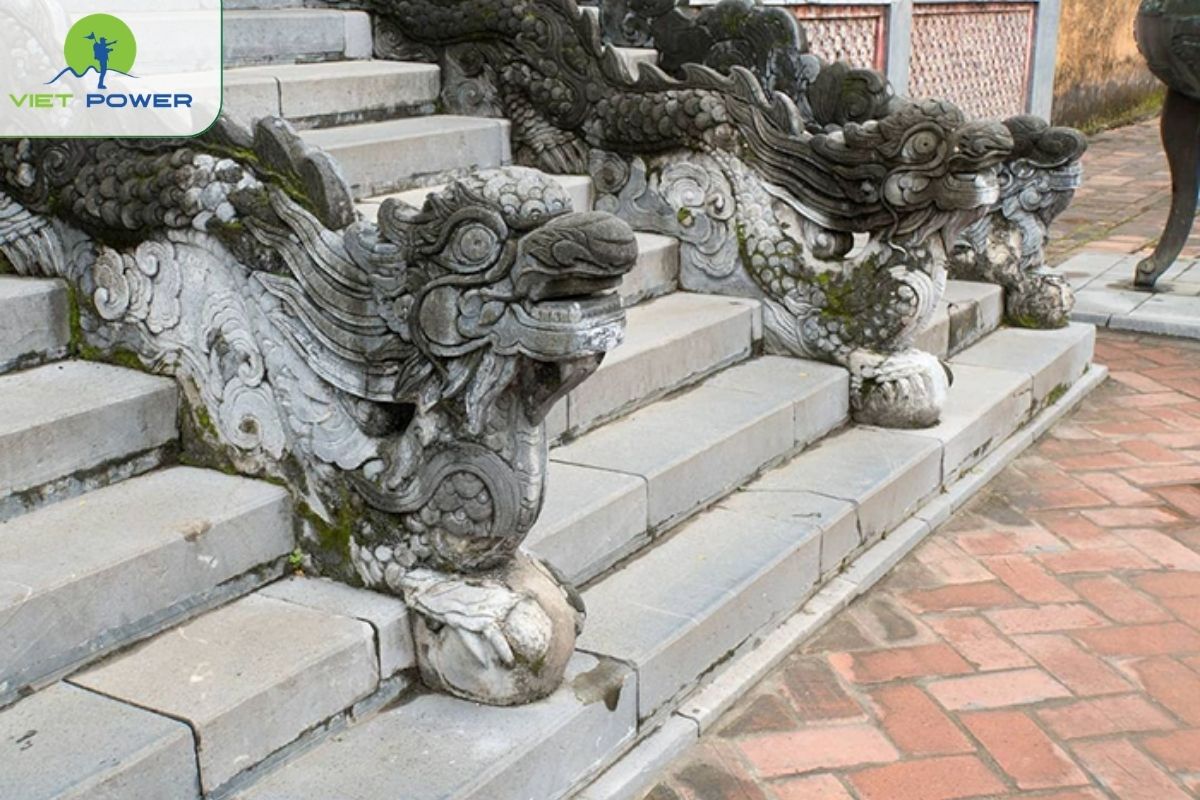
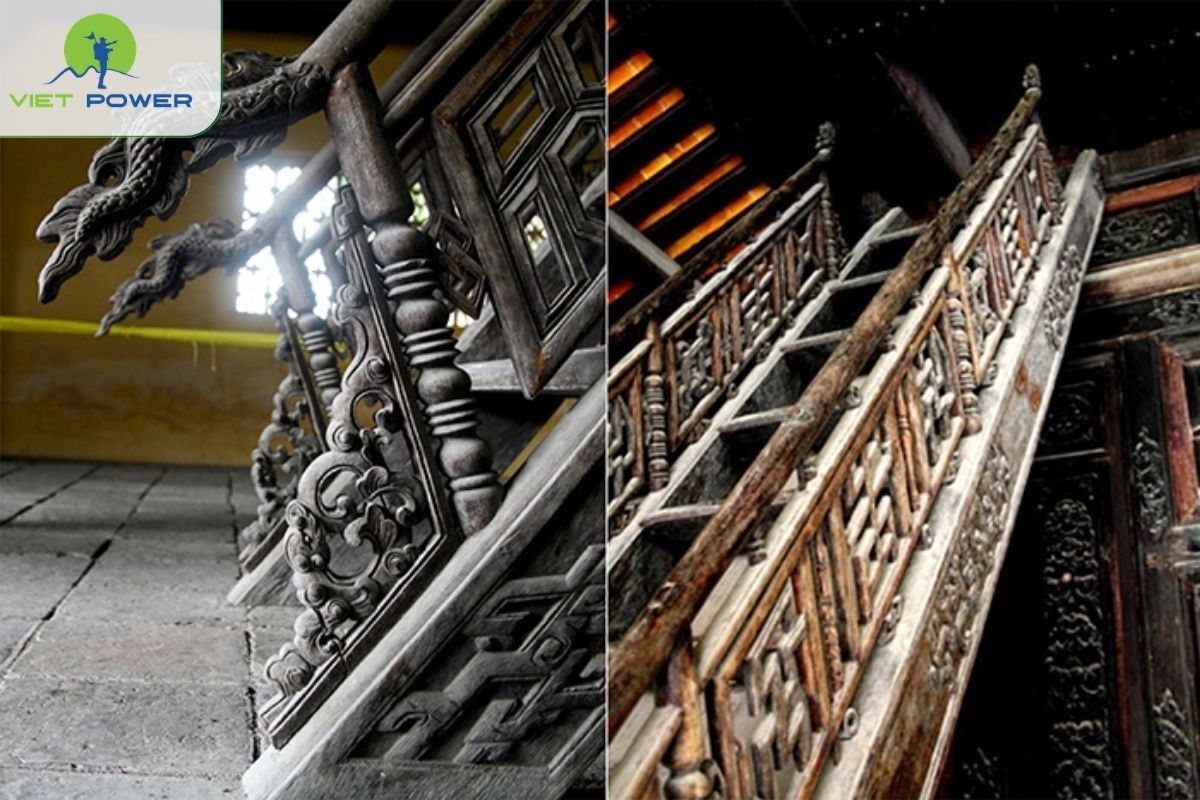
The wooden stairway leading upward is another highly decorative feature. Its handrails are divided into framed sections carved with auspicious motifs such as the characters for longevity and good fortune, along with geometric patterns.
At the beginning and end of the railings, the carvings take the form of dragon heads and tails, which adds movement and elegance to the staircase.
The railings around the upper levels are also finely shaped, helping soften the structure while maintaining its formal royal character.
The pavilion stands on a raised brick base paved with Bat Trang bricks, which gives the structure a stronger sense of height and formality. This elevated platform separates the building from the surrounding ground and reinforces its status within the ceremonial setting. It also shows how material choice and spatial design worked together in Nguyen court architecture.
The stairways add another layer of meaning. Stone steps lead up to the structure, and the central path was traditionally reserved for the emperor. This detail reveals that the building was shaped by court hierarchy as much as by aesthetics.
Because of that, Hien Lam Pavilion should be understood as more than a beautiful heritage building. Its design reflects royal order, ritual practice, and symbolic meaning, which is one reason it continues to stand out among notable Vietnam Tourist Attractions.
You can find more posts related to this topic in the category below:
Before visiting Hien Lam Pavilion, it is helpful to know a few practical details that can make the experience smoother. Since the pavilion is part of the wider Hue Imperial City, visitors usually combine it with nearby royal monuments rather than seeing it as a separate stop.
The most suitable time to visit Hien Lam Pavilion is between 7:00–9:00 AM or 3:00–5:00 PM. Early morning is cooler and quieter, while late afternoon offers softer light that highlights the wooden structure and decorative details. Midday is usually hot and less comfortable, especially when walking through Imperial City.
Hien Lam Pavilion is part of a royal memorial area, so visitors should dress neatly and behave respectfully. It is best to keep noise low, avoid touching or climbing on architectural elements, and move calmly through the space. Taking photos is allowed, but it should be done without disturbing others or affecting the atmosphere of the site.
Most visitors spend 20 to 30 minutes at Hien Lam Pavilion itself. If you include nearby sites such as The Mieu and the Nine Dynastic Urns, you should allow around 50 to 60 minutes for this area.
Since the pavilion is located close to The Mieu, it is best visited as part of the same route rather than as a separate stop. Wearing comfortable shoes and bringing water will make the walk easier, especially in warm weather. A simple route through the Imperial City helps you move smoothly between landmarks and makes the experience more complete, especially when exploring well-known Vietnam Tourist Attractions in Hue.
Hien Lam Pavilion offers more than architectural beauty, as it also reveals the ceremonial spirit and historical memory of the Nguyen court. With its elegant structure, symbolic setting, and lasting heritage value, it remains one of the most rewarding stops in Hue for travelers interested in culture and history.
Plan your trip to Hue and experience its royal heritage more closely through its temples, monuments, and imperial spaces. Let Vietpower Travel guide you through the most memorable Hue Tourist Attractions and turn your visit into a deeper cultural journey.
Please kindly send us your ideas about the tours: destinations, attractions, your group, hotel class... we will get back to you with details & best offers quickly. Surely, you will feel satisfactory!
 |
 |
 |
 |
 |
 |

.jpg) Customize Your Trip
Customize Your Trip
 Vietnam
 Thailand
 Laos
Laos Indonesia
 Cambodia
 Myanmar
 Indochina Tours