Thai Binh Pavilion is one of the most refined cultural highlights inside the Hue Imperial City. Known as a royal reading pavilion, it reflects the quiet and intellectual side of Nguyen Dynasty life through its elegant architecture, symbolic decoration, and peaceful garden setting. For visitors exploring Hue, this pavilion offers a deeper understanding of royal culture beyond ceremonial palaces.
With Vietpower Travel, travelers can experience Thai Binh Pavilion as part of a well-planned heritage journey across Vietnam. As a trusted travel company, Vietpower Travel helps connect iconic sites like the Hue Citadel with meaningful cultural insights, making each visit more engaging and memorable.
Before looking at its history and artistic value, visitors should first understand where Thai Binh Pavilion is located, what it was used for, and how to visit it today. This overview answers the most practical questions early, while placing the pavilion clearly within the Hue royal palace complex. It also helps readers see why this site deserves attention among Vietnam Tourist Attractions.
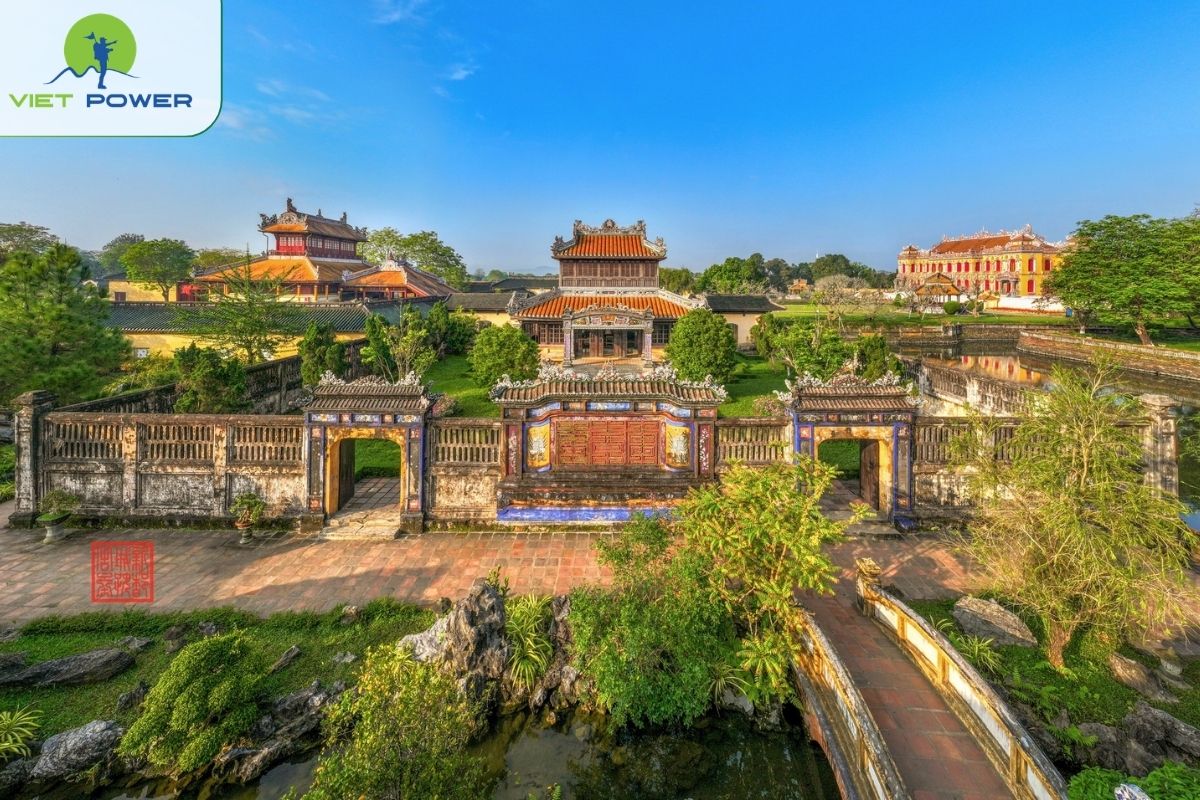
Thai Binh Pavilion is a royal structure inside Hue’s former imperial center. It is also known as Thai Binh Lau pavilion and the royal reading pavilion, names that reflect its original role as a place for reading, resting, composing poetry, and enjoying a quiet royal setting. The pavilion was built in its present form from 1919 to 1921 under Emperor Khai Dinh, and it is widely recognized as one of the notable preserved structures in the inner palace area.
Thai Binh Pavilion stands in the northeastern section of the Forbidden Purple City, inside the larger Hue Imperial City.
In practical travel terms, visitors reach it after entering Dai Noi Hue (Hue Imperial City), which is commonly accessed at 23/8 Street, Thuan Hoa Ward, Hue City, Thua Thien Hue.
Within the palace grounds, the pavilion is associated with the quieter inner court area near royal gardens and palace spaces rather than the main ceremonial forecourts.
Yes, visitors can usually see Thai Binh Pavilion during a visit to Hue Imperial City. It works best as a quieter stop within the broader palace route, especially for travelers interested in architecture, court life, and smaller heritage spaces. Access inside the building or immediate area may vary at times depending on conservation work or site management, so it is best to check the current visitor arrangement on the day of visit.
Thai Binh Pavilion is visited as part of the wider Hue Imperial City route. On the official Hue heritage price list, the Imperial City ticket is 200,000 VND for adults and 40,000 VND for children aged 7 to 12, with the current pricing shown as applied from January 4, 2026.
The official opening hours for monumental sites are seasonal. From March 16 to October 15, the visiting time is 6:30 AM to 6:00 PM. From October 16 to March 15, the visiting time is 7:00 AM to 5:30 PM.
Discover more posts on the same topic and dive deeper into Vietnam’s beauty, culture, and landmarks. Explore our Vietnam tourist attractions category to find new destinations worth adding to your travel list.
Thai Binh Pavilion helps visitors understand a quieter side of life inside the Nguyen court. It was not built for large ceremonies or state rituals. Instead, it was a private royal space connected with reading, rest, poetry, and reflection.
Thai Binh Pavilion developed over several Nguyen reigns rather than appearing all at once. In 1821, Emperor Minh Mang had an earlier wooden structure built near Thieu Phuong Garden under the name Tri Nhan Duong. This early phase already linked the site with learning and private royal use.
Later, under Emperor Thieu Tri, the structure was repaired and renamed Thanh Tha Thu Lau, giving it a stronger literary identity. During the reign of Emperor Dong Khanh, another related pavilion carried the name Thai Binh Ngu Lam, showing that this area had become associated with royal leisure and cultured retreat.
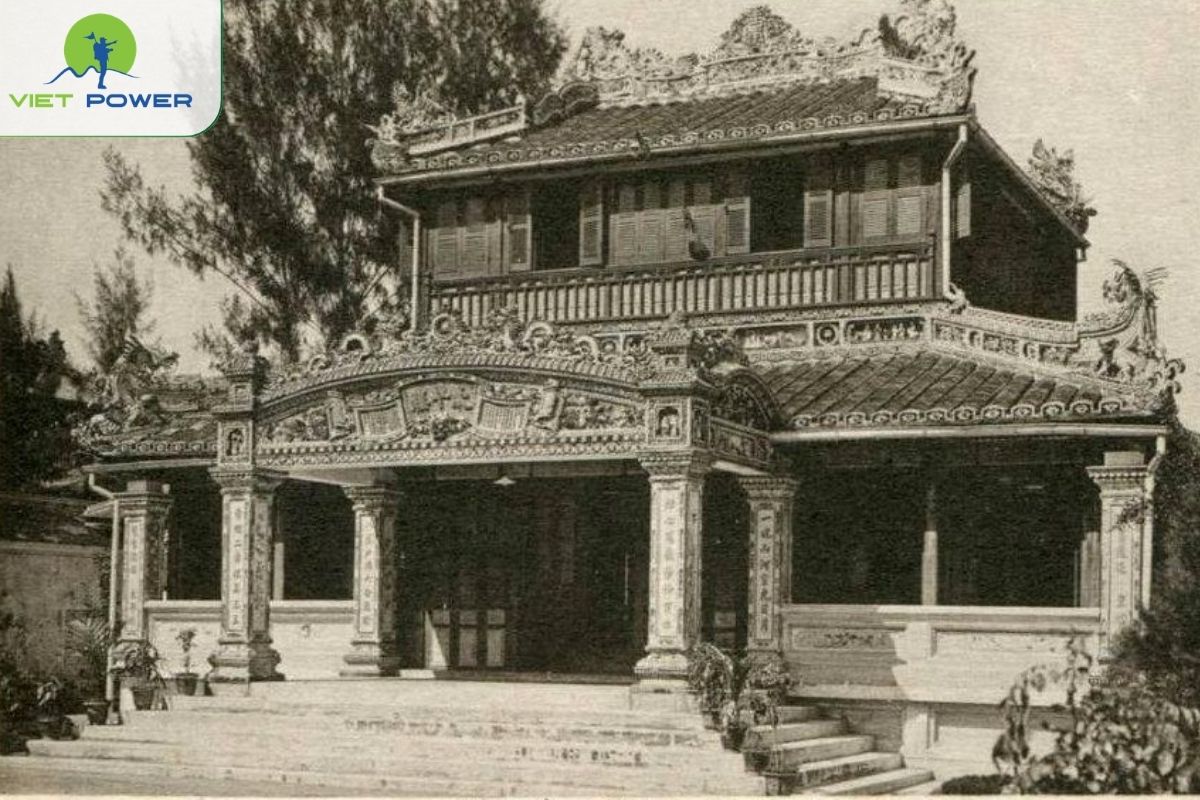
The pavilion seen today is mainly tied to Emperor Khai Dinh, who rebuilt and refined it between 1919 and 1921. This stage gave the building its present form, including its richer decorative style and more polished court appearance. Because of that long development, Thai Binh Pavilion reflects both continuity and change in Nguyen royal design. Its purpose remained similar, but its artistic expression became more elaborate over time.
During the Nguyen Dynasty, Thai Binh Pavilion served as a place where the emperor could read, rest, enjoy the surrounding landscape, and write poetry. It was a quiet retreat inside the palace, far removed from the more formal atmosphere of the main ceremonial halls.
Its location also matched this purpose. Set near gardens, water, and palace corridors, the pavilion offered a calm environment that encouraged reflection. Rather than functioning as a public court building, it served the private daily life of the emperor.
Thai Binh Pavilion is valuable because it shows a more personal side of royal life in Hue. Many buildings in the Imperial City are linked with power, administration, and ceremony. This pavilion, by contrast, reveals how the emperor also lived as a reader, writer, and observer of nature.
It also reflects the court’s respect for scholarship, refinement, and artistic taste. Through its function and design, the pavilion helps explain that Nguyen royal culture was shaped by study and aesthetics as well as politics.
Its historical value became even greater because it survived periods of destruction that damaged many inner court buildings. For that reason, Thai Binh Pavilion remains one of the most meaningful surviving structures in this area. Today, it gives visitors a clearer and more human view of palace life, which is one reason it stands out among Vietnam Tourist Attractions.
You can find more posts related to this topic in the category below:
Thai Binh Pavilion stands out because its architecture and decoration work together so naturally. On one hand, the building has a calm and balanced design. On the other hand, its decorative details add color, symbolism, and royal character. As a result, the pavilion feels refined, elegant, and closely tied to the artistic spirit of the Hue court.
Thai Binh Pavilion is a two-story wooden structure built on a raised base of about one meter. Because of this higher platform, the building appears more balanced and more visible within the palace grounds.
At the same time, the pavilion does not feel heavy or imposing. Instead, its scale feels graceful and controlled, since it was created for private royal use rather than major court ceremony. The wooden frame, yellow-glazed roof, and carefully measured proportions all help create an appearance that is noble yet calm.
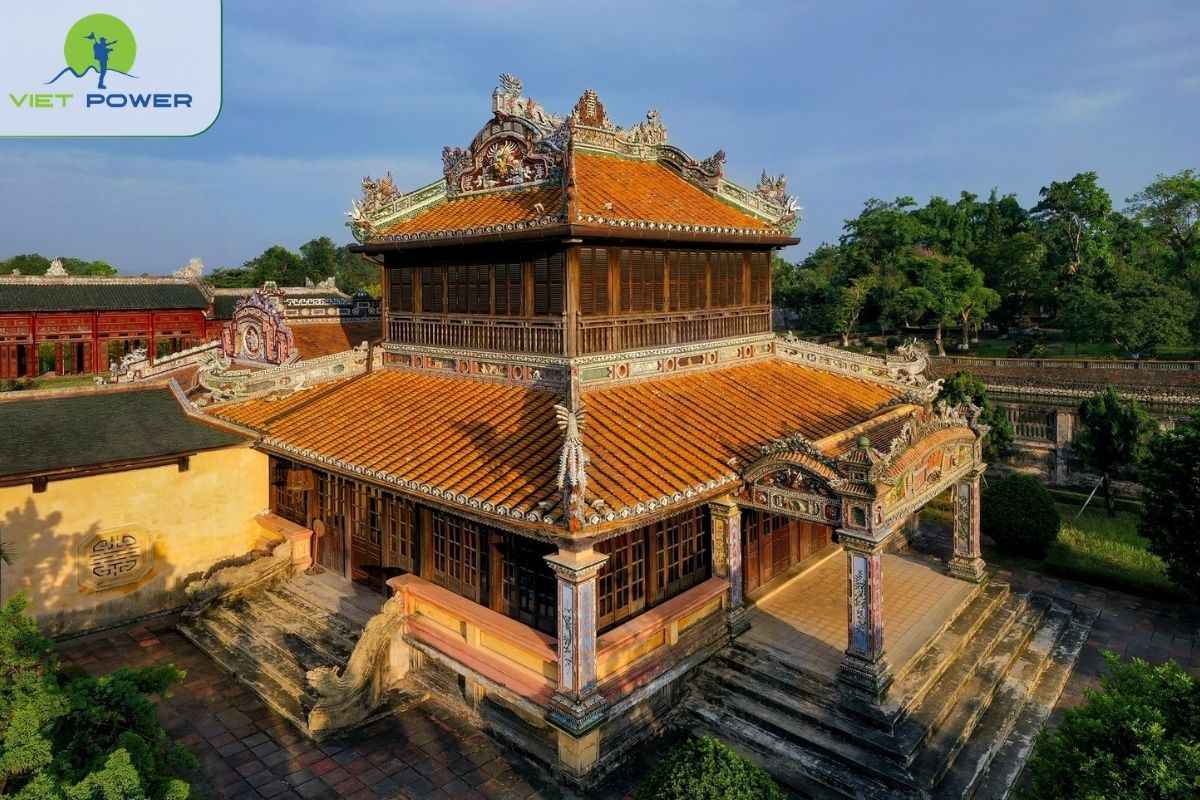
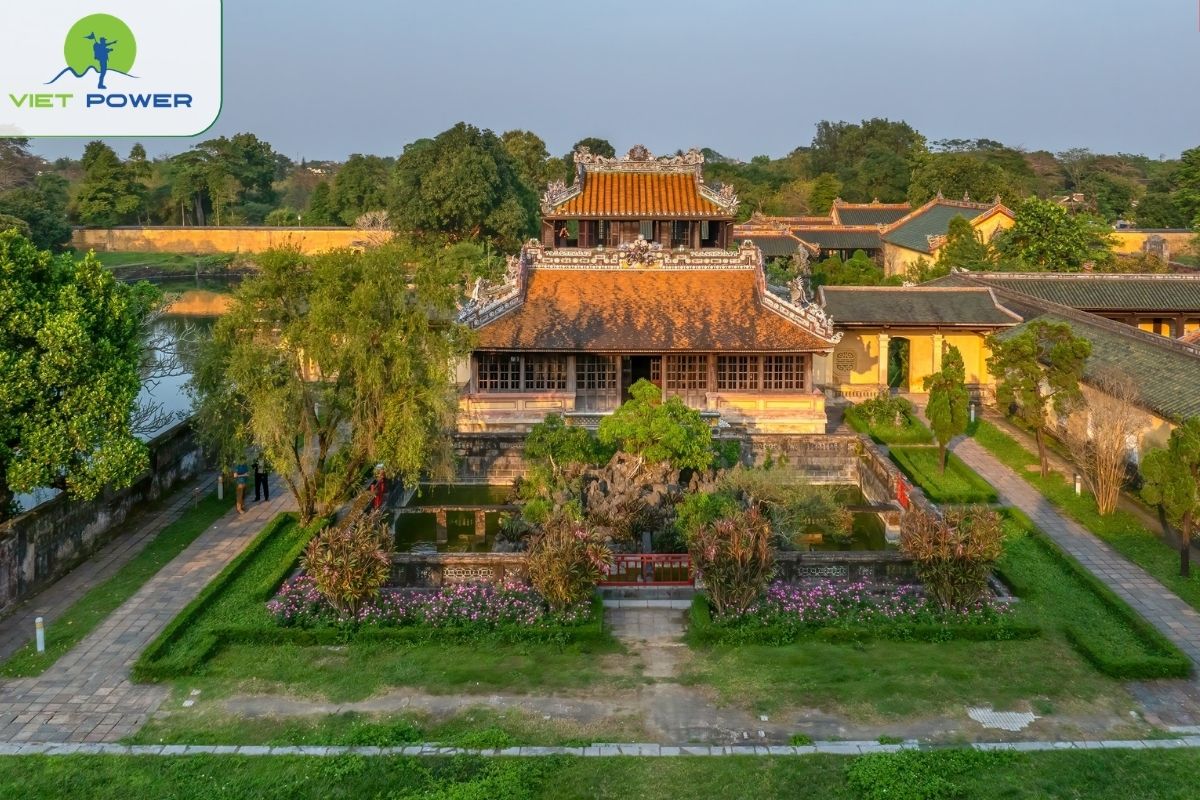
The pavilion is arranged in three connected sections: the front hall, the main central building, and the rear section.
The front hall serves as the opening section. It creates the first formal impression of the building and introduces the decorative style seen throughout the pavilion.
Behind it stands the main two-story section, which forms the architectural core. This is the most visually prominent part of the pavilion and the part most closely tied to its identity.
The rear section continues the composition and opens the structure toward the back landscape, including the ornamental rockwork and nearby palace area.
Continue exploring similar posts to learn more about Vietnam’s attractions and experiences:
What makes Thai Binh Pavilion especially memorable is its rich system of imperial decorative motifs. For example, one of the clearest details is the large Tho character on the roof, which symbolizes longevity. Around it are five bats, forming the Ngu Phuc theme, a traditional symbol of blessing, peace, and good fortune.
In addition, visitors can see Tu Linh, or the Four Sacred Creatures: dragon - phoenix - qilin - turtle. These figures appear on the roof corners, ridges, and decorative edges. Together, they express royal authority, harmony, stability, and long life.
The pavilion also features Hai Oc Thiem Tru on the rear section, showing three elderly men wishing one another health and longevity. Beyond that, the decoration includes floral patterns, leaf motifs, court-style borders, and ceramic couplets. Most of these details are created with ceramic mosaic and colored decorative materials, which give the surface a bright and refined appearance.
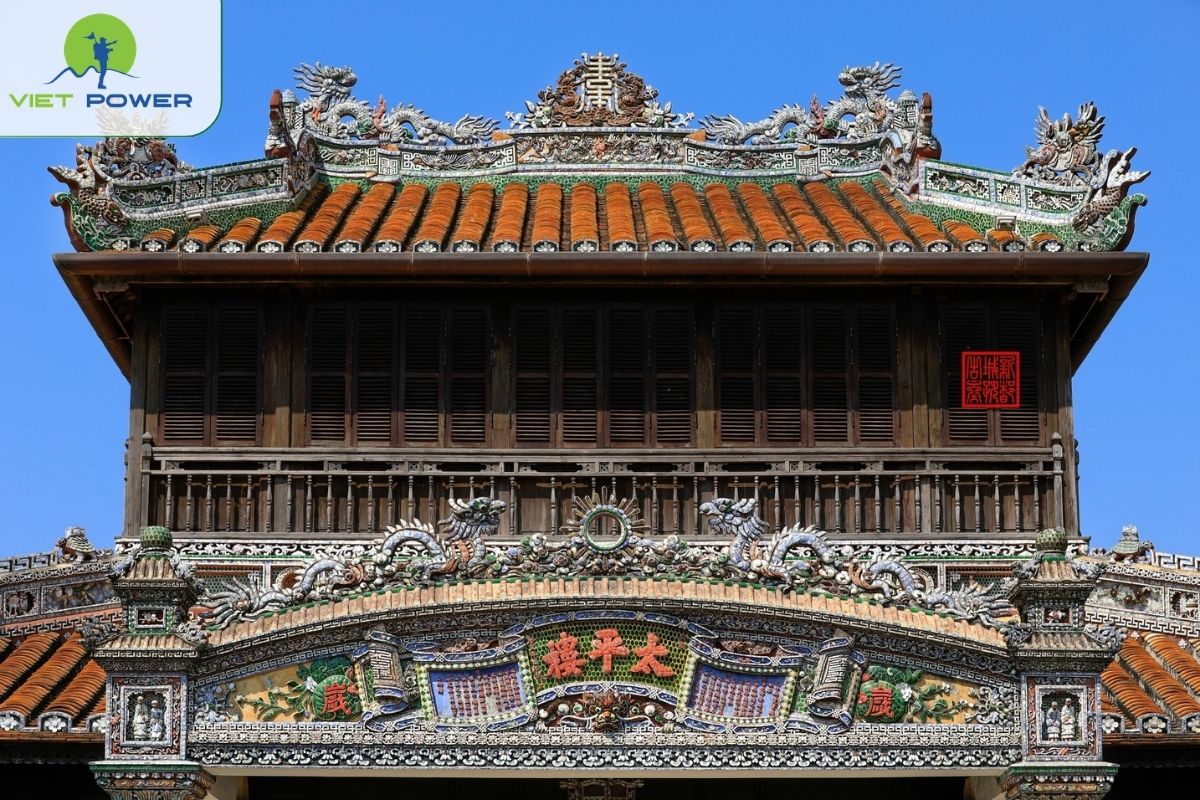
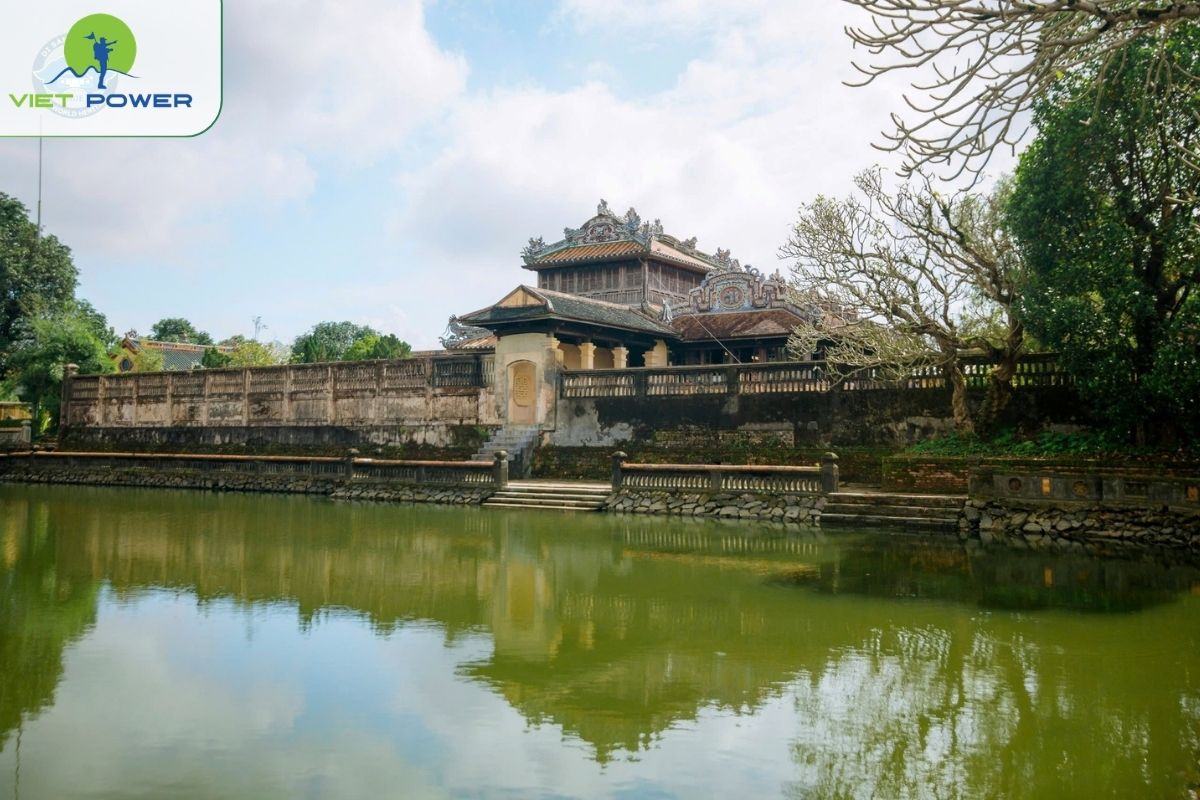
The beauty of the pavilion also comes from its setting. Rather than standing alone, it is closely connected to Ngoc Dich Lake, Thieu Phuong Garden, and the palace corridor system.
Because of this, the building feels softer and more peaceful. The lake adds openness, the garden adds color and quiet beauty, and the corridors connect the pavilion to the wider royal complex. Together, these elements create a setting that suits reading, rest, and reflection.
For that reason, Thai Binh Pavilion leaves a gentle but lasting impression on visitors and remains one of the most appealing Vietnam Tourist Attractions for those interested in Hue’s royal heritage.
Experience Vietnam your way with a custom-crafted itinerary created by the experts at Vietpower Travel.
To enjoy Thai Binh Pavilion fully, it helps to slow down and visit with a little care. Since this is a heritage structure inside the Hue Imperial City, a thoughtful approach will make the experience more comfortable for you and more respectful to the site.
Hue can be hot, bright, and humid, especially around midday. For a more pleasant experience, it is better to visit in the morning or later in the afternoon. At these times, the weather is usually easier for walking, the light is softer, and the atmosphere around the pavilion feels calmer.
Although Thai Binh Pavilion itself is a short stop, reaching it usually means walking through a fairly large heritage complex. Because of that, comfortable shoes are very helpful. Light, breathable clothing is also a good choice, especially in warm weather. If you visit during sunny hours, bringing water, a hat, or a small umbrella can make the trip easier.
Thai Binh Pavilion is an old royal structure with wooden elements, decorative surfaces, and restored details that need protection. For that reason, visitors should avoid touching walls, carvings, mosaic surfaces, or painted parts of the building. Even small contact over time can affect fragile materials.
Because this pavilion was once a private royal retreat for reading, rest, and reflection, it feels more intimate than many larger palace buildings. A quieter voice and a calmer pace suit the space much better. This also helps other visitors enjoy the atmosphere and makes the visit feel more in harmony with the original purpose of the pavilion.
Thai Binh Pavilion is very photogenic, especially because of its elegant structure and surrounding landscape. However, it is best to take photos in a respectful way. Avoid blocking paths for too long, and be careful not to lean on architectural details while posing. If interior photography rules are posted, follow them closely.
Thai Binh Pavilion offers a calm and insightful look into the private world of Nguyen emperors, where reading, reflection, and artistic expression shaped royal life. Its balanced design, symbolic decoration, and peaceful setting make it a rewarding stop inside the Imperial City. For travelers interested in culture and history, it adds depth to any itinerary and stands out among Hue Tourist Attractions.
If you are planning your next cultural journey, this is a great time to visit Hue and explore its royal heritage. Let your trip begin with Thai Binh Pavilion and discover the timeless beauty of Vietnam with Vietpower Travel
Please kindly send us your ideas about the tours: destinations, attractions, your group, hotel class... we will get back to you with details & best offers quickly. Surely, you will feel satisfactory!
 |
 |
 |
 |
 |
 |

.jpg) Customize Your Trip
Customize Your Trip
 Vietnam
 Thailand
 Laos
Laos Indonesia
 Cambodia
 Myanmar
 Indochina Tours