Hue Royal Theatre stands as one of the most valuable cultural spaces inside the Hue Imperial City, reflecting the artistic life of the Nguyen Dynasty. As the oldest surviving traditional theatre in Vietnam, it brings together royal court music, classical performance, and imperial architecture in a single heritage setting. For travelers, this site offers a deeper understanding of how performance, ceremony, and court culture were connected in historic Hue.
For those planning a meaningful journey, Vietpower Travel helps turn these cultural insights into a well-structured travel experience. With carefully designed Vietnam tours, Vietpower Travel supports visitors in exploring Hue beyond surface-level sightseeing, combining historical landmarks like Hue Royal Theatre with local expertise and practical travel planning.
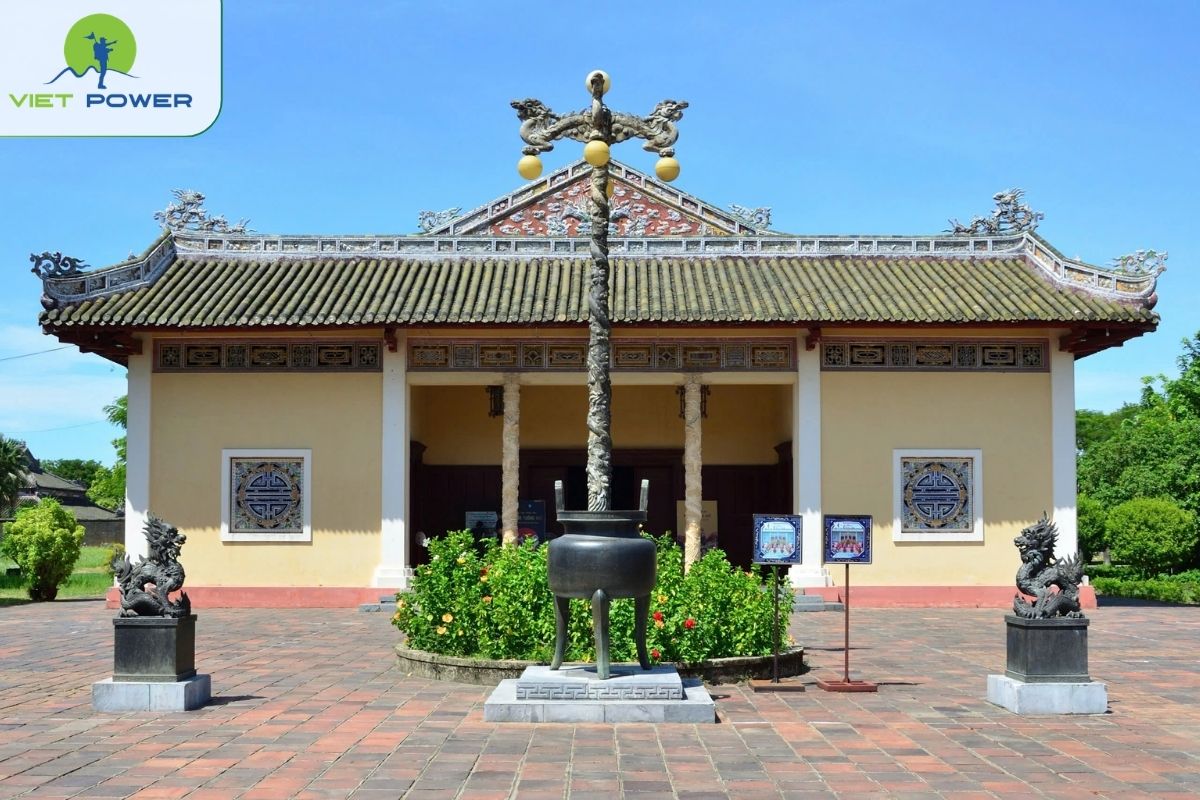
Hue Royal Theatre, also known as Duyet Thi Duong Theatre, was the royal theatre of the Nguyen Dynasty inside the Hue Imperial City. It is widely known as the oldest surviving traditional theatre in Vietnam and remains one of the most meaningful cultural sites in the former imperial court.
Hue Royal Theatre was a performance space for the emperor, the royal family, and court officials. It was used for royal court music, court dances, and Tuong performances, reflecting the artistic life of the Nguyen court. Today, it is valued as both a historic building and a cultural symbol of Hue.
Duyet Thi Duong Theatre is located in the southeast corner of the Forbidden Purple City inside the Hue Imperial City. Its commonly listed address is Doan Thi Diem Street, Phu Hau Ward, Hue City, Thua Thien Hue, Vietnam.
This inner-court location reflects its former royal role, since it stood within the private area of the imperial palace. For visitors, it is also an easy stop when they explore Hue Citadel attractions.
The theatre is part of the Hue Imperial City complex, so visitors usually access it during their wider Imperial City visit. In general, the Hue Imperial City ticket costs around 200,000 VND for adults and 40,000 VND for children, and this allows entry to the site as part of the overall complex.
However, live traditional performances may follow separate ticket arrangements depending on the current program, with show tickets often listed at around 300,000 VND per person.
Let’s continue exploring more about Vietnam and all the incredible places it has to offer. Visit our Vietnam tourist attractions category to discover in-depth guides, travel ideas, and hidden gems across the country.
To understand Hue Royal Theatre fully, it helps to look beyond its appearance and see how it functioned within the royal court. Its story reflects the cultural priorities of the Nguyen Dynasty and shows how performance, ceremony, and power were closely linked inside the Hue Imperial City.
Hue Royal Theatre was built in 1826 during the reign of Emperor Minh Mang. It stood on the site of an earlier theatre space, which shows that this part of the imperial court had long been connected with performance and court entertainment. The new structure gave the Nguyen court a more formal and refined venue for artistic presentation.
From the beginning, the theatre held a central place in court culture. It was one of the key artistic structures of the Nguyen Dynasty, created to host carefully staged performances in a setting that matched the status of the imperial court. This background gives the theatre much greater historical value than a simple old building.
Duyet Thi Duong Theatre served the emperor, members of the royal family, senior mandarins, and honored guests. It was a private court venue where performances were presented within a royal setting rather than a public entertainment space open to ordinary residents.
This role shaped the meaning of the theatre. It was used for court music, dance, and Tuong performances that reflected ceremony, etiquette, and refined taste. In that sense, the theatre formed part of daily and ceremonial court life, helping express the cultural values of the Nguyen court through performance.
After the end of the monarchy in 1945, the theatre lost its original role and entered a long period of decline. Later wars caused further damage, and parts of the structure were altered when the site was used for other purposes during the twentieth century.
A major restoration campaign took place from the late 1990s to the early 2000s, especially between 1995 and 2002. This work helped recover the theatre’s historical character and return it to public life. Thanks to that restoration, Hue Royal Theatre now functions as a cultural site where modern visitors can connect with the artistic heritage of the former imperial court.
Continue exploring similar posts to learn more about Vietnam’s attractions and experiences:
The architecture of Duyet Thi Duong Theatre adds another layer to its cultural value. Its royal design, interior arrangement, and symbolic decoration help visitors read the building as a ceremonial performance space shaped by court life.
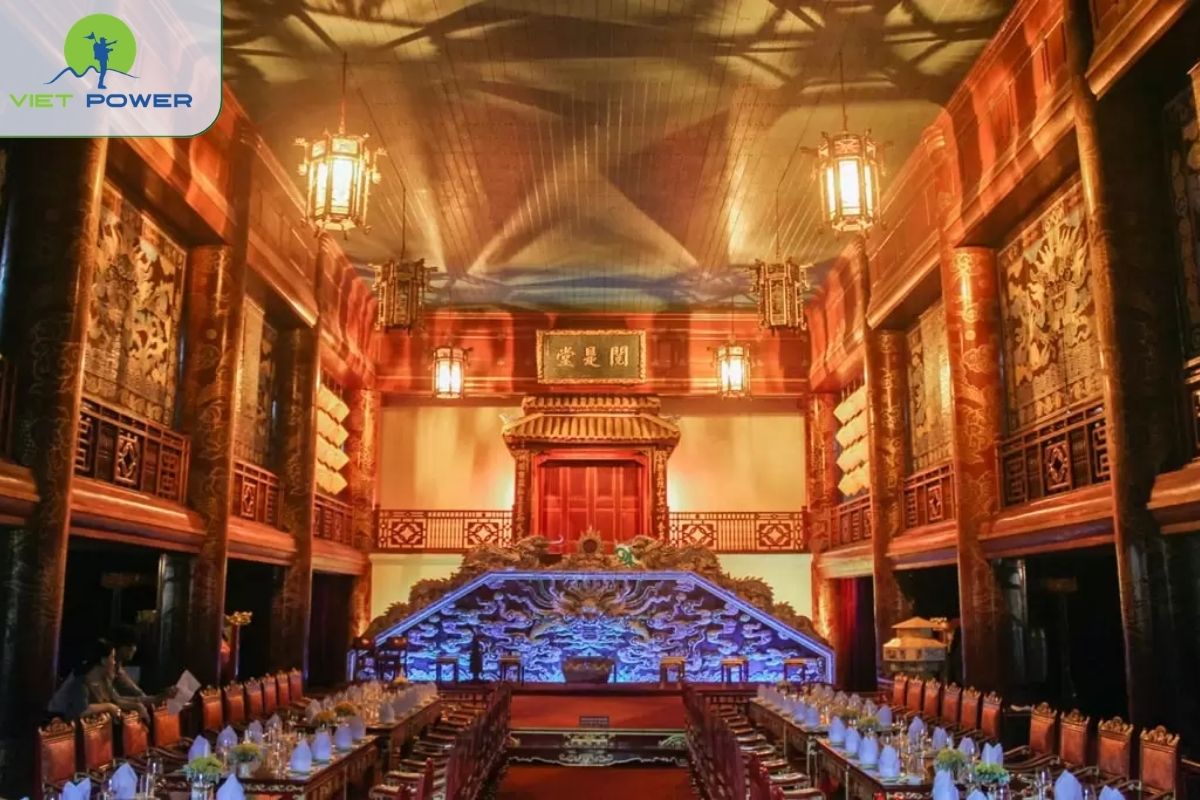
The theatre stands out through its royal design language, lacquered woodwork, carved motifs, and formal setting inside the imperial court. The use of gilded details, painted surfaces, and richly decorated wooden elements gives the space a refined court character.
It also reflects the elegance associated with a Hue royal performance hall. The building was created to suit both performance and ceremony, so its visual style supports the prestige of the events once held there.
The interior was organized around a central stage, with seating and viewing areas arranged according to rank. This stage-centered plan allowed performances to remain the focus while also preserving the order expected in court life.
Royal protocol shaped the building clearly. The emperor, members of the court, and other viewers occupied separate areas, while backstage spaces supported costume changes and performance preparation. This layout shows how function and hierarchy worked together inside the theatre.
Visitors can notice many symbolic motifs inside the theatre, including dragons, the sun, the moon, stars, and clouds. These decorative details were closely linked with imperial imagery and helped create an atmosphere suited to royal performance.
Such elements reflect beliefs about authority, harmony, and court prestige. They also show how decoration in the theatre carried cultural meaning, turning the interior into a space that expressed both beauty and imperial identity.
Dreaming of an unforgettable Vietnam adventure? Let Vietpower Travel build a personalized tour that brings your vision to life.
Hue Royal Theatre was created as a court performance venue where music, dance, and staged drama came together within the ceremonial life of the Nguyen court. The performances held here were closely linked with royal rituals, court culture, and the refined artistic standards of the imperial capital.
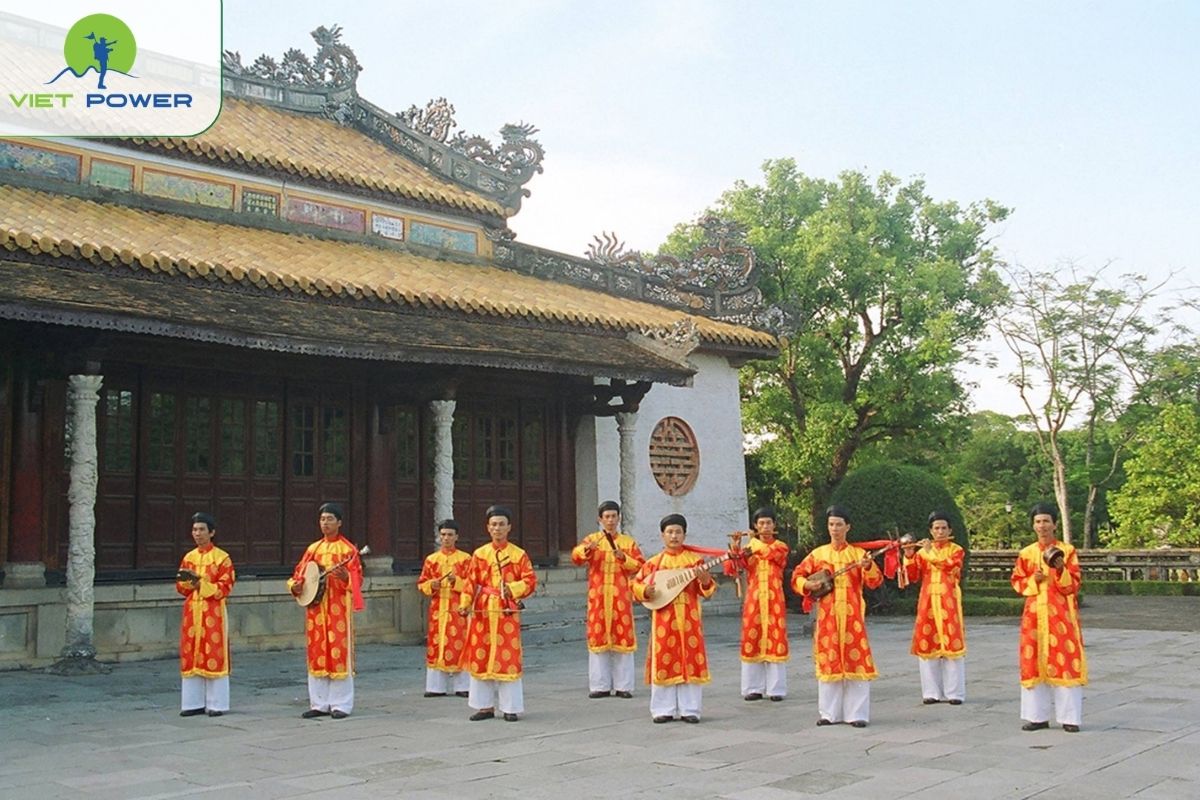
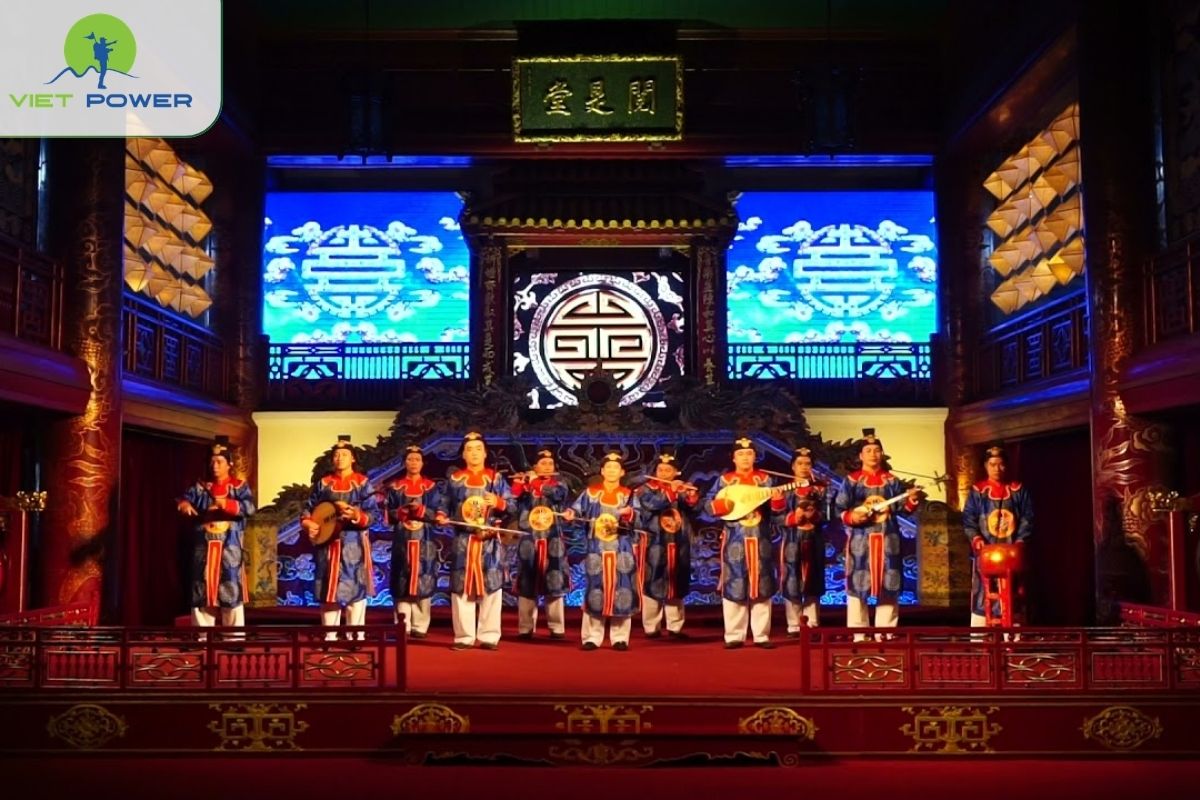
The main art forms presented at Hue Royal Theatre were Nha Nhac, royal dances, and Tuong. These were the core performance traditions of the Nguyen court and formed a major part of artistic life inside the Hue Imperial City.
Nha Nhac was the formal court music of the dynasty and was often associated with royal ceremonies, state occasions, and court celebrations. Royal dances brought visual grace and ceremonial meaning to palace events, while Tuong added dramatic storytelling through stylized acting, music, costume, and gesture. Together, these forms expressed ritual meaning, court prestige, and royal entertainment in a highly formal setting.
Some traditional works linked to Hue court performance include pieces such as Trống Thái Bình, Tam luân cửu chuyển, and Phú lục địch in court music, as well as court dances like Lục cúng hoa đăng and Lân mẫu xuất lân nhi.
In the theatrical tradition, the repertoire also connects with classical Tuong works such as Sơn Hậu and Tam Nữ Đồ Vương. In modern staged programs, visitors may also encounter restored or selected excerpts from older performance traditions, depending on the schedule of the day.
These performances carried cultural, ceremonial, and moral value within court life. They were presented to mark special occasions, honor royal power, and create an atmosphere that matched the dignity of the dynasty.
They also reflected the order and values of the court. Music, dance, and theatre were shaped by rules, symbolism, and refined taste, so each performance showed how the imperial court understood hierarchy, beauty, and proper conduct. In this way, the theatre helped preserve elite artistic standards while also expressing the cultural identity of the Nguyen court.
Today, Hue Royal Theatre is still strongly associated with Hue court music, royal dance traditions, and classical Tuong performance. These art forms continue to shape its identity and remain the clearest link between the theatre’s past and present.
For modern visitors, this living connection gives the site extra meaning. The theatre is appreciated because it preserves more than architecture alone. It also keeps court performance traditions visible within one of the most culturally rich Vietnam Tourist Attractions in Hue.
It is also useful to know that entry to the Hue Imperial City and access to live performances may follow different arrangements. If you want to watch a show, checking ahead will make your visit easier and more organized.
Explore more posts within this topic and uncover more of what Vietnam has to offer:
Hue Royal Theatre is easy to include in a wider Hue Imperial City visit. You can stop briefly to see the architecture, or stay longer to watch a traditional performance and understand the theatre more clearly.
Yes, visitors can still watch traditional performances at Hue Royal Theatre today. Duyet Thi Duong Theatre remains an active cultural venue, so the experience goes beyond viewing an old building.
The shows usually feature court music, royal dance, and selected classical stage excerpts. Watching them inside the original theatre helps visitors understand how the space once functioned in royal court life. For many travelers, this is one of the most memorable cultural experiences in Hue.
Before visiting Hue Royal Theatre, travelers should check the timing of their visit carefully, especially if they want to watch a live performance instead of only seeing the building.
Hue Imperial City opening hours: Hue Royal Theatre is located inside the Hue Imperial City, so you can only visit it during the Citadel’s opening hours. In most cases, the site is open from 6:30 AM to 5:30 PM. This means visitors should plan their arrival within that daily time frame.
Performance times at the theatre: Traditional performances at Duyet Thi Duong Theatre are usually held at two fixed times each day:
These shows normally last around 35 to 40 minutes and may include Hue royal court music, royal dance, and selected classical stage excerpts.
What time should visitors arrive? If you want to watch the performance comfortably, it is better to arrive 10 to 15 minutes before the show begins. A practical arrival time would be:
Arriving a little earlier gives you time to walk to the theatre, look at the interior, settle into your seat, and avoid rushing at the last minute.
If you only want to see the building and take a few photos, around 20 to 30 minutes is enough. This works well if you are exploring several places inside the Imperial City on the same day.
If you want to watch a performance as well, you should allow around 60 to 90 minutes. That gives you enough time to arrive, enjoy the setting, and experience the show without rushing.
Hue Royal Theatre is especially suitable for travelers who want a deeper understanding of Hue, since it brings together imperial history, traditional performance, and court culture in one place.
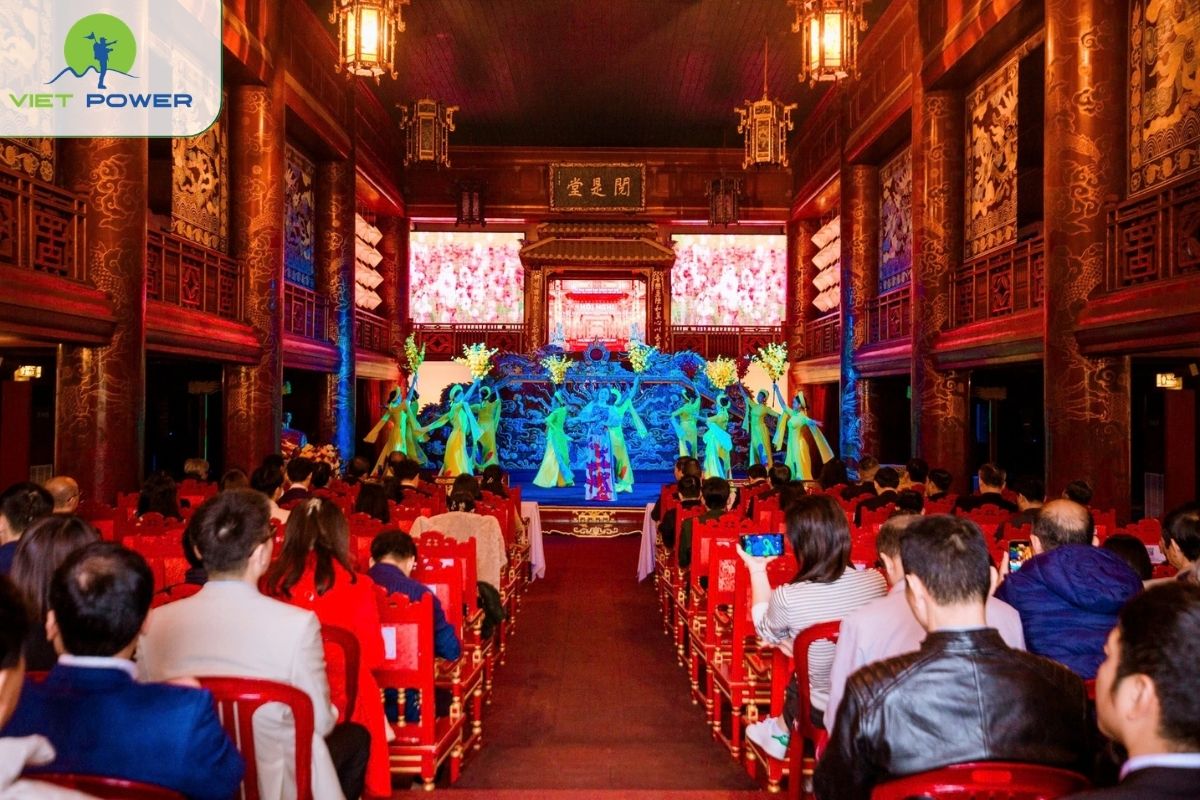
Hue Royal Theatre offers more than a historic landmark. It connects architecture, performance, and royal heritage in a way that helps visitors understand the Nguyen court more clearly. As part of the broader Hue Tourist Attractions, it remains a meaningful stop for travelers who value culture and history.
Plan your journey today and experience the cultural depth of Hue with Vietpower Travel. Let your next trip bring you closer to the heritage and atmosphere of Vietnam’s former imperial capital
Please kindly send us your ideas about the tours: destinations, attractions, your group, hotel class... we will get back to you with details & best offers quickly. Surely, you will feel satisfactory!
 |
 |
 |
 |
 |
 |

.jpg) Customize Your Trip
Customize Your Trip
 Vietnam
 Thailand
 Laos
Laos Indonesia
 Cambodia
 Myanmar
 Indochina Tours