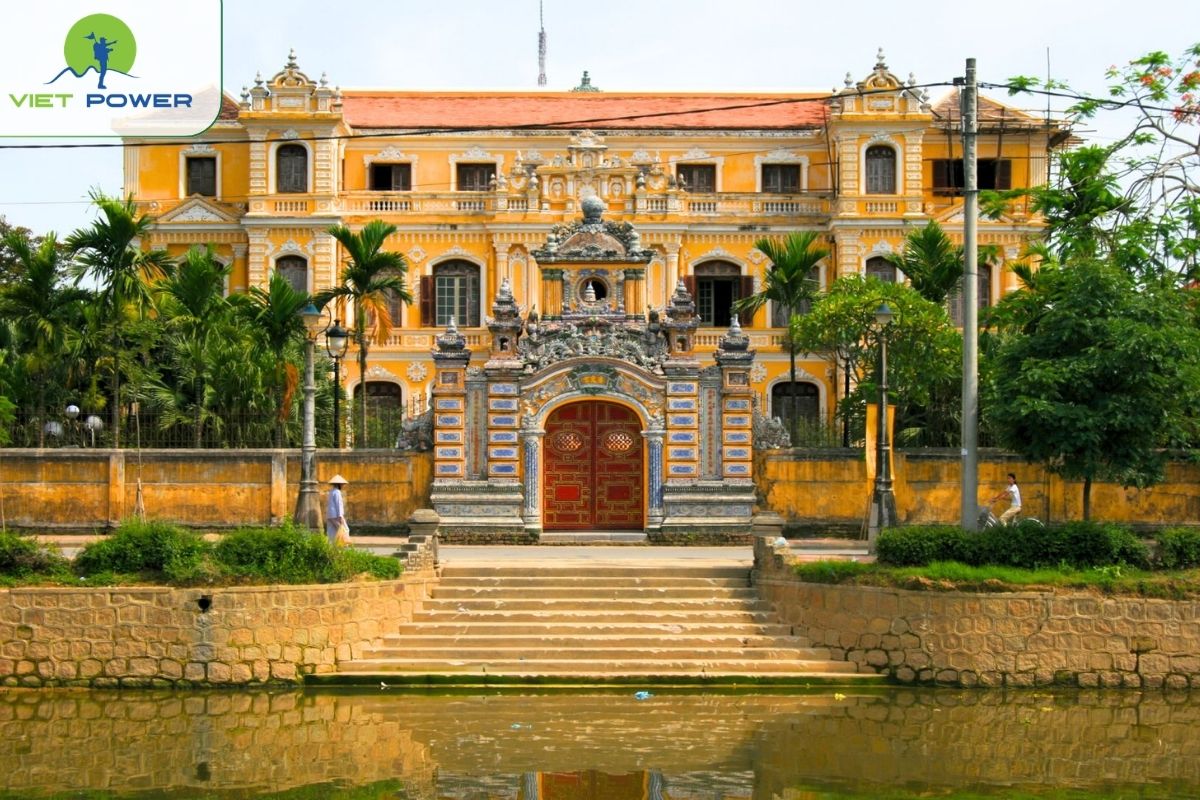
An Dinh Palace is one of the most graceful royal landmarks in Hue, admired for its elegant neoclassical style and rich connection to the final years of the Nguyen Dynasty. With its refined façade, artistic interiors, and royal atmosphere, the palace stands out as a memorable heritage site for travelers who want to see a different side of Hue beyond the Imperial Citadel.
Vietpower Travel is a trusted travel company for meaningful journeys across Vietnam, offering well-planned experiences that bring visitors closer to the country’s culture, history, and local identity. For travelers exploring Hue, Vietpower Travel helps turn historic sites such as An Dinh Palace into a richer and more rewarding part of the journey.
An Dinh Palace is one of the most distinctive royal landmarks in Hue, admired for its elegant appearance and strong connection to the final years of the Nguyen Dynasty. Set near the An Cuu River, the palace offers a quieter and more intimate atmosphere than the larger imperial sites in the city.
An Dinh Palace was originally a private residence of Prince Nguyen Phuc Buu Dao, who later became Emperor Khai Dinh. After ascending the throne in 1916, he had the residence rebuilt and expanded into a more ambitious palace with a new architectural character. The site later became associated with Emperor Bao Dai and Queen Nam Phuong, which gives it a special place in the story of Vietnam’s final imperial family.
An Dinh Palace is located at 179 Phan Dinh Phung Street, Hue City, Vietnam, on the northern bank of the An Cuu River.
Because the palace lies near the city center, it is very easy to include in a Hue heritage itinerary. Most visitors can reach it in about 5 to 10 minutes by taxi or motorbike, or slightly longer by bicycle if they prefer a slower ride through the city.
An Dinh Palace is open daily, including weekends and public holidays. Opening hours are generally divided by season:
Entrance fee:
Visitors can also purchase combo tickets with other sites, such as the Hue Museum of Royal Antiquities, for better value.
An Dinh Palace does not require a very long visit, which makes it easy to combine with other attractions in Hue. Travelers who want a short but rewarding stop can usually see the main highlights in about 30 to 45 minutes. That is enough time to walk through the entrance area, visit Khai Tuong Pavilion, and get a general sense of the palace’s atmosphere.
For visitors who enjoy architecture, decorative interiors, and photography, a slower visit of around 60 to 90 minutes feels more suitable. That extra time allows them to look more carefully at the murals, appreciate the ornamental details inside the main pavilion, and explore the grounds without rushing.
You can find more posts related to this topic in our Vietnam tourist attractions category. Explore detailed travel guides, destination highlights, and inspiration for your next journey through Vietnam.
An Dinh Palace reflects a turning point in Hue’s royal history. It began as a private residence, later became a refined palace under Emperor Khai Dinh, then turned into a residence linked to Bao Dai and Nam Phuong. Today, it stands as a public heritage site that helps visitors understand the final chapter of the Nguyen Dynasty.
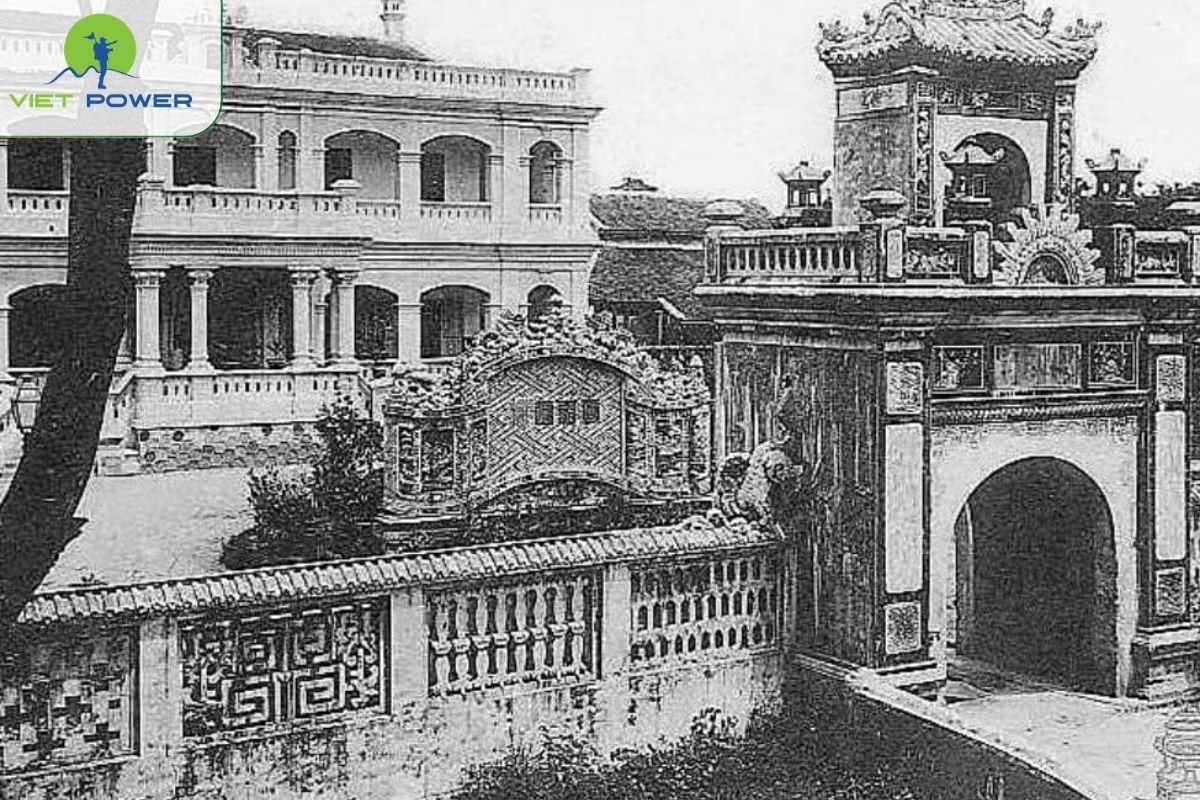
The site began in 1902 as An Dinh Residence, a private residence associated with Prince Nguyen Phuc Buu Dao before he became Emperor Khai Dinh. At that stage, it was a more traditional royal residence rather than the grand palace visitors see today.
The ruler most closely connected with the palace’s transformation was Emperor Khai Dinh. After taking the throne in 1916, he used his own funds to rebuild and enlarge the residence. The main reconstruction took place from 1917 to 1919, turning it into a more ambitious palace with a new architectural style.
After Khai Dinh’s death, the palace remained closely tied to the royal family and later became associated with Bao Dai, the last emperor of Vietnam. Following the August Revolution of 1945, Bao Dai, Nam Phuong, and their children lived here for a period. Because of that, the palace is closely linked to the final years of Vietnam’s imperial household.
After several political changes, An Dinh Palace gradually moved out of private royal use. Following 1975, Dowager Empress Tu Cung donated the palace to the revolutionary government. Since then, it has been preserved as a cultural and historical site, and today it remains one of the more meaningful Vietnam Tourist Attractions for visitors interested in Hue’s royal heritage.
You can find more posts related to this topic in the category below:
The architecture of An Dinh Palace is one of the clearest reasons the site stands out in Hue. Its design brings together royal Nguyen symbolism and European-inspired neoclassical features, creating a palace that feels more decorative and visually rich than many traditional court buildings in the former capital. This combination is most clearly expressed in the main gate, Trung Lap Pavilion, and especially Khai Tuong Pavilion, the palace’s central structure.
An Dinh Palace combines traditional Hue royal decoration with European architectural ideas from the early twentieth century. Visitors can see this in its arched openings, columned façade, symmetrical layout, and decorative relief work.
At the same time, the palace still preserves Vietnamese court motifs such as dragons, phoenixes, floral ornament, and ceramic mosaic decoration. Because of that, the palace feels both royal and more modern than many older Nguyen structures.
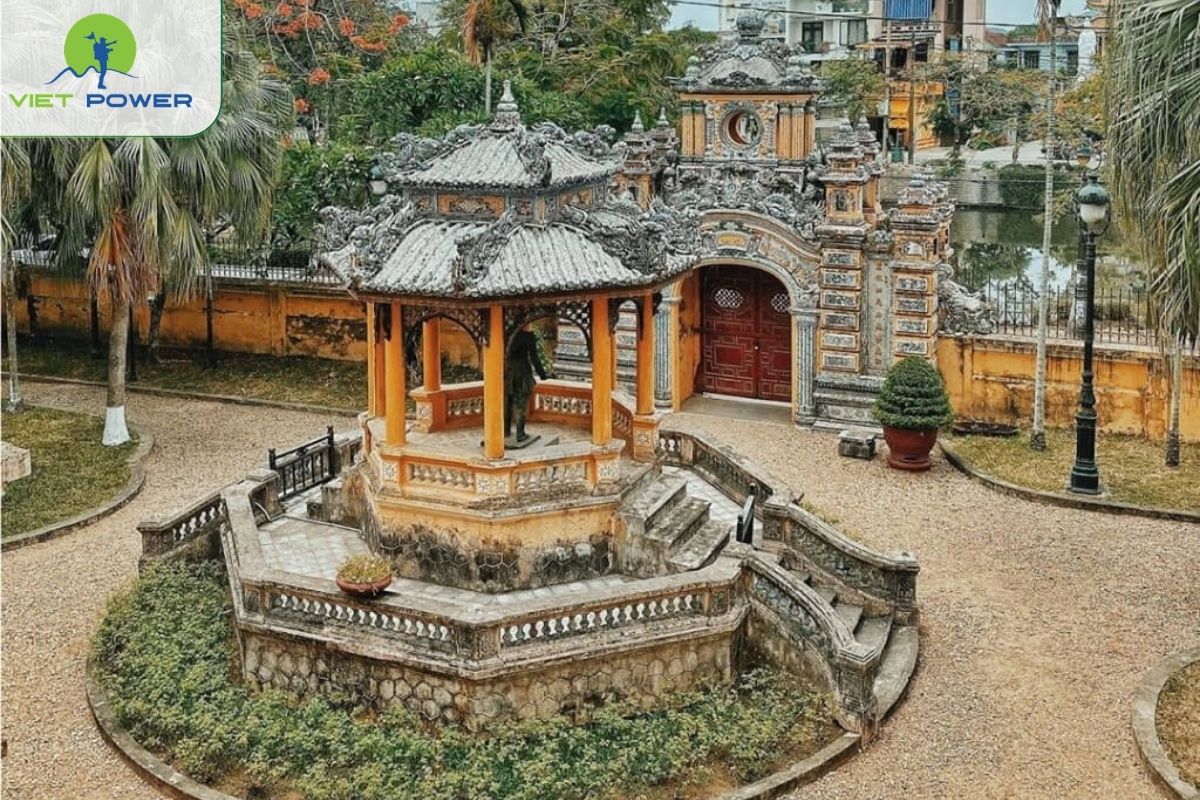
The main gate introduces the palace’s artistic character immediately. It is built as a ceremonial entrance with rich decorative detail, including colorful mosaic ornament and royal symbolic motifs.
Just beyond it stands Trung Lap Pavilion, an octagonal structure that creates a formal transition into the main palace grounds. This pavilion once held a life-size bronze statue of Emperor Khai Dinh, which reinforced the royal identity of the site and gave the entrance sequence a more ceremonial atmosphere.
Dreaming of an unforgettable Vietnam adventure? Let Vietpower Travel build a personalized tour that brings your vision to life.
Khai Tuong Pavilion is the main surviving building of An Dinh Palace and the clearest expression of its architectural identity. This three-storey structure stands at the center of the complex and combines scale, decoration, and visual balance in a way that defines the palace as a whole.
While the gate and Trung Lap Pavilion frame the approach, Khai Tuong Pavilion is the place where the palace’s artistic ambition is most fully preserved.
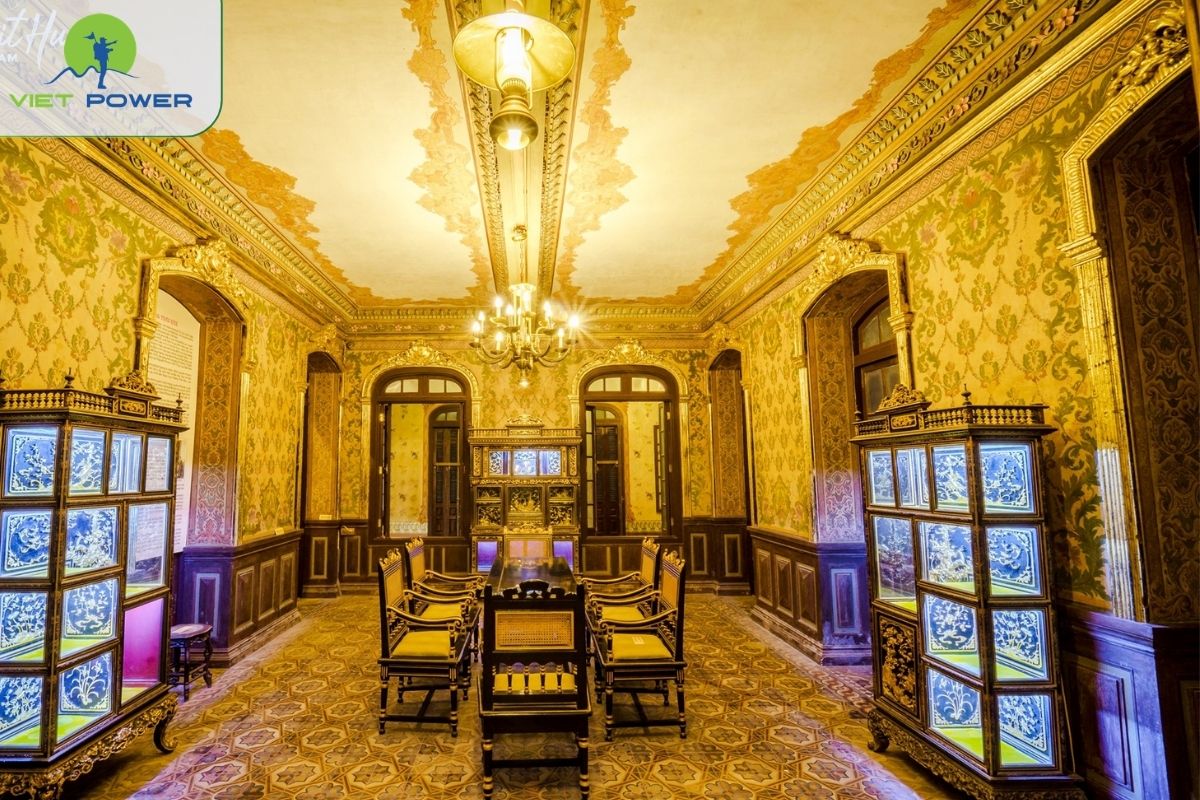
The interior of Khai Tuong Pavilion is memorable because of its rich decoration and carefully preserved artistic details.
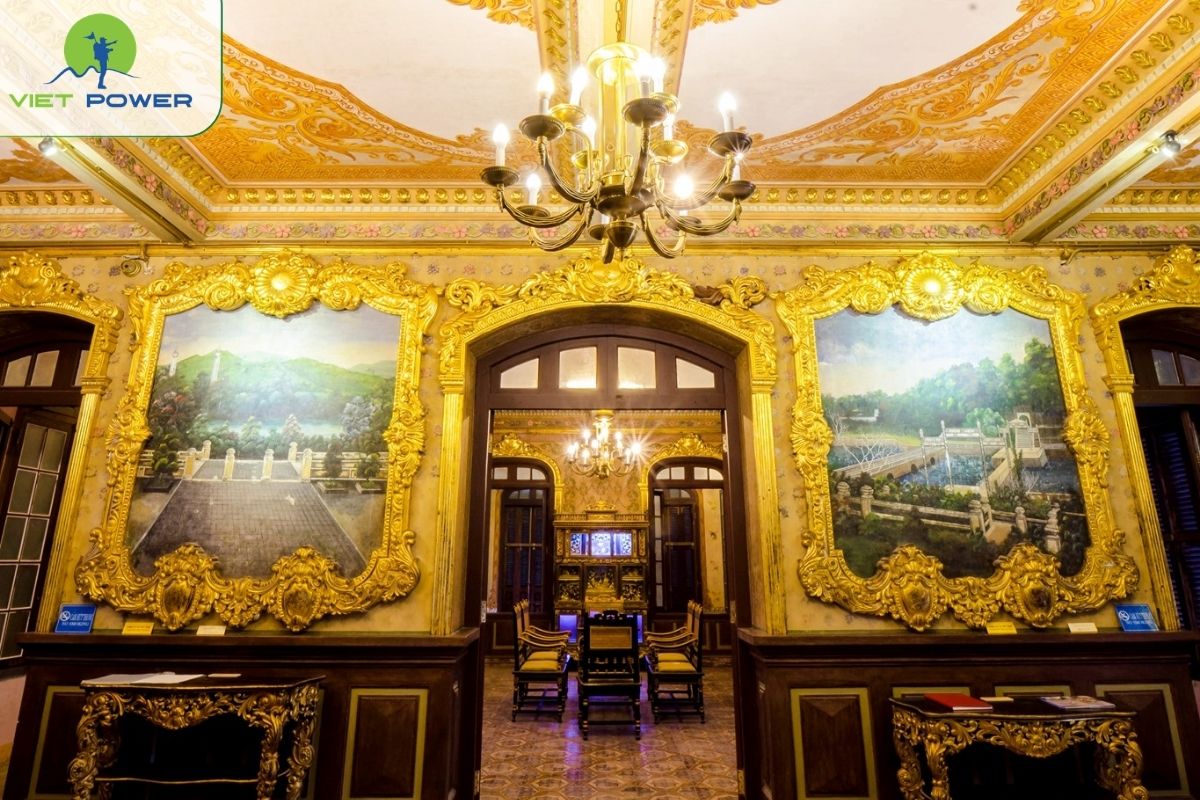
On the first floor, visitors can see a grand hall with large painted wall panels, ornamental plaster reliefs, and refined decorative patterns across the walls and ceilings. The floors were laid with patterned tiles, while the decorative program includes floral motifs, gilded framing, and European-style interior composition.
The second floor once served as part of the living space of the royal family. This level is quieter in atmosphere, but it still preserves decorative surfaces and a sense of royal domestic life.
The third floor was historically used for worship and sacred purposes, which gave the upper level a more solemn character than the reception rooms below.
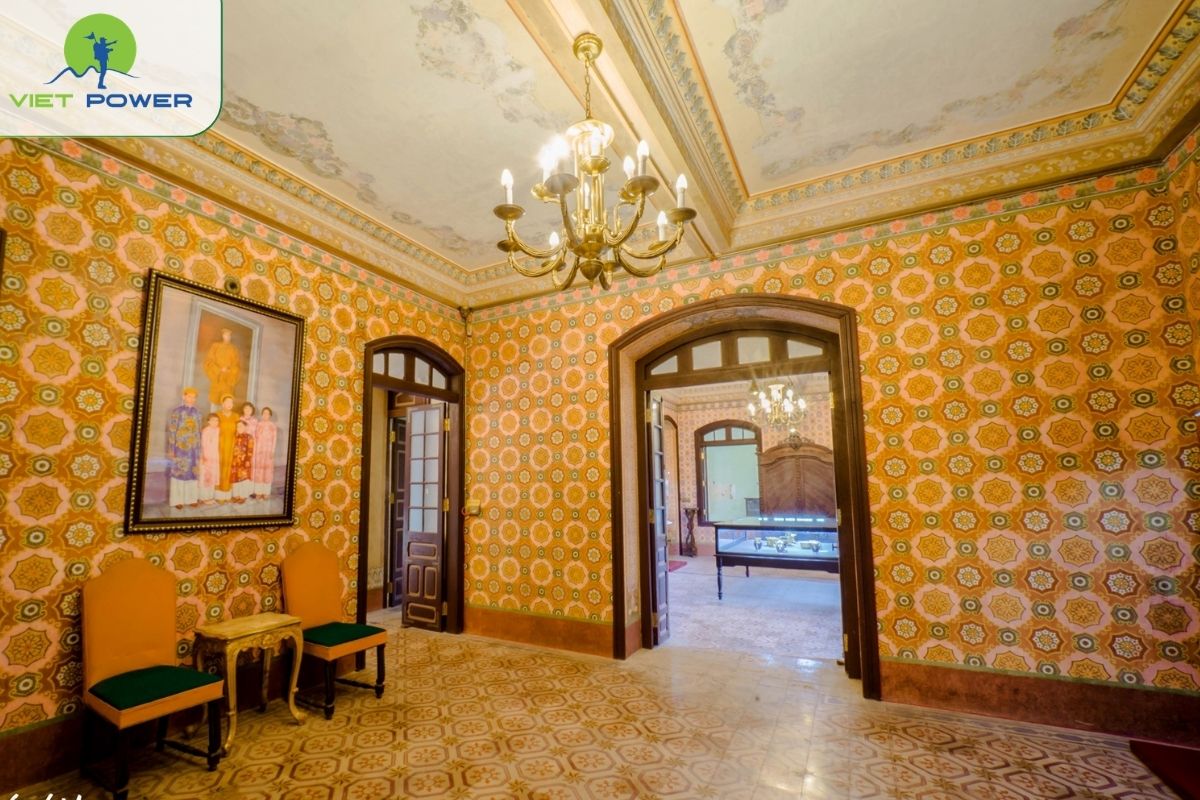
Among the most remarkable features inside Khai Tuong Pavilion are the large royal murals on the first floor. These paintings depict scenes connected to Nguyen royal architecture and court landscapes, and they are especially valuable because they preserve both artistic and historical memory.
In addition to the murals, visitors can notice gilded frames, raised relief decoration, floral ornament, painted ceilings, and finely arranged wall surfaces that reflect the palace’s refined artistic taste.
These interior details help explain why An Dinh Palace remains one of the more visually rewarding Vietnam Tourist Attractions for travelers interested in heritage, art, and royal culture.
A visit to An Dinh Palace is easy to plan, but a few simple choices can make the experience far more enjoyable. Because the palace is relatively compact, travelers can explore it without feeling rushed, yet it still offers enough visual and historical detail to reward a slower visit.
The best time to visit is early morning (6:30–9:00 AM) or late afternoon (3:30–5:00 PM) when the weather is cooler and the lighting is softer for photos.
The most comfortable months are March to April, when Hue has less rain and more stable weather.
Visitors should wear polite and comfortable clothing suitable for a heritage site. Inside the palace, avoid touching murals, reliefs, and decorative surfaces to help preserve them.
Although the palace is compact, it is better to allow at least 45–60 minutes to explore the interiors properly rather than rushing through.
An Dinh Palace is well-suited for several types of travelers:
Let’s explore more posts on this topic to discover even more about Vietnam:
Because of its central location, An Dinh Palace can easily be combined with several key attractions in Hue. The table below shows distance, address, and a short overview for each site:
|
|
|
|
|
|
|
|
|
|
|
|
|
|
|
|
|
|
|
|
|
|
|
|
|
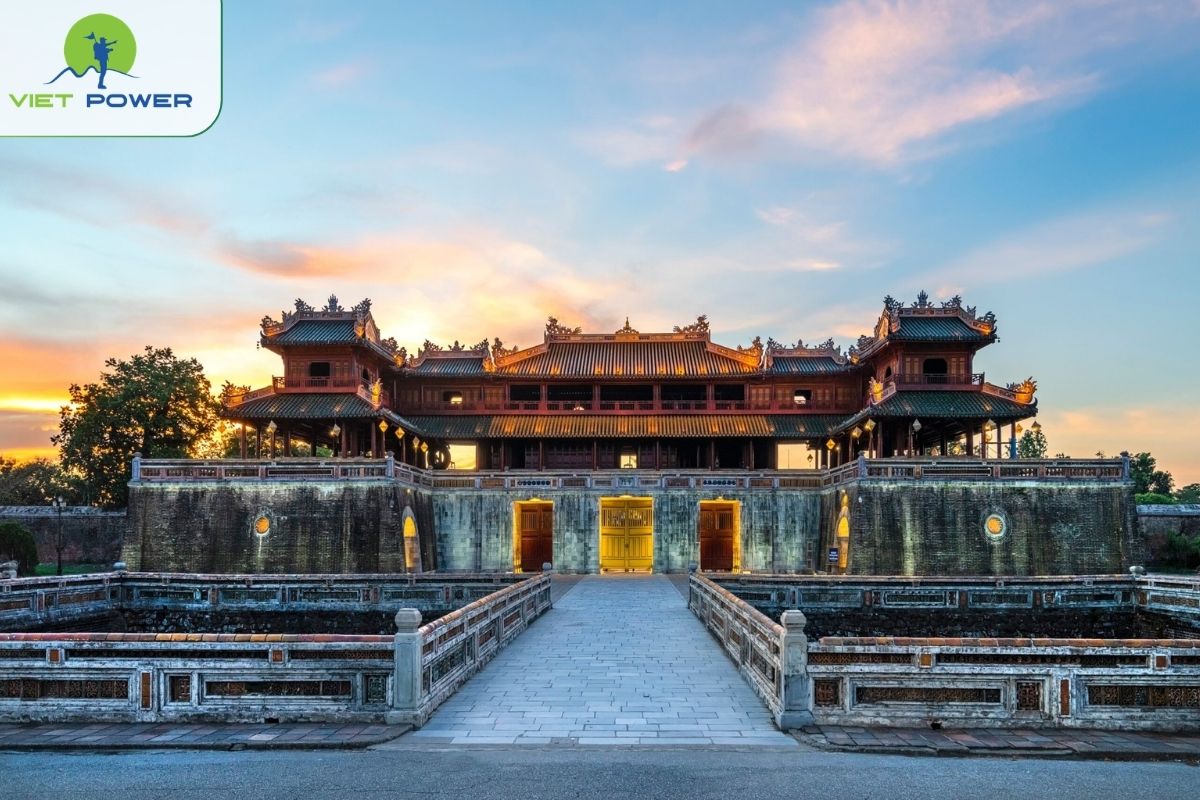
An Dinh Palace brings together royal history, architectural beauty, and decorative art in a setting that feels both elegant and approachable. Its central location and cultural value make it an easy and worthwhile stop for anyone exploring the former imperial capital.
If you are planning your next cultural getaway, let Hue welcome you with its royal heritage, timeless charm, and some of the most rewarding Hue Tourist Attractions in Vietnam
Please kindly send us your ideas about the tours: destinations, attractions, your group, hotel class... we will get back to you with details & best offers quickly. Surely, you will feel satisfactory!
 |
 |
 |
 |
 |
 |

.jpg) Customize Your Trip
Customize Your Trip
 Vietnam
 Thailand
 Laos
Laos Indonesia
 Cambodia
 Myanmar
 Indochina Tours